
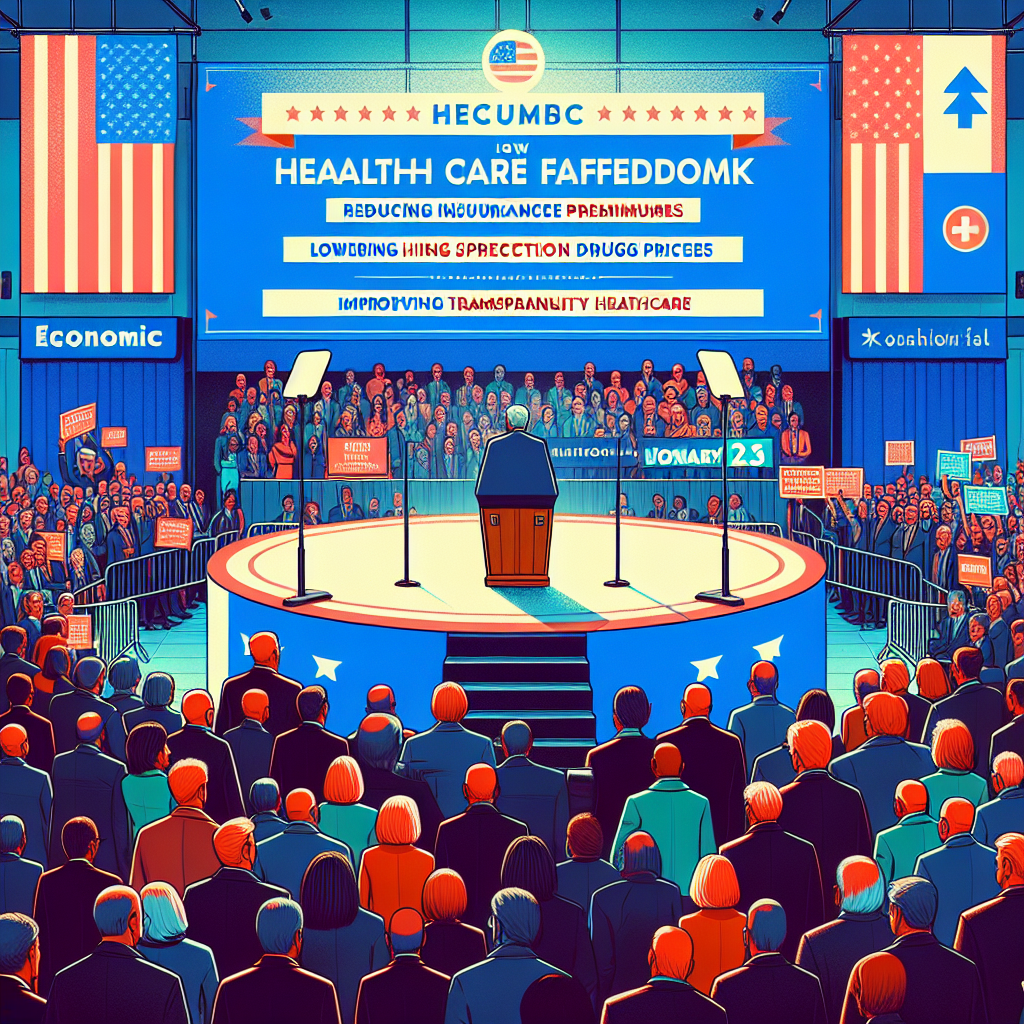
On January 13th, President Trump delivered a speech at the Detroit Economic Club, announcing the upcoming release of a new “Health Care Affordability Framework” aimed at reducing insurance premiums for millions of Americans, lowering prescription drug prices, and improving transparency in healthcare services.
Later this week, I will announce our Health Care Affordability Framework, which will lower premiums, decrease drug prices, enhance price transparency, and demand honesty and accountability from insurance companies nationwide and even globally,” Trump said.
He emphasized that promoting healthcare affordability is one of the government’s top priorities.
According to Trump, this plan will build on his “Most-favored-nation” executive order, which requires pharmaceutical companies to offer the lowest prices to the U.S. market that are on par with other developed countries.
“With my ‘Most-favored-nation’ executive order, healthcare costs will decrease very rapidly. We are fighting against special interest groups to significantly reduce prescription drug prices,” he said.
Since September 30th, 15 pharmaceutical companies have already agreed to the “most-favored-nation” policy terms. The latest addition was Johnson & Johnson, which joined on January 8th.
On December 1st, the U.S. government reached an agreement with the UK to increase drug prices within the UK by 25% to balance the long-term price differences between the two countries.
“Your drug prices will drop, for example, from $100 to $10,” Trump stated.
In addition to drug prices, price transparency is also at the core of this framework. During his first term, Trump introduced regulations requiring hospitals to disclose their pricing to the public. However, hospitals and insurance companies have not fully complied.
Andrew Bremberg, the Domestic Policy Council director during Trump’s first term, revealed to the Epoch Times that the data files provided by insurance companies and hospitals were too large and difficult to read, resulting in limited effectiveness.
“The files are so large that they are calculated in TB or even PB; unless you have expensive data servers and encoding programs, they are impossible to read,” Bremberg said.
As this policy is being unveiled, the U.S. Congress is engaged in bipartisan negotiations on healthcare issues. At the beginning of this year, the enhanced premium subsidies in the Affordable Care Act (ACA), also known as Obamacare, expired, putting pressure on millions of Americans facing rising premiums.
This issue has become a focal point for the 2026 midterm elections. Senate Minority Leader Chuck Schumer recently stated that Democrats will prioritize healthcare costs in the 2026 election campaign.
Meanwhile, within Congress, there is a divide among Republicans on whether to extend the related subsidies. Despite opposition from House Speaker Mike Johnson, 17 Republican members voted in January to support the Democratic proposal in an attempt to extend the subsidy deadline by three years. However, similar legislation has failed to pass the Senate on multiple occasions.
(This article draws from related reports from the English-language Epoch Times.)