
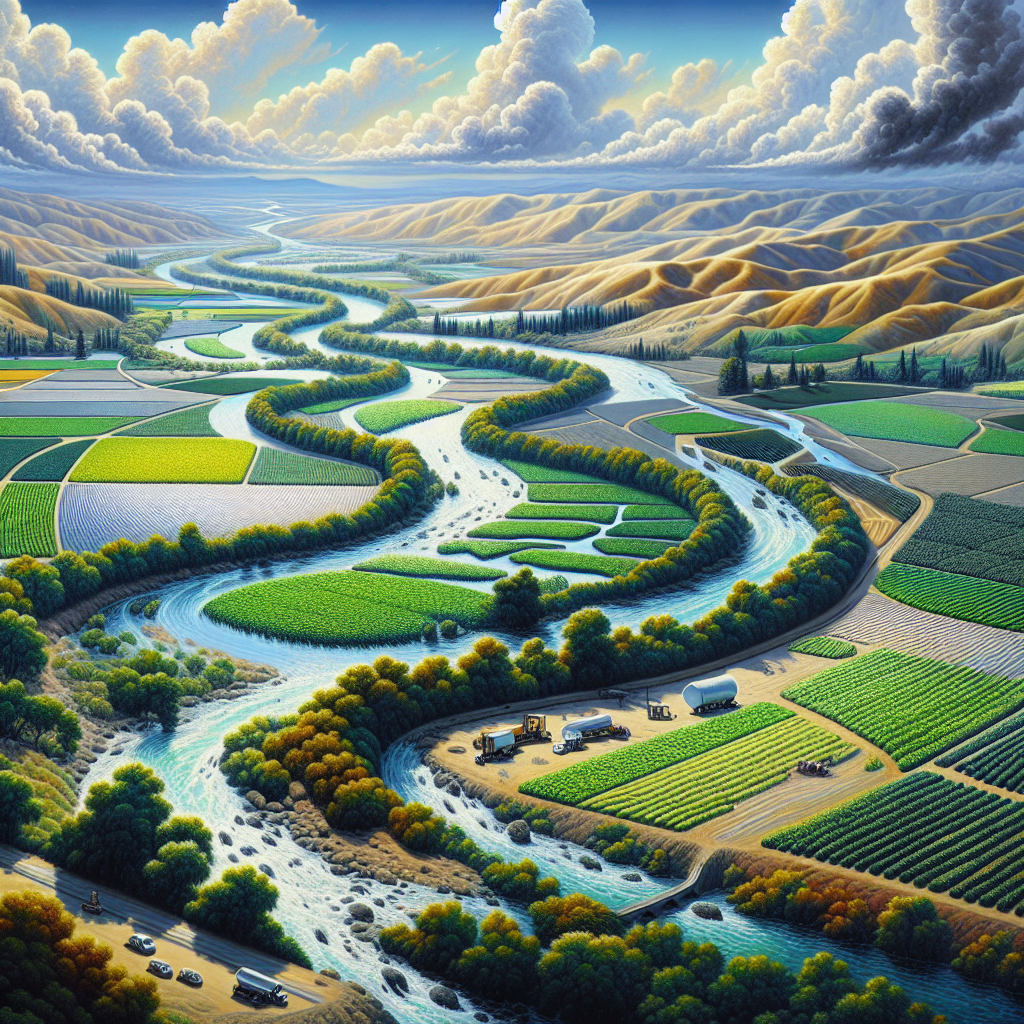
The U.S. Bureau of Reclamation has approved the revised management plan of the Central Valley Project (CVP) in California, aiming to provide more water to the state’s farmers.
The revision plan, named “Action 5,” is in line with Executive Order 14181 signed by President Trump on January 24, which requires federal agencies to maximize water supply to the Central Valley while complying with legal standards.
Interior Secretary Doug Burgum stated on Thursday (December 4) that with the signing of this decision record, they are fulfilling the commitment of Executive Order 14181 to strengthen California’s water resource resilience.
Burgum also mentioned that the updated operational plan utilizes cutting-edge science to increase water supply while protecting the environment.
This announcement coincides with the 90th anniversary of the authorization of CVP in 1935. CVP is a federal project managed by the U.S. Bureau of Reclamation, consisting of a vast system of dams, reservoirs, and canals stretching 400 miles from Redding to Bakersfield, serving up to 30 million people.
In December 2024, federal and state government officials reached a consensus to regulate the water flow of CVP to prevent floods and droughts. At that time, Karla Nemeth, the Director of the California Department of Water Resources, stated that the new framework would better manage the system, benefiting millions of Californians and endangered fish species.
The latest adjustments may increase CVP’s annual water supply by 130,000 to 180,000 acre-feet, allowing the State Water Project to obtain 120,000 to 220,000 acre-feet, depending on weather conditions and the implementation of “Action 5” in California.
The new strategy replaces the December 2024 framework and incorporates more advanced scientific tools to assist decision-making. These adjustments are still within the scope of the 2024 environmental impact study and comply with the biological assessments of NOAA Fisheries and the U.S. Fish and Wildlife Service.
Significant changes include minor adjustments to water withdrawals from the Delta, discontinuation of Delta Summer and Fall Habitat Action, and the cancellation of the proposal to reduce out-of-state water imports in California’s Healthy Rivers and Landscapes program.