
The News:
The Newton administration in California recently borrowed $3.44 billion from the state’s general funds at the beginning of this month to fill the gap in funding for the state-sponsored health care program, Medi-Cal. This week, on the 17th, the governor requested an additional $2.8 billion.
During a budget hearing on Monday, the Director of the California Health and Human Services Agency, Michelle Bass, stated that the funding gap for healthcare reached $6.2 billion. With the $3.44 billion loan and an additional $2.8 billion, the government expects to manage the expenditures of the Medi-Cal program before the end of the fiscal year. It was previously estimated during a hearing that California would spend about $8.5 billion in state general funds annually for the Medi-Cal program for illegal immigrants.
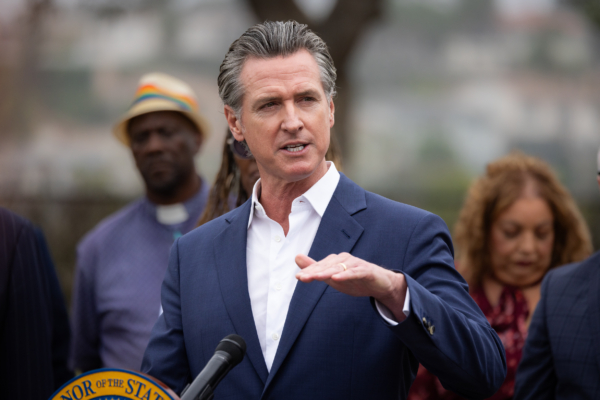
Local media KCRA 3 interviewed Newton on the 18th, asking whether he would consider cutting healthcare benefits for undocumented immigrants. Newton responded, “That is not within my scope of consideration.”
Newton mentioned that Pennsylvania, Colorado, and Indiana have expanded subsidies for undocumented immigrants in their healthcare assistance systems, “I have had conversations with those governors, and they have done more.” He emphasized this national issue at the Democratic Governors Association (DGA) annual meeting in December. As discussed during the state budget proposal in January, the state is working towards a solution.
“I believe in universal healthcare, a principle I have upheld since my time as a mayor,” Newton insisted. “This is a core principle for making California and America healthy – not just disease care but healthcare. That is why we are investing so much in healthcare programs from farms to schools.”
Moreover, Newton stated that California’s revenue has exceeded expectations, demonstrating remarkable economic resilience, “We have balanced the budget, and revenues are sufficient.”
Newton explained that the large-scale tax season in April is approaching, delayed due to the Los Angeles fires. As usual, he will submit a budget, working with the state legislature to determine priorities. He also emphasized the need for extensive adjustments and reforms in the healthcare assistance system.
The tax was implemented in 2009 and was set to expire in 2026.
Brian Jones, the California State Senate Republican Leader and Senator for the 40th district, expressed shock about the $6.2 billion budget overrun and increasing costs, with no end in sight. He commented, “Californians should not be forced to bear the burden of radical Democrats’ reckless financial mismanagement.”
Over the past decade, California has expanded Medi-Cal coverage to undocumented immigrants of all ages. Last January, the state began providing comprehensive health insurance to the last age group (26-49 years old) of undocumented immigrants, benefitting around 700,000 people. Newton stated at the time that California became the first state to achieve universal healthcare.
Currently, around 15 million people benefit from California’s Medi-Cal, with approximately 1.6 million being undocumented immigrants.
Jones highlighted that even former Governor Jerry Brown refused to expand Medi-Cal to all undocumented immigrants, knowing it was financially irresponsible and unsustainable. “Under Newton’s leadership, legal residents are bearing the economic cost and reducing access to healthcare,” Jones added.
In 2016, former Democratic Governor Brown signed into law providing healthcare to undocumented immigrants under 19 years old.
“Why are the costs so much higher than what Newton promised? What plans does he have to address the financial disaster he has caused? The public deserves answers,” Jones asserted. “California taxpayers should have transparency and accountability, not another empty promise from Newton’s failed politics.”
Carl DeMaio, a Republican State Assemblyman for the 75th district, also expressed on the 17th, “This is absolute madness. The fact that this has not made headlines, even in local news, is a crisis that all Californians should be concerned about.”
“We must immediately stop providing insurance to undocumented immigrants in California; it is simply unaffordable,” DeMaio stated. “This is not just about California politicians wanting to provide healthcare services to non-citizens for free but jeopardizing healthcare for vulnerable Californians – the elderly, disabled, and children.”
California’s cost for Medi-Cal has exceeded the planned budget due to rising prices, surpassing billions of dollars. According to Michelle Bass of the health department, several factors have led to the budget overruns, including an increase in the number of undocumented immigrants and rising pharmacy costs, which have occurred unprecedentedly and concurrently.
Firstly, the government underestimated the number of undocumented immigrants applying for Medi-Cal by 2024. The department estimated that California would spend over $2.7 billion beyond budget for new registrations of immigrants (26-49 years old) to cover medical and prescription costs.
Additionally, starting last year, the state government no longer includes certain assets (such as cars, homes, and savings) in the eligibility review. This change, based solely on income, has allowed more elderly people to register for Medi-Cal.
Due to pandemic-related flexibility, there has been an increase in enrollees in the program. During the pandemic, the federal government paused income eligibility reviews to ensure people could access healthcare in emergencies, leading to a significant increase in overall Medi-Cal enrollment in California. After the pandemic, fewer people left the healthcare system than expected.
Bass also noted that healthcare costs in other states have also exceeded budgets, with overall expenditures increasing everywhere.
Pilar Schiavo, a Democratic Assemblywoman for the 40th district, stated after the hearing that California’s current shortfall could be resolved, indicating that it is unlikely that the legislature would consider cutting Medi-Cal expenditures.
But in reality, California has faced funding gaps in recent years, necessitating budget balancing through project cuts and utilizing state reserves to achieve budget stability.