
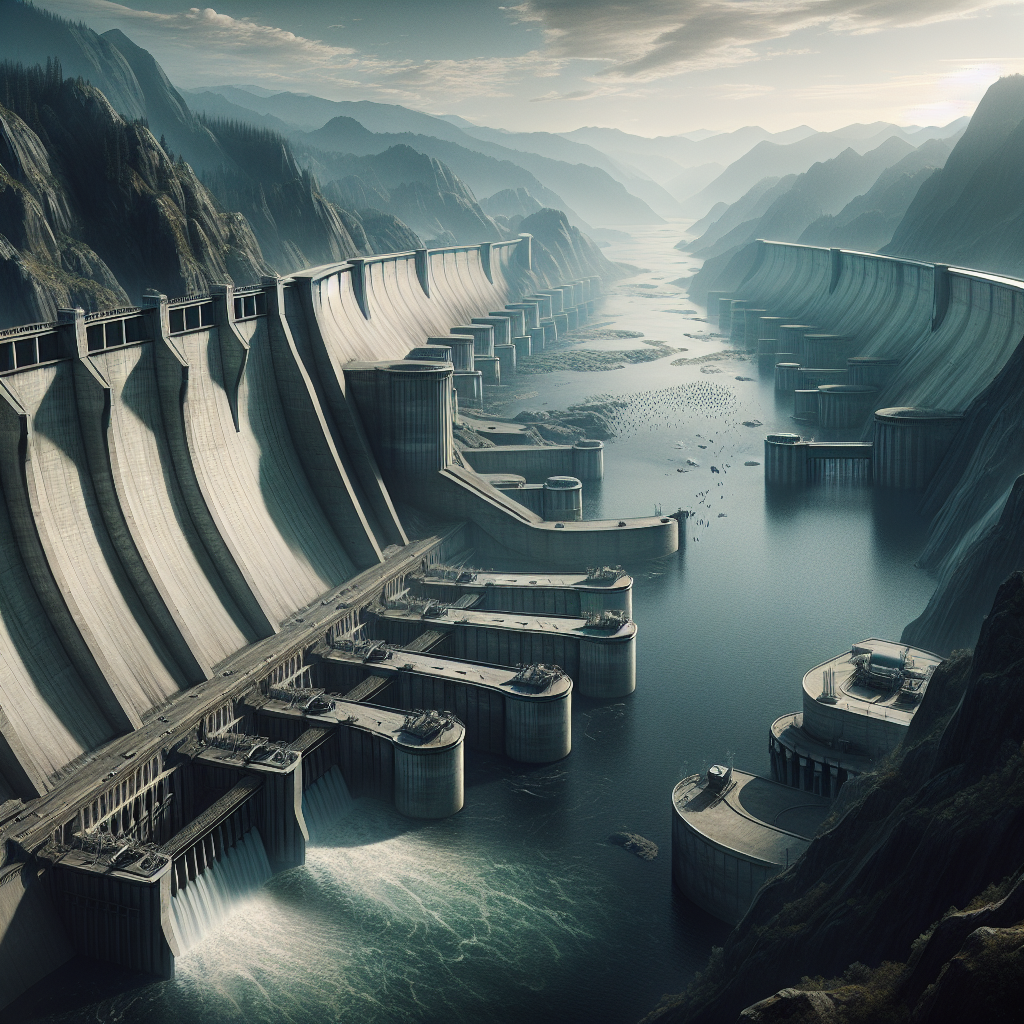
PacifiCorp, a power company, built a number of dams between 1918 and 1962 for hydroelectric power generation. However, these large dams blocked the natural flow of a river that was once known as the third-largest salmon-producing waterway on the West Coast, disrupting the salmon’s life cycle in the region. Salmon typically spend most of their lives in the Pacific Ocean before returning to the cold mountain streams to spawn.
According to the Associated Press, less than a month after the completion of the largest dam removal project in U.S. history, salmon have once again returned to the cool creeks that have been cut off from them for generations to spawn. Videos taken by the Yurok Tribe show hundreds of salmon have reached the tributaries between the former Iron Gate and Copco dams, and now the waterways are filled with hope once again.
A massive female Chinook salmon can be seen flipping her body in shallow water, using her tail to build a nest on the riverbed, shining brightly in the sunlight.
For decades, the local tribes have dreamed of witnessing such a scene, as they have been working tirelessly to remove four hydroelectric dams that blocked the passage of salmon along the 400-plus miles (644 kilometers) of the Klamath River and its tributaries on the Oregon and California border.
“I am thrilled to see the salmon spawning on the old dams,” said Joseph L. James, chairman of the Yurok Tribe. “Our salmon have come home. The tribes of the Klamath Basin have fought for this day for decades because our descendants deserve a healthier river from the headwaters to the sea.”
The Klamath River flows from its source in southern Oregon, through the mountain forests of northern California, before emptying into the Pacific Ocean.
On October 2nd, the completion of the dam removal project marked a major victory for the local tribes. Through protests, testimonies, and legal actions, the tribes showcased the environmental damage caused by the dams, especially their impact on the salmon, which had their historic habitats severed and suffered mass deaths due to poor water quality.
Toz Soto, the fisheries project manager for the Karuk Tribe, stated in a press conference after the dam removal that harmful algal densities have decreased since the removal of the dams. The Klamath River Renewal Corporation, the non-profit overseeing the project, reported that in October this year, daytime water temperatures averaged 8 degrees Celsius (14 degrees Fahrenheit) lower compared to the same period over the past 9 years.
“Overall, the fish that have returned this year are very healthy,” Soto said. “I have not seen any fish with bacterial infections, so water temperature has had an impact on fish health.”
The number of salmon entering tributaries that were previously inaccessible is also encouraging. Mark Hereford from the Oregon Department of Fish and Wildlife stated that experts have found 42 salmon spawning beds in Spencer Creek and discovered as many as 115 Chinook salmon in a single day. Spencer Creek is located upstream of the former J.C. Boyle Dam, the furthest upstream of the four dismantled dams.
“They show us where good habitat is and where habitat is lacking,” said Barry McCovey Jr, director of the Yurok Tribe’s Fisheries Department. “As river managers and scientists, we can use these fish to tell us where restoration is needed.”
McCovey expressed that the return of so many salmon has been faster than he anticipated, filling him with hope for the future of the river.