
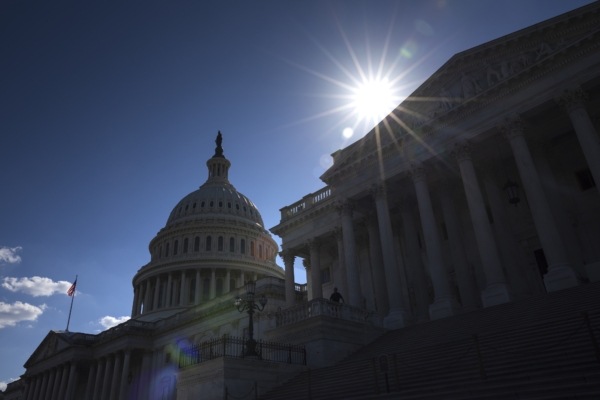
The United States Congress convened its first week back as “China Week,” planning to swiftly review and pass a series of anti-Communist bills.
On Wednesday, the Congress continued discussions and voting on bills related to China, passing legislation to establish a “CCP Action Plan” within the Department of Justice, support Taiwan’s full participation in the World Health Organization, and conduct national security reviews for citizens from countries like China and Russia who seek to purchase American farmland.
The House of Representatives also passed the “Protect America’s Innovation and Economic Security from CCP Act of 2024” with a vote of 237 to 180.
This bill calls for the establishment of a “CCP Initiative” within the Department of Justice, aimed at curbing Communist China’s espionage activities targeting American intellectual property and academic institutions. It also includes strategies to enforce laws against non-traditional collectors, such as researchers in laboratories, universities, and defense industrial bases; implement the Foreign Investment Risk Review Modernization Act of 2018; and handle cases involving Chinese companies competing with American businesses as per the Foreign Corrupt Practices Act of 1977.
The bill prioritizes identifying and prosecuting individuals engaged in commercial espionage, hacking attacks, and economic espionage, as well as protecting key American infrastructure from external threats arising from foreign direct investment and supply chain issues.
The legislation, introduced jointly by Republican Representatives Lance Gooden, Randy Weber, Bill Posey, and Doug Lamborn in March of last year, was approved by the House Judiciary Committee on May 22 this year, with additional sponsors joining later.
Republicans and Democrats engaged in intense debates during Tuesday’s session on this bill. Those opposing the legislation argued that it raised concerns of racial discrimination and targeted Asian researchers with a suspicion of “racial profiling.” They viewed it as a duplication of the “China Initiative” initiated by the Trump administration during the Department of Justice’s tenure.
The Trump administration previously launched the “China Initiative,” implemented by the Department of Justice’s National Security Division, aiming to eliminate Chinese espionage comprehensively and prevent the theft of American technology by China. However, the high proportion of individuals of Chinese descent among those prosecuted raised worries and critiques of “racial profiling.” On February 23, 2022, the Department of Justice announced the termination of this initiative.
Nevertheless, the latest legislation explicitly targets actions by the Chinese Communist Party, as indicated by the line “CCP here refers to the Chinese Communist Party.”
After multiple rounds of debate and voting on amendments, the U.S. House of Representatives also passed the “No WHO Pandemic Preparedness Treaty Without Senate Approval Act” and related amendments introduced by California Republican Congressman Tom Tiffany with a vote of 219 to 199 on Wednesday afternoon.
This bill stipulates that any public health convention or agreement related to epidemic prevention advocated by the World Health Organization must be considered an official treaty, needing approval from the U.S. Senate to be effective.
A proposed amendment to the bill will include advocating for Taiwan’s full participation in the World Health Organization as a policy of the United States.
Tennessee Congressman Andy Ogles, who proposed the amendment, stated, “We have allowed Communist China to influence U.S. foreign policy and the agenda and membership of major international organizations, including the United Nations, for too long.”
Ogles emphasized that decades of appeasement towards China have ultimately harmed the United States itself. When Taiwan tried to warn the World Health Organization on December 31, 2019, of the possibility of human-to-human transmission of the coronavirus, no one took notice. Meanwhile, the WHO declared that there was no clear evidence of human-to-human transmission of the virus, causing the U.S. to lose crucial weeks in preparing for the COVID-19 pandemic.
Chief Democratic member of the House Foreign Affairs Committee, Congressman Gregory Meeks from New York, expressed American support for expanding Taiwan’s international space and participation in international forums. Yet, he cautioned that careful wording is necessary for significant policy matters.
Meeks stated, “I want to emphasize that I believe this amendment aligns with the spirit of current U.S. policy, supporting meaningful Taiwan participation in the World Health Organization’s World Health Assembly.”
However, due to Taiwan’s non-membership in the United Nations, Meeks believes that supporting Taiwan to become a formal member of the World Health Organization goes against America’s longstanding policy towards China.
During Wednesday’s legislative agenda, discussions were held on the “Protecting American Agriculture from Foreign Adversaries Act of 2024” introduced by Washington Republican Congressman Dan Newhouse. The bill saw debates and ultimately passed with a vote of 269 to 149.
This legislation amends provisions in the 1950 Defense Production Act concerning foreign investments in American agriculture.
The bill mandates modifications to the policy of the Committee on Foreign Investment in the United States (CFIUS), requiring the committee to determine if reported agricultural land transactions submitted by the Department of Agriculture need national security reviews. If reported agricultural land transactions involve foreign individuals from China, North Korea, Russia, or Iran acquiring agricultural land, reports on these transactions must be submitted to the Department of Agriculture.
Moreover, the bill expands CFIUS membership to include the Secretary of Agriculture in transactions regulated involving agricultural land, agricultural biotechnology, or agricultural industries such as agriculture transportation, storage, and processing.
Democrats who opposed the bill highlighted its recent introduction just five days earlier and its similarity to previous legislation. They expressed concerns about the legislation potentially discriminating against individuals from specific countries purchasing agricultural land in the U.S., citing suspicions of racial discrimination and racial profiling.
Newhouse, along with Republican Congressman John Moolenaar, Chairman of the House Committee on China Questions, and 18 other cosponsors, introduced the “No American Land for the Chinese Communist Party Act” in June of this year, seeking to prohibit any agents of the Chinese Communist Party or any enterprises affiliated with the CCP from purchasing real estate adjacent to U.S. federal lands.
(Source: Voice of America, with modifications)