
As of February 12, in the Chinese A-share listed real estate companies that released their 2025 performance forecasts, 74% reported losses, totaling over 200 billion yuan. According to industry experts, the pressure of losses is unlikely to ease in the short term.
Data from WIND, a mainland data service provider, indicates that as of February 12, 77 A-share listed real estate companies have released their 2025 performance forecasts or interim reports. Among them, 57 companies are expected to incur losses, with a total estimated loss ranging from 208.2 to 209.4 billion yuan.
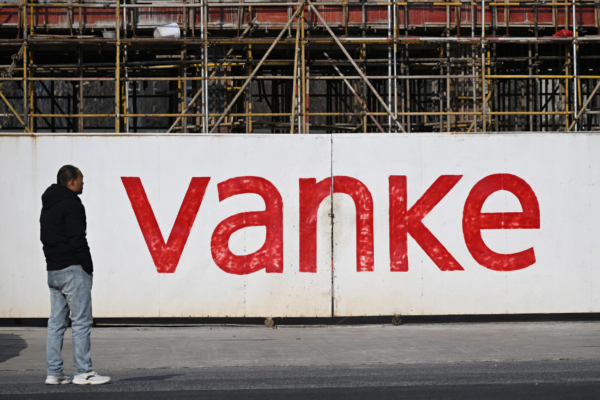
Among these loss-making companies, five real estate firms are facing losses exceeding tens of billions of yuan. Vanke is expected to incur a loss of 82 billion, Huaxia Happiness with a loss of 16 to 24 billion, China Overseas Land & Investment with a net loss of 13 to 15.5 billion, Greenland Holdings with a loss of 16 to 19 billion yuan, and Country Garden Holdings with a loss of 11 to 13.5 billion yuan. Vanke set a record for real estate companies in A-share with an expected loss of 82 billion yuan.
Additionally, there are 24 real estate companies with expected losses exceeding 1 billion yuan, including some with backgrounds of central or state-owned enterprises.
The report indicates that the loss-making real estate companies share common characteristics. Firstly, there is weak demand on the sales side leading to significant profit reduction. According to data from the National Bureau of Statistics of China, in 2025, the sales area of newly constructed commercial housing decreased by 8.7% year-on-year, with sales revenue dropping by 12.6% year-on-year. The soft sales directly result in reduced project turnover, decreased gross profit margin, and some projects even operating at a negative profit margin.
Secondly, these companies still heavily rely on real estate development for core income. During the industry’s deep adjustment period, the weak development business has continued, leading to insufficient overall risk resistance for companies.
Furthermore, due to the industry’s downturn, the continuous pressure on real estate asset prices has resulted in a sharp increase in impairment provisions. The amount of impairment in many companies accounts for over 50% of the total loss.
Entering 2026, the real estate industry in China shows no sign of improvement. According to the announcement on February 13 by the National Bureau of Statistics of China, the price changes of newly constructed residential properties in 70 large and medium-sized cities show a year-on-year decrease in January: a 2.1% decline in first-tier cities, expanding by 0.4 percentage points from the previous month; a 2.9% and 3.9% respective decline in second and third-tier cities, with decreases expanding by 0.4 and 0.2 percentage points. The data indicates that the year-on-year price declines in new residential properties continue to widen in various city tiers.
In the second-hand housing market, second-hand house prices in first-tier cities dropped by 7.6% year-on-year, with the decline expanding by 0.6 percentage points from the previous month. Among the four first-tier cities, Beijing decreased by 8.7%, Guangzhou by 8.3%, Shanghai by 6.8%, and Shenzhen by 6.5%; second and third-tier cities saw declines of 6.2% and 6.1% respectively. This demonstrates that the year-on-year price decline in the second-hand housing market is greater than that of the new housing market.
Moreover, in January, the price index of new housing in 70 cities decreased by 0.4% month-on-month, and the index of second-hand housing decreased by 0.5% month-on-month.
Regarding the deep-seated reasons for the continuous decline in China’s real estate, mainland capital circles’ senior figure Xu Zhen told Dajiyuan that declining birth rates and marriage rates have weakened the population base for new housing demand; stagnant growth in household incomes and incomplete repair of household asset and debt balance sheets restrict effective home-buying ability. The shift of housing function from investment-oriented to residential-oriented and the diminishing demand logic previously supported by asset appreciation expectations make housing demand continue to be squeezed.
Commentator Xiao Yi’s analysis suggests that the Chinese real estate market is facing deep structural issues, including accelerating supply-demand imbalances, alarming numbers of vacant properties, yet real estate companies persist in increasing supply. Confidence in the market has been damaged and has been slow to recover. The Chinese real estate industry is currently in a challenging period of de-leveraging and de-bubbling. In the next few years, market pains will only intensify, with the Chinese real estate market expected to continue its downward trend.
In its research report, Shenwan Hongyuan Securities Co., Ltd. stated that the real estate industry will remain in an adjustment period throughout 2026, with short-term pressure of losses difficult to fully alleviate. The market is expected to keep differentiating, with high-risk real estate companies and inefficient companies gradually being eliminated, further increasing industry concentration.