
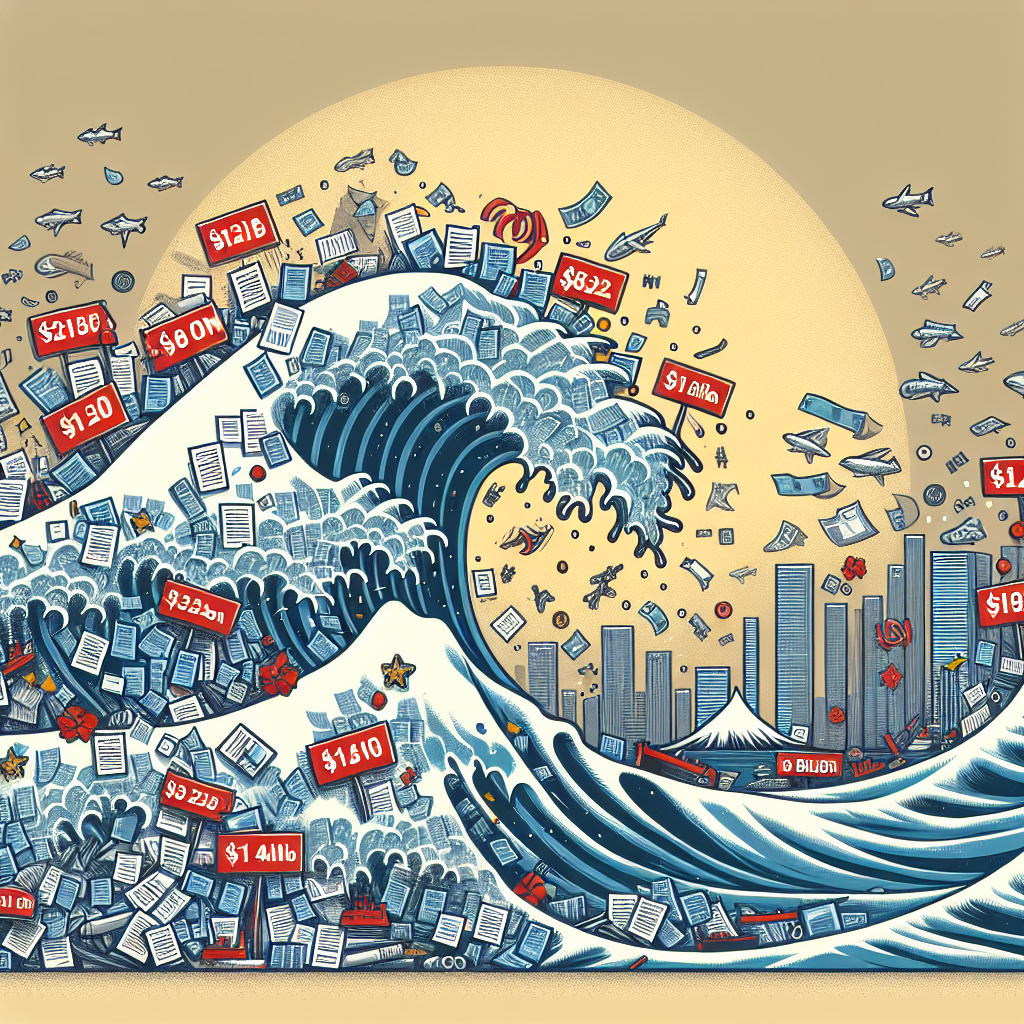
After nearly a decade of silence, Chinese companies’ overseas acquisition wave seems to be rekindling. The latest data shows that in January, Chinese companies’ outbound merger and acquisition (M&A) deals have approached nearly $12 billion, setting a record high for the same period since 2017.
In fact, according to a monitoring report by Ronding Group last week, it also warned that the total amount of new foreign direct investment (FDI) transactions announced by Chinese companies in 2025 reached $124 billion, a growth of 18% compared to 2024. Although it is still far below the peak in 2016, it is the highest level since 2018.
As Chinese investments extend from consumer brands to key infrastructures like electricity and mining, the national security risks they bring are triggering scrutiny and high vigilance in Western countries.
This wave of acquisitions includes not only consumer brands like German sports brand Puma, but also multi-billion-dollar strategic assets transactions such as African mineral trades.
Richard Griffiths, Head of Mergers and Acquisitions in the Asia-Pacific region for BNP Paribas, told Bloomberg, “Chinese interest in overseas mergers and acquisitions is clearly on the rise, with many new projects under evaluation, and more significant deals expected to be announced in 2026.”
Although this wave of retail industry acquisitions seems less politically sensitive, such as Luckin Coffee’s consideration to acquire Blue Bottle and Anta’s major stake in Puma, Chinese companies are also accelerating their penetration into critical infrastructures in multiple countries.
For instance, in Chile, China already has significant influence in its electricity market. Both China Southern Power Grid Company (CSG) and State Grid Corp. of China hold stakes in important electricity enterprises.
Insiders revealed that China Southern Power Grid once sought to increase its stake in Chilean transmission company Transelec SA through a transaction worth about $4 billion, aiming to further expand control beyond its existing 28% ownership, although the deal has not been finalized.
To ensure dominance in the global supply chain, Beijing is supporting Chinese companies in mergers and acquisitions in “critical industries” to strengthen China’s control over strategic assets such as “critical metals.” Recently, Chinese investments have been actively penetrating Latin America, conducting resource layouts worth billions of dollars.
According to Bloomberg, in Brazil, Chinalco is collaborating with Rio Tinto to seek controlling stakes in Brazilian aluminum company Cia. Brasileira de Alumínio.
At the same time, in a bid to secure critical metals needed for electric vehicles and high-tech industries, CMOC Group recently completed the acquisition of Equinox Gold’s business in Brazil; Jiangxi Copper has agreed to acquire mining company SolGold Plc.
In January this year, Zijin Gold International of China announced reaching an agreement to acquire all issued shares of Canadian mining company Allied Gold (AAUC) in an all-cash transaction worth $4 billion, giving Zijin strategic mineral assets in three countries in Africa, including projects in Mali, Ivory Coast, and Ethiopia.
Some of China’s major investments last year also included the Simandou iron ore project in Guinea and two large lithium processing plants in Nigeria.
Most of these transactions are above $1 billion, indicating China is sparing no effort to establish a global mineral resource map.
Research by the Ronding Group indicates that nearly half of China’s foreign investment in 2025 is concentrated on energy and minerals to ensure the supply of critical resources amidst the expanding global AI infrastructure.
In the green energy and electric vehicle sectors, Chinese strategies are shifting from “exporting products” to “establishing localized production overseas.” Chinese electric vehicle giant BYD and battery leader CATL are investing heavily in setting up production bases abroad.
Analysts point out that this massive investment in overseas production facilities is not only to evade increasingly stringent trade tariffs and import restrictions in the West but also to embed China’s supply chain deeply into the global market.
Matthew Phillips, Director of Financial Services at PricewaterhouseCoopers (PwC) China, analyzes that such overseas investments will further “strengthen China’s supply chain,” indicating a possible deepening of global reliance on China’s supply chain.
Facing Chinese penetration in advanced technology, infrastructure, and agricultural fields, Western countries are intensively enacting laws to protect national security. The US, Germany, Switzerland, and the EU have set up barriers:
– The US: President Trump has issued executive orders instructing the Committee on Foreign Investment in the United States (CFIUS) to strengthen scrutiny over Chinese investments in strategic industries such as semiconductors, AI, quantum computing, biotechnology, defense, energy, raw materials, agriculture, and healthcare.
– Germany and Switzerland: The German government has intercepted Chinese acquisition attempts multiple times, while Switzerland screens Chinese investments in strategic industries through laws.
– EU’s trade barriers: Faced with Chinese penetration in various sectors, the EU is protecting local industries through trade barriers and tariff policies. For example, in February, the European Commission formally announced imposing an anti-dumping tariff of 79% on ceramic tableware and kitchenware from China. Out of the 63 ongoing trade investigations by the EU, 47 investigations (approximately 75%) are targeted at Chinese products.
As Chinese companies repeatedly face obstacles in Western countries, they are turning to the “global South,” replenishing funds from US and European markets and massively directing investments to Africa, the Middle East, and Southeast Asia.
However, the Ronding Group pointed out that due to concerns by Chinese authorities that local technology may flow out through investments, countries hoping for industrial development driven by Chinese capital may end up disappointed.
Although the current acquisitions seemingly have more strategic purposes, given the context of intensified geopolitical rivalry, these expansion plans targeting critical resources and brands will undoubtedly face more stringent international scrutiny.