
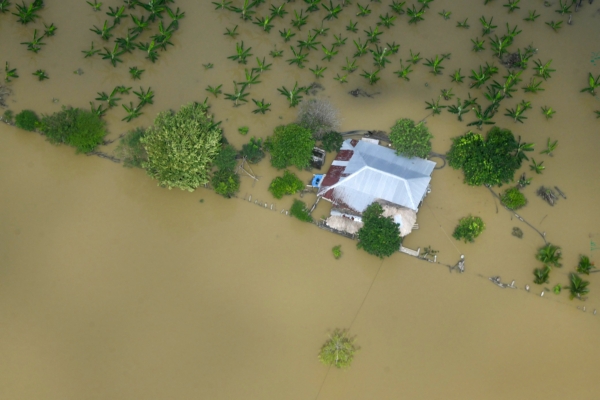
Recently, Colombia has been hit by rare heavy rainfall, triggering severe flooding and landslides nationwide, resulting in at least 22 deaths and affecting nearly 70,000 households.
Among the hardest-hit areas is the province of Córdoba on the north coast along the Caribbean Sea. 80% of the province has been submerged by floodwaters, with rainfall exceeding the historical average by a staggering 160%, setting a new record for February rainfall in the region.
Local officials reported that the disaster has affected 156,000 people in the province, with thousands of homes inundated, multiple bridges collapsed, and main roads cut off due to river overflows, leading to significant disruptions in several city’s transportation systems. Rescue operations and supply deliveries are facing tremendous challenges. The flooding caused by the heavy rainfall has also dealt a severe blow to the local agriculture sector, with around 157,000 hectares of farmland submerged and a significant number of livestock facing relocation difficulties.
Currently, Colombia’s National Unit for Disaster Risk Management (UNGRD) is coordinating national rescue efforts to respond to the crisis. Police and military personnel have been deployed to affected communities, with the Defense Ministry mobilizing helicopters, rescue boats, and specialized teams to perform personnel evacuations and relief operations in remote disaster areas. Authorities have distributed thousands of emergency relief supplies, including food and medicine, to the affected regions.
The Colombian National Meteorological Service analyzed that the causes of this extreme weather event are highly unusual. The country should typically be in its dry season, but a cold air front from the northern hemisphere has pushed southward to the Colombian Caribbean coast, interacting with abundant moisture from the Amazon basin and low-pressure systems, resulting in this “unprecedented” sustained heavy rainfall.
Meteorological data indicates that from January to early February this year, Colombia’s national rainfall has been 64% higher than the historical average, saturating the soil and further increasing the risks of landslides and flash floods.
The meteorological department has issued warnings, suggesting that there might be further impacts from new cold air fronts in the region, raising the possibility of the situation worsening. The government has called on residents in high-risk areas to remain vigilant and be prepared to follow evacuation orders at any time.