
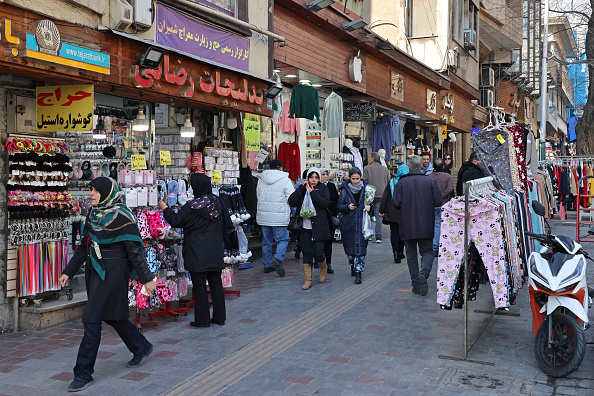
On February 3, Iranian President Masoud Pezeshkian announced that he has instructed to start negotiations with the United States regarding the nuclear deal. Multiple sources revealed that Iran is currently in a vulnerable position, with its leadership very fearful that a potential U.S. strike could further incite angry citizens to take to the streets in protest against the regime.
Pezeshkian stated on social media platform X that as long as “threats and unreasonable expectations” are avoided, negotiations with the U.S. should continue to safeguard the national interests.
He tweeted, “Considering the requests from friendly regional countries, in response to the proposal of negotiations from the U.S. president, I have instructed the foreign minister to seek fair and just negotiations in an appropriate environment without threats and unrealistic expectations.”
In regards to the willingness of the Iranian regime to negotiate with the U.S., six current and former Iranian officials informed Reuters that the country’s leadership is increasingly concerned that the brutal crackdown on protests could lead to overwhelming public anger and loss of control over power.
Four sources revealed that during high-level governmental meetings, officials informed Supreme Leader Ayatollah Ali Khamenei that the public’s anger following the recent crackdown had reached a level where fear might no longer intimidate them.
The suppression in early January was the bloodiest since the Islamic Revolution of 1979. The U.S.-based human rights organization HRANA reported on February 2 that during the protests from late December to January, 6,430 protesters were confirmed killed, including 152 minors under the age of 18, with nearly 11,300 death cases still under investigation. Over 50,000 people were arrested.
Officials indicated that Khamenei was informed that many Iranians are prepared to once again confront the security forces, and external pressure could embolden them, potentially causing irreparable damage to the political system from limited U.S. military strikes.
Former Iranian Prime Minister Mirhossein Mousavi, a key figure in the reform movement, warned in a statement on the Kalameh website that the river of warm blood flowing in cold January will not cease boiling until it alters the course of history. He urged the people to express their disdain for the regime and not believe in lies any longer.
Mousavi, who served as Prime Minister from 1981 to 1989 and participated in the 2009 Iranian presidential election, has been under house arrest without trial since 2011 following his criticism of election fraud that sparked mass protests known as the Green Movement.
Last year, in late December, Iranian people took to the streets in protests due to dissatisfaction with the economic situation. Years of sanctions led to severe economic contraction in the country, with a significant devaluation of the currency. The exchange rate of Iran’s currency against the U.S. dollar nearly halved in 2025, making life difficult for the people, many of whom struggled to put food on the table.
What started as economic protests morphed into anti-government demonstrations, swiftly spreading. The Iranian authorities suppressed the dissent brutally, but analysts and insiders agree that despite the seeming calm on the surface, deep-seated discontent among the people persists.
Public frustration over economic recession, political oppression, widening wealth gaps, and entrenched corruption has left many Iranians feeling trapped in a system offering no escape or way out.
Six current and former officials warned Reuters that if protests were to reignite under mounting external pressure and met with violent responses from security forces, they fear demonstrators may become even bolder than in previous protests.
One resident of Tehran stated, “If the U.S. attacks, I will return to the streets to avenge my son and the children killed by this regime.” He expressed that protesters simply seek a normal life, but the authorities respond with “bullets.”
His 15-year-old son was killed during the January 9 protests.
(Adapted from Reuters reports)