
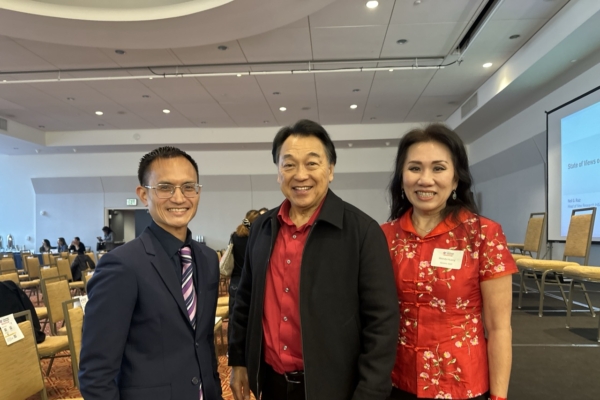
On January 24th (last Saturday), a forum focusing on the core theme of Mass Deportation within the Asian community was held in San Francisco’s Chinatown. The event featured multiple speeches and discussions throughout the day, highlighting immigration enforcement, deportation policies, and their impact on the Asian community, attracting dozens of community members.
At the start of the event, the organizers outlined the overall agenda of the forum, noting that the recent federal immigration enforcement and mass deportation issues have sparked nationwide attention, with discussions intensifying within the Asian community. Therefore, immigration topics were made a focal point of the event.
The first core panel discussion was titled “Mass Deportation: Cruelty or Necessity?”. Republican representative Wendy Huang and veteran immigration lawyer Marc Santamaria took the stage to discuss immigration enforcement, deportation policies, legal grounds, and humanitarian considerations.
Huang stated that deportation is a legal government administrative procedure and not a cruel means. The federal government has a responsibility to enforce immigration laws to maintain public safety and social order. She mentioned that a significant number of immigrants have voluntarily left through non-violent and non-confrontational means, showing that enforcement can be carried out without excessively disrupting communities. She also believed that relevant policies help alleviate the long-term burden on public finances and social resources.
Santamaria responded based on his practical experience. He emphasized that immigration issues cannot be solely viewed through legal texts or data. Many immigrant families, even when applying legally, face years of fruitless efforts due to lengthy administrative procedures and insufficient judicial resources. He stressed that if enforcement neglects due process, it not only hinders efficiency but also risks family separations and more social problems.
In the subsequent open dialogue segment, the audience’s speeches and questions presented two different stances. One side supported strengthening immigration enforcement from a rule of law and public safety perspective, believing the government is responsible for strictly enforcing immigration laws and focusing on whether birthright citizenship has been abused; while the other side raised concerns from constitutional and human rights perspectives, worried that mass deportations violate due process and pointed out the practical contributions of undocumented immigrants to the economy and labor market.
The clash of viewpoints led to multiple rounds of questioning and responses.
Before the dialogue, background insights were shared. Pew Research Center researcher Neil Ruiz shared research data analyzing deportation policies and visa restrictions, noting variances in how Asian Americans of different generations and immigrant backgrounds perceive immigration policies.
In a flash speech following, Norman Wong, a descendant of the Wong Kim Ark case, reviewed the historical background of birthright citizenship and reminded attendees that current discussions on immigration policies must align with constitutional principles.
The organizers indicated that the inclusion of the mass deportation issue as the opening topic was due to its timeliness and public attention, aiming to first discuss controversial policies before expanding to economic, housing, and other related community issues.
Aside from immigration topics, the day also featured economic data sharing on inflation, affordability of housing, first-time home buying, visas, and employment prospects, delving into the practical challenges faced by the Asian community from various angles including policy, data, and personal experiences.