
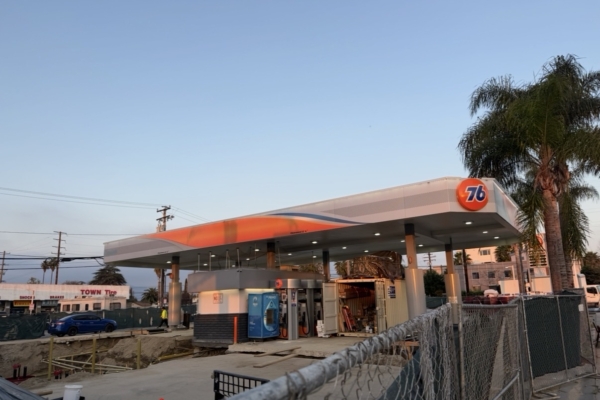
California passed an environmental law in 2014 requiring single-walled underground storage tanks to be upgraded to double-walled tanks by the end of 2025 to prevent fuel leakage and contamination. Otherwise, the facilities cannot operate. This may have led to hundreds of gas stations in California being shut down due to non-compliant storage tanks. There are concerns that gasoline prices in California could skyrocket as a result.
According to SB445, the “California Health and Safety Code” that came into effect on September 25, 2014, all regulated underground storage tanks that do not meet the requirements outlined in sections 25291(a)(1)-(6) of the law by December 31, 2025, must be permanently closed according to section 25298 of the law and section 2672 of the California Code of Regulations Title 23, Chapter 16 (Underground Storage Tank Regulations).
Tanks that fail to comply by the deadline, do not have double-walled protection, and lack continuous leak detection systems are considered violations. These tanks may be labeled with a red tag by the California Certified Unified Program Agency (CUPA) or the State Water Resources Control Board (SWRCB) and cannot be used for fuel transportation and distribution.
SWRCB notified CUPA and inspectors of underground storage tanks in late January of last year regarding the law, instructing all single-walled gasoline tanks and pipelines in the state to be permanently closed by the end of last year. Enforcement actions began on January 1st this year, with fines ranging from $500 to $5,000 per day for each non-compliant tank.
Despite nearly 50,000 single-walled tanks in California being replaced by double-walled tanks, around 120 tanks still lack dismantling plans primarily due to insufficient funds. The total cost of the renovation projects, including excavation, soil reinforcement, and waste disposal, is estimated to be in the six figures, with excavation alone potentially costing $100,000. For some small business owners, this is undoubtedly a significant expense. Although the “Underground Storage Tank Retrofit Program” (RUST) provides grants for eligible small businesses, the annual quota is limited.
The owner of a 76 Gas Stations in the Bay Area told the San Francisco Chronicle that approximately 480 gas stations have been shut down for the same reason, many of which are “mom and pop shops.”
Data from the geographic information platform ArcGIS shows that there are still 279 gas stations in California using single-walled tanks, with about 50 in Los Angeles County alone. If they continue to operate, they are at risk of fines or closure at any time.
This development may increase the difficulty of accessing gas in some communities, especially in remote areas where gas stations are already scarce. Residents may now need to drive long distances to refuel, potentially leading to an increase in gasoline prices.
For years, Californians have endured some of the highest gas prices in the United States. As of Friday, the average price of gasoline in California was $4.21 per gallon, with Los Angeles County at $4.35, representing a 47.20% and 52.09% increase over the national average of $2.86.
Adding to the woes, Valero’s oil refinery in the San Francisco Bay Area is set to close in April, and in December last year, Phillips 66 closed its Los Angeles refinery. Together, these refineries accounted for 17% of the gasoline supply in the California market.
There are concerns from experts that by the end of the year, California may only have 11 refineries left. Any fire incidents or annual maintenance needs could easily lead to a substantial increase in gasoline prices.