
Since the beginning of Xi Jinping’s leadership of the Chinese Communist Party, there has been an increasing sense of anxiety about the potential overthrow of the CCP regime. Initially, measures were taken to prevent officials from being influenced by Western ideologies, followed by restrictions on private trips abroad by officials and even the confiscation of passports of primary school teachers. Now, the CCP is accelerating the removal of “naked officials” with ties to the West, intensifying the anxiety.
However, the current situation differs significantly from when Xi first came to power, with experts bluntly stating that the CCP regime is accelerating its own downfall.
During the period of CCP reform and opening up, overseas elites rose to high-level political positions due to their international connections and were valued. Now, overseas relationships are often seen as security risks rather than advantages.
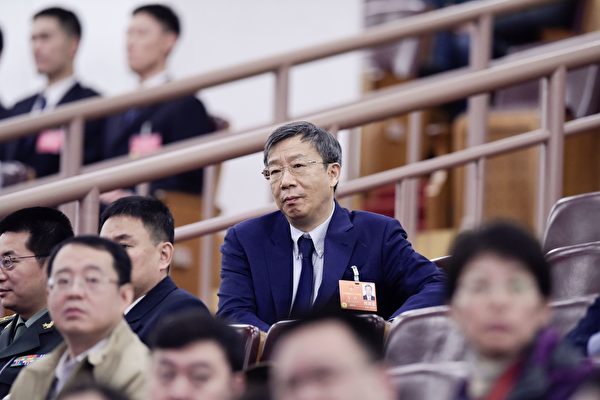
On January 9, the Jamestown Foundation, a US think tank, released a report stating that during the 14th meeting of the CPPCC in November 2025, a significant reshuffling of personnel was announced, including important figures such as Yi Gang, Deputy Director of the Economic Committee (former Governor of the People’s Bank of China), and Wang Rong, Deputy Director of the Hong Kong, Macau, and Taiwan Overseas Chinese Affairs Liaison Committee (former Chairman of the Guangdong Provincial CPPCC).
The report noted that the sudden resignations of these heavyweight figures were rare. They neither reached the mandatory retirement age nor were involved in any public corruption scandals. The description of their stepping down was “no longer serving” in specific leadership positions – distinguishing it from the usual formal “dismissal” associated with disciplinary actions.
Most of the officials replaced in this reshuffle retained their qualifications as CPPCC members, indicating that this personnel adjustment was not a traditional purge but a more subtle form of political marginalization.
During the second half of 2025, at least 20 officials “no longer served” in key positions, including Liu Duo, Deputy Mayor of Shanghai; Yan Aoshuang, Vice Chairman of the Beijing Municipal People’s Congress Standing Committee; Lin Shangli, President of Renmin University of China and former Deputy Director of the Central Policy Research Office; as well as Zhang Guangjun, former Deputy Minister of the Ministry of Science and Technology and current Party Secretary of Huazhong University of Science and Technology.
The report pointed out that these individuals all shared a common trait: they had strong overseas backgrounds, with close relatives residing abroad long-term. In other words, they were “naked officials” – officials whose spouses or children had moved abroad.
The report concluded that while the cleansing operation at the end of 2025 was carried out quietly, it would have a profound structural impact on the CCP’s political landscape. This marks the gradual end of the era characterized by the technocratic bureaucratic model that was prevalent during the reform and opening up period.
(Media Editor, former founder of Shenzhen NPO, Ai Shicheng, told Epoch Times that there were over one million naked officials in the CCP during the Hu-Wen era, an average of over 50 in each county. Over the years, the situation has escalated, especially after Xi came to power and reversed progress. Officials within the CCP system feel even more insecure and need to be more discreetly naked. This is all very normal.
Ai Shicheng stated that the current leader’s move to clear out these individuals and make them step down is based on the drastic changes in the current international and domestic situation. Especially after the US-China trade war, the separation between the US and Western countries and the CCP regime has become inevitable and irreversible.
He pointed out that after the collapse of the Soviet Union, neither the Chinese people nor Western countries expected that Xi would take over the flag of anti-American communism and engage in a struggle with the United States. His clearing out of these wavering elements and destabilizing factors did not start recently but began several years ago.
Taiwan think tank adviser Wu Sezhi told Epoch Times that many high-ranking CCP officials’ families have been residing overseas for a long time. Beijing’s current requirements may involve not only political loyalty but also complex political and business financial flows.
Wu Sezhi believed that this practice reflects the CCP’s governing logic, emphasizing how to achieve stability from struggles and engage in struggles during the stability process, forming a normality of struggle and stability in the CCP’s authoritarian rule.
He analyzed that faced with economic decline, political instability, and the pressure of overall societal and economic uncertainty, the CCP will intensify internal control or political struggles. However, vested interests within the CCP may have different thoughts, and in the end, they may become more resigned and turn the government’s policies ineffective, leading to a continuous internal strife situation.
“The internal chaos in China will become more apparent than in the past,” he said.
The report by the Jamestown Foundation summarized three distinct stages of Beijing’s control policies regarding “naked officials” over the past 15 years.
The first stage began in the late period of Hu Jintao (2010-2013), with the policy emphasizing “registration management,” focusing on collecting information to prevent capital outflows and combat corruption. The policy took a relatively tolerant attitude towards senior knowledge-based professionals and technocrats with international relations, viewing them as advantages rather than security risks.
During the second stage in Xi Jinping’s era (2014-2024), the relevant regulations significantly tightened. In 2014, the prohibition of five categories of “naked officials” from holding key positions (military, diplomatic, national security, secret, and key leadership positions) was explicitly stated, making it a “ceiling” for career advancement for officials with overseas families.
From the beginning of 2025, it entered the third stage: “comprehensive cleanup,” requiring officials at the deputy ministerial level and above either to bring their families back to China or resign.
The report mentioned that the logic of this stage had completely changed, transitioning from anti-corruption to preventing infiltration and ensuring political security. The previously valued technical bureaucrats’ expertise by the party could no longer provide exemptions.
As an example, Yi Gang may be the most representative case – long considered a typical “scholarly official,” he previously led financial reforms and was seen by international investors as a voice of reason within China’s economic decision-making circles. Despite facing numerous restrictions before, Yi Gang was able to hold high positions due to his wife’s return to China and his unique value in US-China financial diplomacy. However, under the “zero-tolerance” policy, having children residing overseas became an insurmountable obstacle for him.
The report indicated that Yi Gang’s resignation sent a chilling signal: when political security overrides everything, even internationally recognized professional values cannot withstand political scrutiny.
Wu Sezhi stated that the debate between socialism, capitalism, and professionalism was a structural problem within the CCP system that would not change over time. Especially with the CCP leader entering his third term, under the logic of prioritizing politics in decision-making, these technical bureaucrats or professionals or experts may no longer be what he currently needs.
He pointed out that in this situation, decision-making mistakes could occur. The systematic exclusion of technical bureaucrats after 2020, following the CCP’s dynamic zero-clearance line, was evidently an irrational decision. This has led to China’s economic decline, social instability, and has been affecting the country until now. In recent years, the CCP leader’s continuous purges under the guise of military reform or various so-called economic supervision actions were not normal decisions.
Ai Shicheng stated that from Deng Xiaoping to Hu Jintao, there were signs and trends of the CCP transitioning from totalitarian dictatorship to authoritarian dictatorship. However, after Xi came to power, he quickly reversed course and returned to Mao’s communist totalitarian dictatorship. Regardless, these changes would significantly lower the level of professional judgment and inevitably lead to misjudgments.
He said that over the years, those technical bureaucrats within the system, those knowledgeable elites with high education levels after the Cultural Revolution, especially those with some conscience and integrity, could not perform their duties properly. “I know many officials in the system like this, but they have gradually been marginalized and eliminated.”
Veteran political and economic commentator Wu Jialong told Epoch Times that eliminating technical officials would increase echo chamber effects, leading to a loss of professional talents and a fading of the checks and balances. People would follow the opinions of the top leader, causing a loss of judgment in various situations, ultimately holding the top leader responsible for any misjudgments.
“There will definitely be misjudgments; this is the aftermath of dictatorship.”
Since the beginning of Xi Jinping’s leadership, an increasing sense of anxiety about the potential overthrow of the CCP regime has been revealed, with a major initial action aimed at preventing the spread of Western liberal ideology.
Starting from 2014 under the guise of anti-corruption, strict management of passports, and clear regulations were implemented, stating that CCP officials at the departmental level and above generally were not allowed to make private trips abroad and explicitly requiring a tightening of “naked officials” traveling abroad. In 2018, organizations and schools at all levels in various regions began collecting teachers’ passports. Recently, according to an exclusive report by Epoch Times, ordinary citizens in Gansu, Guizhou, and other places have been required to “temporarily store” their passports.
Now, by eliminating high-ranking officials with overseas relations, the Xi administration is showing an unparalleled level of anxiety about the regime’s potential overthrow.
However, the current situation is significantly different from the past, as both the public and those within the CCP system are filled with dissatisfaction towards the party leader.
Wu Sezhi stated that in the past, under the power-sharing or power division established by Deng Xiaoping, there might have been a terrifying balance of power among the different factions. However, now that power is concentrated in one person, the overall decision-making process is becoming more closed and internally focused, which could likely generate unforeseen reactive forces.
He analyzed that from a political struggle perspective, having one person in power does not mean there are no different factions within the party; these factions are low-key due to political risks. These low-key political oligarchs will pose significant sources of a backlash in the future. Furthermore, economic decline and people under centralized control may not touch political red lines, but it does not mean they are satisfied with the CCP regime. When trust is stripped away, people become disappointed with the government’s governance, leading to societal backlash.
In other words, as the CCP’s insecurity grows, it will intensify internal control, and power will become more inward-focused. However, as society becomes more distrustful of the state, this negative cycle may endanger the collapse of the entire CCP political system.
Ai Shicheng stated that the CCP regime is getting closer to the brink of collapse, without a doubt.
He pointed out that firstly, there is economic failure, followed by social disorder, with a large number of people losing jobs, and even having issues with food. As more people are hit by stark realities, there will be more awakened individuals. Therefore, there is no need for enlightenment; more and more people will wake up.
Ai Shicheng said that the differentiation within the elite class has accelerated since the amendment of the CCP leader’s constitution. Groups like the traditional ‘Red Second Generation,’ ‘Youth League Faction,’ etc., have alienated all these people; those from the Fujian Faction, Zhejiang Faction, Shanghai Faction, and those from the Shaanxi military-industrial complex are all vested interests. However, under an authoritarian system, there is no genuine loyalty, only interests, and loyalty is unreliable when the tide turns.
Ai Shicheng stated that it remains a multipolar world led by the United States, and prosperity will only follow and develop by aligning with the US. If the CCP thinks it is qualified to challenge the US, with such ambition, will China’s fate be good? The party leader is the accelerator of the CCP’s collapse.
“In this wave, the CCP will definitely repeat the Soviet Union’s mistakes, collapse and fall. The timing cannot be determined, but the general trend has already formed,” he said. “In the face of historical trends, I judge that the Communist Party can last at most ten more years.”
Wu Jialong said that now we are facing a chaotic world, and everyone has learned to be cautious and not openly express their views, as aligning with Xi today may lead to being targeted by the anti-Xi faction in the future. Therefore, an increasing number of individuals are experiencing a sharply rising sense of insecurity.
“The main issue is that the overall situation looks very unfavorable now and may not last beyond this year, so everyone has to measure political risks.”
Wu Jialong candidly said that an opportunity for a regime change is emerging. Currently, China’s economic and social crises have erupted simultaneously, and there is simply no solution to be found. It’s like multiple organ failures, essentially beyond saving. So, everyone is just waiting to see how it all ends.