
The official data released by the Chinese Communist Party (CCP) shows that by the end of 2025, the population of China was approximately 1.40489 billion, a decrease of 3.39 million from the previous year, marking the fourth consecutive year of decline. Many people in various regions have reported a high incidence of sudden deaths among middle-aged and young adults. Insiders have pointed out that the real population crisis may be far more severe than the figures officially released.
According to data released by the CCP National Bureau of Statistics on January 19, 2025, the number of births in China was only 7.92 million, a decrease of approximately 17% from the 9.54 million in 2024, reaching the lowest level since 1949. The nationwide number of deaths in 2025 reached 11.31 million, higher than the 10.93 million in 2024, and the natural population growth rate was -2.41‰. The total population of China dropped to 1.405 billion, marking the largest annual decline since the Great Famine of 1960.
The structural problems of the population have also worsened. Official data shows that the population of people aged 60 and above in China has reached 323 million, accounting for 23% of the total population, an increase of one percentage point from the previous year. It is predicted by officials that the size of the elderly population will continue to expand over the next decade, creating long-term pressures on labor supply, social security systems, and public finances.
As a crucial leading indicator of fertility trends, marriage registration data has also seen a significant decline. Officials have acknowledged that in recent years, the number of marriages has experienced “one of the largest declines in statistics ever.”
However, on January 22, many individuals told Epoch Times that while these official figures are already “alarming,” they may still be significantly underestimated compared to the actual situation.
People in various regions have clearly felt the sharp decrease in population. Zhao Hongwei, a villager in Cangzhou, Hebei Province, mentioned that in their village with over a thousand residents, only one child was born last year, while seventeen or eighteen individuals passed away.
“If this is the situation in one village, what would it be like when you add up thousands of villages across the country?”
Chen Yahui, a villager in Guangzhou, said that many villages now have almost no residents left, with some villages having only one or two households remaining.
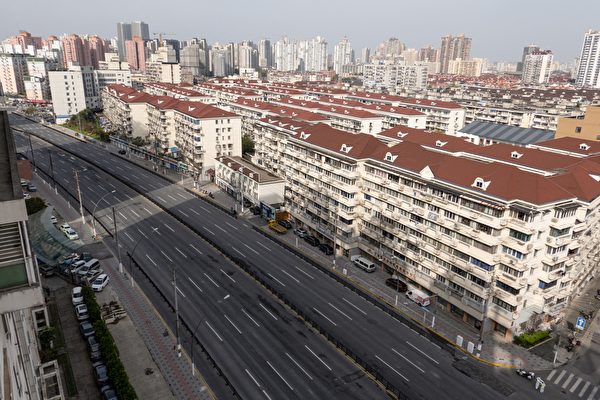
Population decline is not only limited to rural areas. Zhou Jingyi, a resident of Qingdao, observed a significant decrease in foot traffic, stating, “The number of people on the streets is only one-third of a few years ago. It’s rare to see people out at night, and many physical stores that used to stay open late have closed because there are simply no customers.”
The CCP’s claim that China’s population still stands at 1.4 billion has faced widespread skepticism. Ling Xiao, an informant from Nanjing, Jiangsu Province, revealed to Epoch Times in January 2024 that internal data from the CCP’s Ministry of Public Security showed that the registered population in the public security system nationwide was approximately 1 billion.
Ling Xiao recalled that during the COVID-19 pandemic, hospitals were overwhelmed, and mass deaths occurred, resulting in “white lungs.” When people couldn’t afford medical expenses, hospitals would turn them away.
At the same time as the sharp population decline, the birth rate has plummeted. Zhao Hongwei analyzed that there are several reasons for this in rural areas, including fewer women, high dowries costing around 160,000 to 180,000 yuan, and the additional expenses of buying a car, purchasing a house, or building one, making it nearly impossible for ordinary farmers to afford.
Regarding the various pro-natal policies implemented by the CCP, he bluntly stated, “The Communist Party claims that the one-child policy will remain unchanged for a hundred years, but now that they suddenly encourage more births, the common people are not complying. There are too many frightening aspects domestically, and those with money and skills have all fled.”
Chen Yahui from Guangzhou also confirmed that young people are generally unwilling to have children, noting that “rural areas cannot survive without energy.”
Guangzhou resident Lin Meijuan criticized the authorities for their inconsistent policies, stating, “First, they forcefully collect social security fees, depleting people’s money, then they pressure them to have a second or third child, yet the policies are never enforced, ultimately scraping off the last bit of the people’s fat and grease.”
Li Xin, a resident of Beijing, told Epoch Times that authorities had predicted a “rebound in consumption” and “a rebound in births” after the pandemic restrictions were lifted; however, the reality is completely the opposite: “There’s no consumption, no increase in births, and very few marriages are taking place.”
Meanwhile, there has been a noticeable increase in the number of deaths among middle-aged and young adults. Zhao Hongwei stated that the deceased in the village nowadays are mainly individuals in their forties and fifties, whereas two decades ago, it was primarily elderly individuals in their seventies and eighties who passed away.
He attributed these deaths to long-term environmental and food quality issues. “Water pollution, counterfeit food products are everywhere. Herbicides, genetically modified cooking oil, and substandard fake goods are rampant in rural supermarkets.”
“You may not die in an instant, but after a certain period, malignancies start to manifest,” he explained, noting that diseases such as cancer, heart attacks, strokes, and sudden deaths of unknown causes have surged, especially in the years following the pandemic.
Zhao Hongwei emphasized, “What we see here is just a microcosm; many places across the country are experiencing similar situations.”
Zhang Min, a villager from Zhijin County, Bijie City, Guizhou Province, described the situation in her local area as “frightening,” noting that six middle-aged people in their fifties died within one month in the village, with even a common cold proving fatal for some.
Zhao Jianguo from Hebei mentioned that during last year’s medical examinations in the village, many people were found to have pulmonary nodules. Ye Jincheng, a villager from Kang County, Linchang Town, Yunnan Province, recounted that after his father’s passing, many residents in the village died consecutively, creating a time of fear and terror.
Wei Guodong, a resident of Jilin City, pointed out that provinces like Heilongjiang, Jilin, and Liaoning have high mortality rates nationwide, and the divorce rate remains consistently high. “The Northeast has no future at all.”
Faced with this unprecedented population crisis, Zhao Hongwei lamented, “The Chinese people are in such a dire situation, it’s truly heartbreaking.”
(Due to the request of the interviewees, the names Zhao Hongwei, Chen Yahui, Zhou Jingyi, Lin Meijuan, Ling Xiao, Li Xin, Wei Guodong, Zhang Min, Zhao Jianguo, Ye Jincheng are pseudonyms.)