
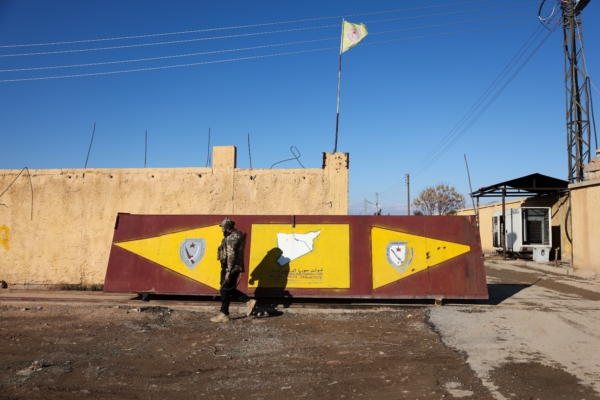
On Monday, January 19th, following the withdrawal of the Kurdish “Syrian Democratic Forces” (SDF), the Syrian government forces led by President Ahmed al-Sharaa swiftly moved in and tightened control over large areas in northern and eastern Syria. This marks one of the most significant changes in the Syrian control map since the fall of the Assad regime in 2024.
On Sunday, the Syrian government announced a ceasefire agreement with the SDF, with the SDF agreeing to withdraw from the eastern and northern provinces. However, during the process of transferring prisons holding Islamic State (IS) prisoners, both sides accused each other of attempting to undermine the agreement, leading to a large number of IS prisoners escaping. Furthermore, disagreements in the integration of forces between the two sides have added uncertainty to the fragile situation.
According to a statement from the Syrian Ministry of Interior on Tuesday, around 120 IS prisoners escaped from Shaddadi prison. Authorities said that Syrian special forces entered Shaddadi and re-arrested 81 of them, continuing to search for the remaining fugitives in the town and surrounding areas.
However, Kurdish media outlet Rudaw quoted SDF spokesperson Farhad Shami as claiming that the number of escapees reached as high as 1,500, a stark contrast to the official figures released.
The government forces accused the SDF of deliberately releasing prisoners, while the SDF countered that it was the attack by government forces that led to the loss of control, stating that dozens of SDF fighters had lost their lives in the conflict.
The SDF claimed that Shaddadi prison housed “thousands of” armed militants and described the conflict as a “highly dangerous development,” warning that it could threaten stability and breed terrorism anew.
While territorial handovers were taking place, political negotiations between the two sides also faced resistance. President al-Sharaa met with SDF commander Mazloum Abdi on Monday, but reports indicated that the meeting atmosphere was not constructive.
The core of the conflict lies in the 14-point agreement signed by both parties, requiring SDF fighters to be incorporated into the Syrian forces as “individuals” rather than as a “unit.”
Senior Kurdish politician Fawza Yousef expressed that Damascus hopes the Kurds will “surrender everything.” Sources revealed that Abdi was dissatisfied with this provision and has requested more time for discussion with commanders.
Reuters reporters witnessed government forces moving into Raqqa and Deir al-Zor provinces, which had been under SDF control for years, taking over some oil and gas facilities.
According to the latest agreement, the SDF is to hand over prisons holding IS militants, as well as all border crossings and oil and gas fields, to government control.
While Turkey has welcomed this integration agreement, frontline tensions remain high.
The SDF publicly criticized the lack of intervention by the U.S. military despite the close proximity of Shaddadi prison to the international coalition base, just 2 kilometers away. The U.S. Central Command did not immediately respond to Reuters’ request for comment.
As news of IS prisoners escaping spread, neighboring Iraq’s Anbar province has heightened security readiness to prevent the infiltration of terrorists across the border.
According to the Syrian state news agency, SANA, on Monday, Syrian military imposed a “comprehensive curfew” in Shaddadi and announced plans to conduct searches in the city to apprehend IS terrorists who escaped during the conflict.
Iraqi media sources also reported that Anbar province in Iraq has increased security alert levels to prevent terrorists from crossing the border.