
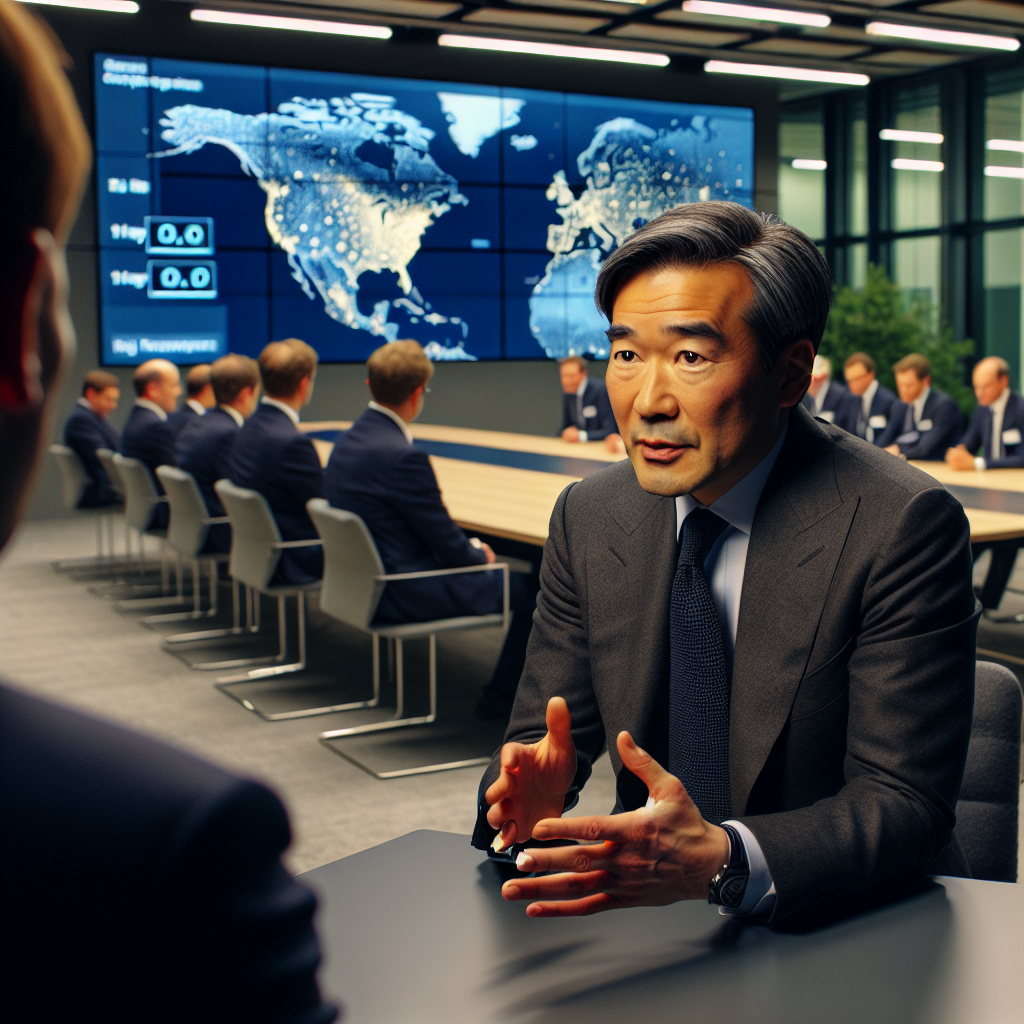
Germany’s largest pharmaceutical and healthcare service company and private hospital operator, Fresenius SE, CEO Michael Sen, warned about the heavy dependence of the European pharmaceutical industry on China.
During an interview with Bloomberg at Davos on Monday, January 19, Sen pointed out that Europe has been outsourcing drug production for years, leading to an “unhealthy” reliance on China for active pharmaceutical ingredients (APIs).
He cautioned that with escalating global trade tensions, Europe must swiftly strengthen the supply of key drug ingredients to prevent these components from being weaponized by Beijing.
Sen highlighted the risk of “weaponizing active pharmaceutical ingredients in this new world order” due to the excessive reliance on China.
“If there is a shortage of key drugs, it will lead to extreme difficulties,” Sen said. “Medication could be utilized as a tool for power play.”
Sen previously likened Europe’s reliance on Chinese drug ingredients to China’s monopoly in the rare earth sector.
A 2024 study by European scholars on “International Drug Trade and National Security Issues” found that up to 80% of the chemical substances required for EU drug production come from outside the EU, mainly from China and India. This geographical concentration has caused structural vulnerabilities, sparking concerns about national security and medical autonomy.
Renowned American economist Milton Ezrati wrote in an article for National Interest in December 2025 that China’s pharmaceutical supply chain is intricate, and if Beijing were to implement an export ban using the “Biosecurity Law,” the consequences would be severe.
Although Beijing has not openly threatened to use this leverage to date, during the COVID pandemic, the Chinese authorities briefly interrupted 80% of the global supply of contrast media, leading to hospitals facing a ten-month shortage of diagnostic imaging supplies, leaving the West with a bitter experience.
Sen reiterated on Monday, “Last year I said we were in a transitional period. This time I say we are at the beginning of a new order, an order that highly emphasizes trade, agreement-orientedness, and prioritizes national interests.”
At the time of Sen’s remarks, Europe is increasingly concerned about how geopolitical tensions may impact global trade. The invasion of Ukraine by Russia and recent threats by US President Trump regarding Greenland have heightened this concern.
President Trump pledged to acquire Greenland and stated that the island is closely related to US national security.