
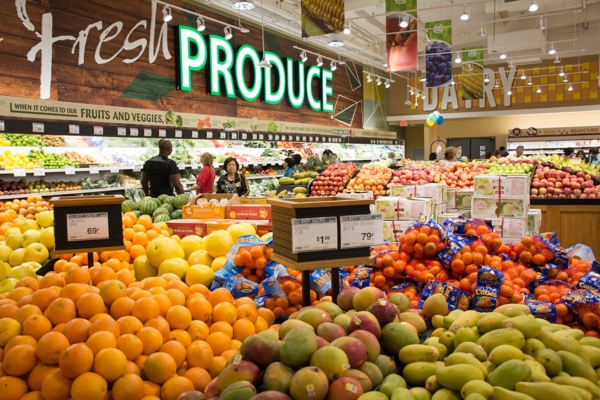
Since the surge in prices in the United States during the pandemic, inflation has significantly slowed down, but the high cost of food continues to be a headache for consumers.
The increase in food prices was higher than the overall inflation rate for most of last year, with a 3.1% year-on-year growth rate in December. According to the latest Consumer Price Index (CPI) data, food prices still saw a significant increase of 2.7% compared to all items. On a monthly basis, food prices rose by 0.7% last month, marking the largest increase since September 2022.
CBS News reported that while the CPI tracks the speed at which prices rise over time, consumers’ perception of food prices is more likely influenced by the prices on store shelves. David Ortega, a professor at Michigan State University and food economist, pointed out that since people spend more frequently on food, every trip to the supermarket serves as a reminder that food prices are higher than they used to be.
Ortega stated, “We encounter food prices much more frequently than other prices.”
According to the latest CPI data, Ortega noted that rising food prices have been driven by certain categories such as beef and coffee, with prices of these items reaching historic highs. CBS News’ price tracking data shows that overall food prices have risen by nearly 19% since January 2022.
Based on data from the Federal Reserve Bank of St. Louis, here are some everyday essentials that have seen price increases:
• Ground coffee was priced at $9.05 per pound in December 2025 (up from $6.78 in December 2024).
• Boneless ribeye steak cost $14.03 per pound in December 2025 (up from $11.67 in December 2024).
• Romaine lettuce was priced at $3.47 per pound in December 2025 (up from $3.03 in December 2024).
• A 12 oz. can of concentrated orange juice was priced at $4.82 in December 2025 (up from $4.29 in December 2024).
• Bananas were priced at 66 cents per pound in December 2025 (up from 62 cents in December 2024).
While overall inflation rates have eased from their peak in 2022, many households are still struggling with high living costs.
Several factors contribute to the rise in food prices, including limited beef supplies, tariffs, and adverse weather affecting coffee-producing regions.
One positive development for consumers is the decline in egg prices. In recent years, the price of a dozen eggs skyrocketed due to ongoing avian influenza outbreaks but subsequently dropped, with a nearly 21% year-on-year decrease in December. According to CBS News’ price tracking data, in December 2025, a dozen eggs were priced at $2.71, a significant drop from the peak of $6.23 in March of the previous year.
Not only is purchasing food tightening Americans’ wallets, but the cost of dining out is also on the rise. The “food away from home” index measured by the US Department of Labor showed a 4.1% year-on-year increase in December, compared to an overall inflation rate of 2.7%.
Joe Hannon, Inventory and Purchasing General Manager at Restaurant365, a restaurant management cloud platform, attributed price hikes to rising labor and utility costs.
In an email to CBS News, he stated, “Restaurant operators are increasing menu prices not due to a sudden surge in one cost but because multiple costs remaining high are squeezing already slim profits. This is why even as some major inflation indicators begin to cool down, menu prices continue to rise above the overall inflation rate.”
Ortega agreed with this assessment and added that the increase in dine-out demand since the pandemic has also put upward pressure on menu prices.
He explained, “When costs rise and consumer demand remains strong, price increases become inevitable.”