
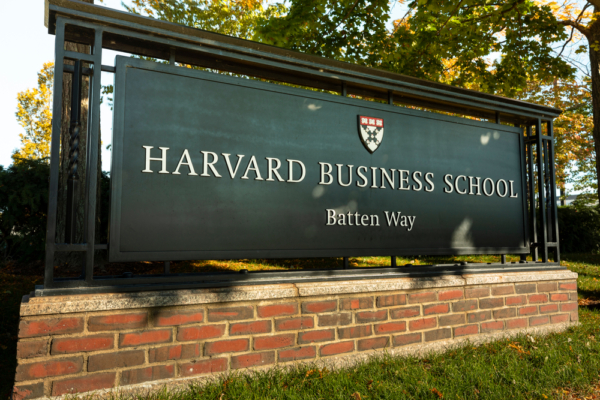
Many graduates of top business schools in the United States are finding it increasingly challenging to secure employment, even with excellent academic credentials.
According to a report by The Wall Street Journal, the job market for MBAs in the United States has been sluggish for over a year. In the past, MBA graduates could easily land high-paying executive positions, with some earning annual salaries reaching hundreds of thousands of dollars. However, even graduates from prestigious business schools such as Harvard University and Columbia University are struggling to find employment three months after graduation.
While overall university employment showed improvement in 2025, the job prospects for most business schools still lag behind pre-COVID levels.
For example, three months after graduating in the summer of 2025, 21% of Fuqua School of Business at Duke University graduates were still seeking employment. Similarly, approximately 15% of graduates from the Ross School of Business at the University of Michigan were still job hunting at that time, mirroring the situation in 2024.
Some graduates have expressed frustration with the job market. Many top business school students typically aim for positions at consulting firms like McKinsey, Boston Consulting Group, Bain Capital, and financial institutions. However, these organizations have slowed down their recruitment efforts post-pandemic.
The United States added about 49,000 new jobs per month in 2025, with a significant concentration in the healthcare sector – an industry not commonly chosen by business school graduates.
On the other hand, a wave of experienced job seekers entering the job market due to layoffs has intensified competition for recent graduates.
Alexis Rooney, a 2025 Harvard Business School graduate, shared her struggle in finding roles in product marketing and marketing strategy. Despite securing some job interviews, she has yet to receive any job offers and finds it challenging to compete with recently laid-off candidates.
Employers and campus career centers have noted a decrease in campus recruitment activities over the past year, with companies delaying hiring decisions.
The changing global trade landscape and the impact of artificial intelligence development have also posed challenges for many companies, leading to significant job cuts in lower-tier positions.
Christine Murray, director of career development at Georgetown University’s McDonough School of Business, highlighted two major factors contributing to challenging job prospects. Over half of the school’s 2025 MBA graduates were international students facing visa uncertainties. Additionally, federal budget cuts have limited hiring in Washington, D.C., where there is an oversupply of talent in the job market.
One-quarter of the MBA graduates from the school were still seeking employment three months after graduation, higher than the approximately 16% from the previous year and 8% in 2019.
Some business schools have improved their employment prospects in 2025 by enhancing networking opportunities and providing students with artificial intelligence training.
Harvard Business School, for instance, offers AI tools to help MBA students match job opportunities from various job sites and connect with alumni working in those companies.
Tsedal Neeley, director of the MBA program at the school, credited AI training and guidance from alumni and faculty in helping students secure jobs.
Compared to the previous year, the proportion of Harvard Business School graduates still seeking employment three months after graduation decreased (16% compared to 23%), but remains higher than pre-pandemic levels.
As of the end of November 2025, except for 10%, all graduates had accepted job offers, with half already receiving official notifications.
Daniel Alves do Quental, a Harvard Business School graduate, expanded his network extensively while job hunting and sought guidance from professors to connect with former students or colleagues at his target companies. He eventually joined a Boston consulting firm in New York.
The 29-year-old Portuguese graduate noted, “Top schools will open doors for you, but they won’t walk you in.”
Heather Byrne, director of career development at the Ross School of Business at the University of Michigan, advised students to adjust their expectations and explore roles at smaller companies or mid-size enterprises.
“Those who are patient, continue to expand their network, and maintain flexibility and adaptability in their expectations will ultimately succeed,” she said.