
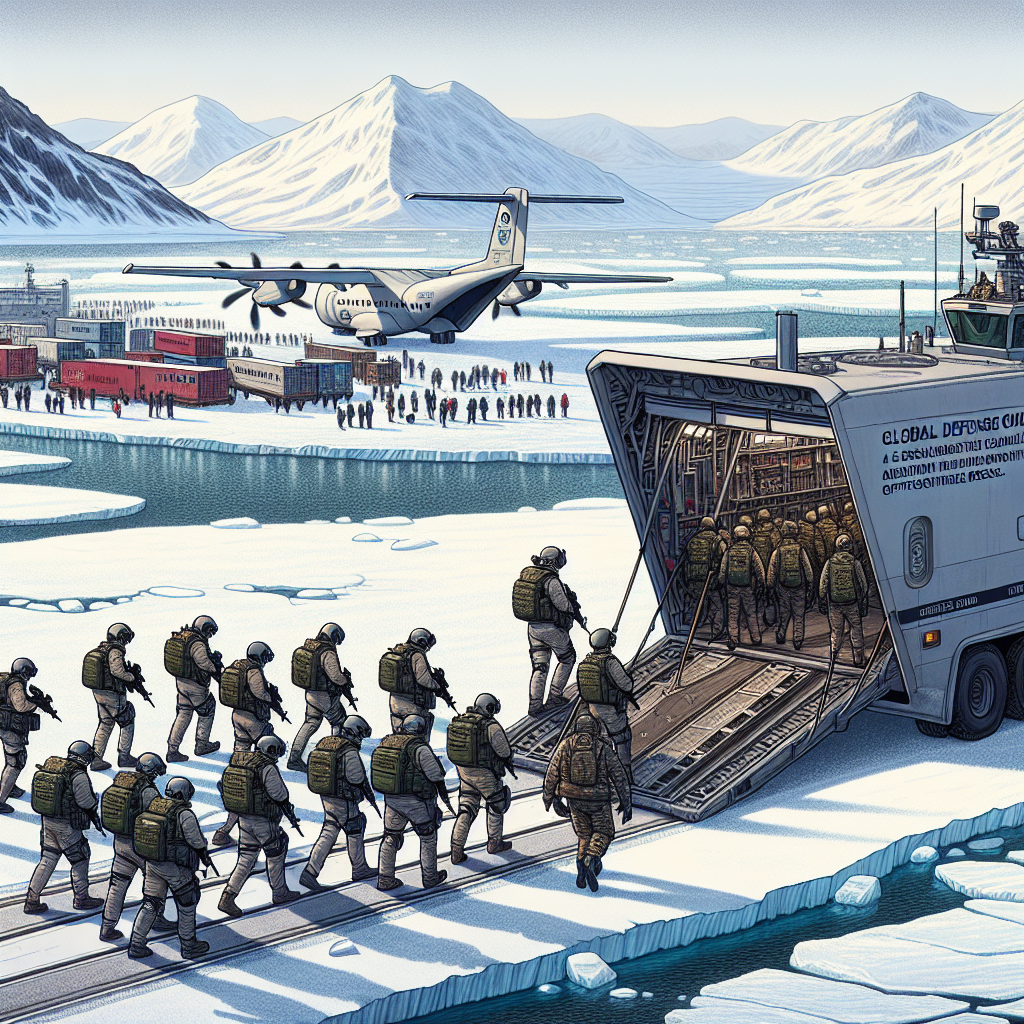
In recent news, amidst the escalating tensions over Greenland, a small reconnaissance team from the German Federal Defense Forces departed Greenland on Sunday following President Trump’s decision to impose tariffs on certain European countries. This rapid departure of the reconnaissance team from Greenland has attracted attention and raised speculations about the underlying reasons for their abrupt exit.
Reported by the German newspaper “Bild” on January 18th, the team, comprised of 15 soldiers led by German Navy Rear Admiral Stefan Pauly, boarded an Icelandair Boeing 737 plane at the Nuuk Airport in Greenland, destined for Keflavik Airport in Iceland. The team had arrived in Greenland two days prior with plans for reconnaissance missions at the Danish military base in Kangerlussuaq and discussions on future military cooperation in the Arctic region with Danish officials. However, due to adverse weather conditions, their flight operations were canceled leading to the decision to withdraw the entire unit.
The German Defense Ministry refrained from commenting on any potential political factors regarding the evacuation, stating that this action was part of pre-established military exchange arrangements. The German authorities emphasized that the team had been invited by Denmark to Greenland within the framework of NATO cooperation. Notably, discussions between Denmark, Greenland, and the United States on Greenland affairs in Washington did not yield substantial progress.
On the eve of the German military’s withdrawal, President Trump announced via his social media platform “Truth Social” that starting from February 1st, the United States would impose a 10% tariff on goods imported from Denmark, Norway, Sweden, France, Germany, the UK, the Netherlands, and Finland. Trump justified this decision by claiming that actions taken by these countries regarding Greenland have impacted U.S. national security interests, highlighting the island’s strategic significance in its missile defense systems.
The White House expressed willingness to engage in negotiations with the concerned countries on this matter. Germany, heavily reliant on exports, especially to the United States, with an annual export value of around 157 billion euros in sectors such as automotive, machinery, chemicals, and pharmaceuticals, would likely be impacted by the new tariffs.
Retail and digital economy expert Gerrit Heinemann predicted that if the additional tariffs were implemented, German exports to the U.S. could decline by 5% to 10%, resulting in annual losses between 8 to 15 billion euros. This added pressure comes on top of the existing 15% base tariffs and substantial special tariffs on steel and aluminum products. Data shows that German automobile exports to the U.S. witnessed a nearly 14% year-on-year decrease in 2025.
In response to the U.S. tariff measures, Ursula von der Leyen, President of the European Commission, warned about the possible severe impact on transatlantic relations and instructed EU institutions to assess potential retaliatory options. With the uncertainty surrounding the Greenland issue, Manfred Weber, Chairman of the largest party group in the European Parliament, expressed difficulty in advancing the approval process for the EU-U.S. trade agreement. Meanwhile, Bernd Lange, Chairman of the European Parliament’s Trade Committee, urged that relevant agreements should be put on hold until the situation becomes clearer.