
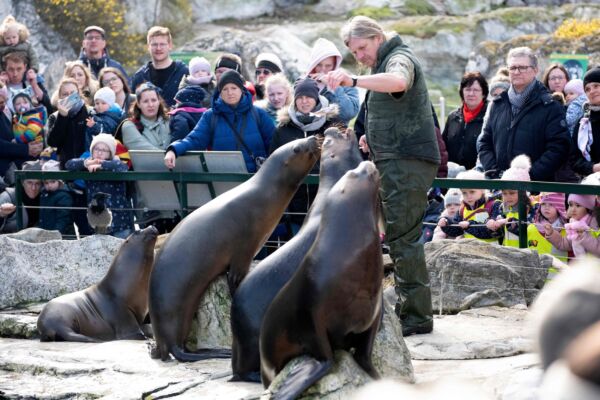
The Schoenbrunn Zoo, also known as the Vienna Zoo, is located within the Schoenbrunn Palace in Vienna, Austria. Established in 1752 by the Habsburg Monarchy, it originally served as a royal menagerie and is the oldest zoo in the world. It has been awarded as the best zoo in Europe six times consecutively.
As a Baroque-style zoo, the Schoenbrunn Zoo not only has a fascinating history but is also one of the most modern zoos in the world today. The seamless integration of imperial charm, architectural heritage preservation, and modernized animal care gives it a unique allure. Spanning approximately 17 hectares of land, the zoo is home to over 700 species of animals, some of which are endangered, including Siberian tigers and playful meerkats.
In 1906, the zoo successfully bred an Asian elephant calf named “Mädi,” marking the first artificial breeding of elephants in a European zoo. Its successful breeding programs of the world’s first mud turtle and stream frog further garnered international acclaim.
Other highlights include the Rainforest House, constructed with a domed glass structure, simulating the Amazon Basin’s ecological environment with a constant temperature of 26°C and 80% humidity added in 2003. The Arctic House, opened in early 2004, features a 12-meter artificial ice field and an underwater observation tunnel displaying sea lions diving. In 2010, the largest pangolin conservation center in Europe was completed, equipped with an adjustable light system simulating karst cave conditions.
From close encounters with giraffes to witnessing the spectacle of polar bears diving into water, every corner of the zoo offers joy and surprises. Statistics show that since 2006, over 2 million visitors from around the world have visited this historic zoo annually.
The Schoenbrunn Palace is located in the southwest of Vienna, Austria, and is a masterpiece of Baroque architecture. It served as the palace of the Holy Roman Empire, the Austrian Empire, the Austro-Hungarian Empire, and the Habsburg Dynasty. Today, it stands as one of Vienna’s most renowned tourist attractions. In 1996, the entire palace and its surrounding approximately 2 square kilometers of park were designated as a UNESCO World Heritage Site.