
On Wednesday (7th), the Yemeni anti-Houthi alliance, the “Presidential Leadership Committee,” announced the dismissal of separatist Southern Transitional Council (STC) leader Aidarus al-Zubaidi and filed treason charges against him.
According to Reuters, the conflict between the Saudi-backed, internationally recognized Yemeni government and the previously Emirati-backed Southern Transitional Council has escalated once again.
On Wednesday, Zubaidi refused to attend a meeting scheduled to be held in Riyadh, aimed at resolving the crisis that caused a rift between the Gulf allies Saudi Arabia and the UAE.
Zubaidi’s absence has hindered efforts to quickly stabilize the volatile situation in southern Yemen. This turmoil has exposed deep divisions among the Gulf powers and led to a split within the anti-Houthi alliance. This alliance has been a core force against the Iran-backed Houthi rebels in the long-running Yemeni civil war.
Turki al-Maliki, a spokesperson for the Saudi-backed anti-Houthi alliance, confirmed in a statement that the whereabouts of Southern Transitional Council chairman Zubaidi are unknown.
Maliki stated that a flight carrying several senior members of the separatist organization took off after a delay of over three hours, but Zubaidi was not on the plane, and his whereabouts are still unknown.
Maliki cited signs such as Zubaidi’s call for mobilization, factional moves, and the equipping of light and medium weapons during the delay of the flight, indicating that Zubaidi has mobilized significant forces.
Days after the Yemeni government requested Saudi Arabia to host a forum on southern issues, Zubaidi was supposed to attend negotiations in Riyadh to resolve the conflict between the Southern Transitional Council and the Yemeni government that erupted last month.
Zubaidi’s absence has added uncertainty to the progress of these talks.
According to the Yemeni government’s official news agency SABA, the anti-Houthi alliance’s “Presidential Leadership Committee” has revoked Zubaidi’s membership and handed him over to the prosecution on charges including “treason.”
The committee’s chairman Rashad al-Alimi accused Zubaidi in a signed resolution of inciting armed rebellion, attacking constitutional authorities, and committing atrocities against civilians in southern Yemen.
Saudi Arabia and the UAE intervened in Yemen more than a decade ago when Iran-backed Houthi rebels captured the Yemeni capital Sanaa in 2014.
With Saudi support, the Yemeni “Presidential Leadership Committee” was established in April 2022 to replace ousted Yemeni President Abd Rabbuh Mansur al-Hadi, leading the fight against the Houthi militants and seeking national unity and stability with the support of the international community and regional countries.
The UAE joined the effort the following year. The Southern Transitional Council, established in 2017 with UAE support, then became part of this committee, backing the internationally recognized Yemeni government. This government controls southern and eastern Yemen and has the support of Gulf countries.
However, in late December last year, the Southern Transitional Council forces suddenly seized large swathes of Yemeni territory, breaking the fragile power balance and making the divisions between Saudi Arabia and the UAE public.
Recently, Saudi Arabia bombed several positions of the Southern Transitional Council. Under Saudi pressure, the UAE has withdrawn its troops stationed in Yemen, as Saudi Arabia views the advancement of this separatist faction towards its border as a national security threat.
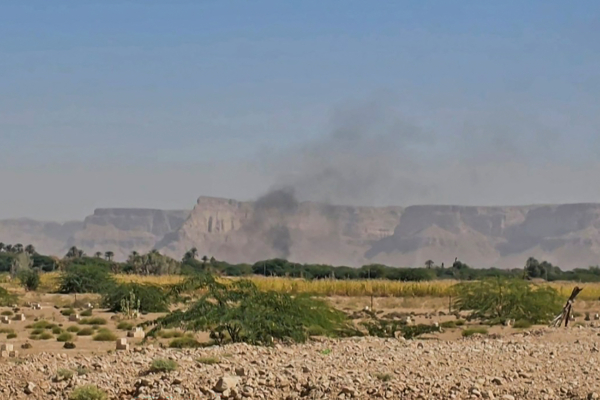
On Wednesday, the Saudi-led anti-Houthi alliance announced limited preemptive airstrikes on Zubaidi’s birthplace in Dali province after monitoring armed forces leaving their camps.
According to Reuters, the province has experienced more than 15 airstrikes, citing local sources and internal sources within the southern separatist camps.
Yemen is located at the southern end of the Arabian Peninsula, bordering East Africa, and adjacent to the Red Sea and the Gulf of Aden. The civil war in the country has resulted in over 150,000 deaths, including combatants and civilians, and has triggered one of the world’s most severe humanitarian crises.