
On January 1, 2026, Bulgaria abandoned its currency, the Lev, which had been in use since the late 19th century, and officially adopted the Euro, becoming the 21st member country of the Eurozone. This move comes nearly 19 years after its accession to the European Union in 2007.
European Central Bank President Christine Lagarde warmly welcomed Bulgaria into the Eurozone family, describing the Euro as a strong symbol of shared values and collective strength. The Euro was first introduced in 12 countries on January 1, 2002. With Bulgaria joining the Eurozone, the number of people using the Euro in Europe will exceed 350 million.
However, there has been a divided reaction among the country’s citizens towards this historic transition. Some view it as the final step towards integration into the EU, while many are concerned that the introduction of the Euro may lead to price increases and economic stagnation.
Over the years, Bulgaria has been striving to join the Eurozone but faced delays due to not meeting certain key criteria, particularly in terms of inflation rates.
In April 2025, the country’s inflation rate dropped to 2.7%, slightly below the reference value of 2.8%, allowing Bulgaria to successfully pass and become the 21st member country of the Eurozone.
Bulgaria, the poorest country in the EU, managed to surpass wealthier candidate countries like Poland, the Czech Republic, and Hungary to smoothly advance into the Eurozone.
Some economists and professionals praise the Eurozone accession as a step towards deeper integration with the EU, symbolizing Bulgaria’s closer financial and institutional integration. However, others warn that ordinary Bulgarians may face economic challenges.
Economist Stefan Lukov believes that joining the Eurozone is a necessary final step for Bulgaria after joining the EU. He stated, “Firstly, this will further integrate our economy, and eventually, at least our central bank will become a full member of the European Central Bank family and have the right to participate in decision-making.”
European Commission President Ursula von der Leyen stated that Bulgaria joining the Eurozone is an “important milestone” for the Bulgarian people, making travel and living abroad more convenient, enhancing market transparency and competitiveness, and promoting trade.
Bulgarian National Bank Governor Dimitar Radev emphasized that the Euro symbolizes more than just a currency, it represents a sense of belonging.
For most urban, young, and entrepreneurial Bulgarians, joining the Eurozone is seen as a positive step towards becoming part of the European mainstream. Since 2004, Bulgaria has gradually joined NATO, the EU, and the Schengen Area.
The Lev, meaning “lion” in Bulgarian, has been the country’s currency since 1881. However, since 1997, it has been pegged to other European currencies, initially the German Mark and later the Euro. With the switch to the Euro, the exchange rate uncertainty for Bulgarian businesses and investors has further decreased.
Additionally, Eurozone membership is generally seen as a symbol of stability, which can attract more investments.
However, there are potential negative impacts, including inflation concerns as people fear price hikes, especially against a backdrop of existing high inflation. There are also worries about reduced autonomy in monetary policy, as Bulgaria will completely rely on the European Central Bank for setting monetary policy and adjusting interest rates according to its own economic conditions.
Bulgarians have two contrasting expectations based on other countries’ experiences joining the Eurozone: the successful “Baltic model” seen in Estonia, Latvia, and Lithuania, which combined Euro adoption with reforms to simplify management, encourage investments, and combat corruption; and the failed “Italian model,” where Italy experienced years of economic stagnation after Eurozone entry.
A beauty salon owner in the capital city Sofia expressed opposition to adopting the Euro, fearing it will make them poorer. While a small business owner in a central town voiced discontent with the forced adoption of the Euro, predicting that 70% of the population would oppose it in a referendum.
For more conservative Bulgarians, the replacement of their sovereign symbol currency, the Lev, with the Euro has triggered fears and dissatisfaction over economic instability risks.
In the years leading up to joining the Eurozone, Bulgaria has experienced political turmoil. This was mainly fueled by large-scale anti-corruption protests in 2020, which led to the long-ruling former Prime Minister Boyko Borisov’s GERB party losing its dominance, entering into a period of ongoing political crisis.
Between 2021 and 2024, Bulgaria held seven parliamentary elections. The eighth election might take place early in 2026. In December 2025, a trust vote resulted in Prime Minister Rosen Zhelyazkov’s coalition government losing confidence.
The continuous government changes, protests, and discontent over corruption have heightened the worries of the population regarding the currency transition.
Nevertheless, successive governments in this country of 6.4 million people have all advocated for joining the Eurozone, hoping it will boost the economy of the EU’s poorest member, strengthen ties with the West, and resist Russian influence.
In the long run, the critical issues will be whether the government can stabilize the political situation, effectively control prices, and attract more investments and reform momentum through its Eurozone status.
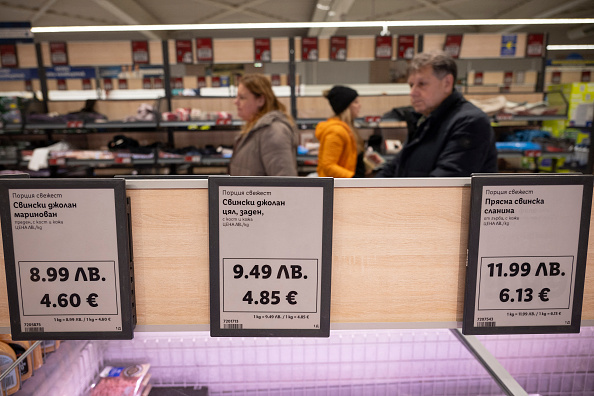
To help the population adapt to the currency change, starting from August 2025, the Bulgarian government required businesses to price products in both Lev and Euro, with a fixed exchange rate of approximately two Levs to one Euro.
Throughout January 2026, the Lev and Euro will coexist. From February 1, 2026, the Euro will become the sole legal tender. Dual pricing will continue until August 8, 2026, to prevent price gouging by businesses.
To make Bulgarians feel welcomed and alleviate concerns about losing sovereignty, the new Euro banknotes feature familiar Bulgarian imagery.
The €1 coin depicts St. Ivan of Rila, the country’s patron saint and hermit. Saint Paisius of Hilendar, an 18th-century Eastern Orthodox monastery monk and advocate of national revival, appears on the €2 coins. The €0.50 coin features the Madara Rider, a rock relief of a knight conquering a lion, created in the early 8th century at the founding of the Bulgarian Empire, serving as a national symbol.