
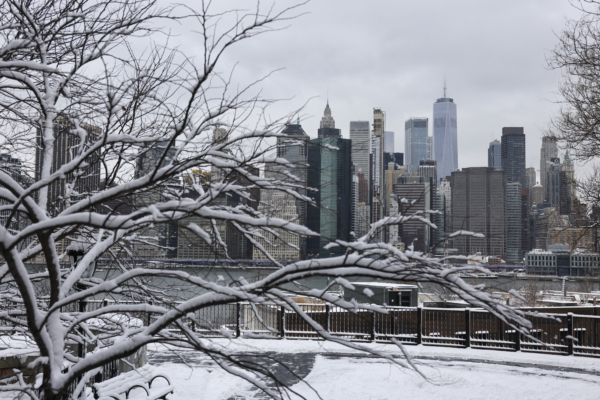
On Saturday (December 27), multiple areas in the Northeastern United States were hit by a winter storm, leading to emergency declarations in New York and New Jersey. The storm gradually weakened from early morning to midday, but the chaos it brought to air and land transportation persisted throughout the day, causing significant disruptions for post-holiday travel peak.
According to the flight tracking platform FlightAware, as of Saturday evening, there have been over 9,000 flights delayed and more than 1,500 flights canceled nationwide. Including the 1,700 flights preemptively canceled the day before (December 26), the total number of affected flights has exceeded 3,000 within the two-day period.
The most severely affected flight operations were concentrated in the East Coast region, with the New York metropolitan area bearing the brunt. The National Weather Service (NWS) stated that major airports in New York City collectively received over 4 inches of snow within a 24-hour period.
As a result, John F. Kennedy International Airport (JFK), LaGuardia Airport, and Newark Liberty International Airport in New Jersey faced operational difficulties, with the flight delays caused by the three major airports accounting for more than half of the total nationwide.
In addition to flight operations being hindered at JFK Airport, the airport’s AirTrain service also experienced disruptions. The airport authorities issued a notice announcing free shuttle buses between Jamaica Station and Federal Circle, advising passengers to allocate extra travel time.
Apart from New York, Boston Logan International Airport was similarly impacted, with the National Weather Service reporting snow accumulation of up to 1 foot, creating sustained pressure on aviation operations.
In terms of airlines, JetBlue and Delta Air Lines had the highest number of overall flight cancellations, while Southwest Airlines faced notably significant delays, with over 950 flights delayed in a single day.
The severe weather coincided with the peak holiday travel season. The Transportation Security Administration (TSA) projected that from December 19 to January 4, approximately 44.3 million people would pass through airport security checkpoints, reaching a historic high, with December 28 expected to be the busiest day.
Meteorological authorities forecasted that the heaviest snowfall had ceased, but scattered snow showers would continue into the afternoon of the 27th, with cold temperatures below the seasonal average expected to persist throughout the weekend.
Meanwhile, a new cold air system known as the “Blue Norther” was descending from Canada, expected to bring another round of snow to the Northern Rockies and High Plains region over Saturday and Sunday. However, the National Weather Service noted that due to the system’s fast movement, the total snow accumulation would be relatively limited.