
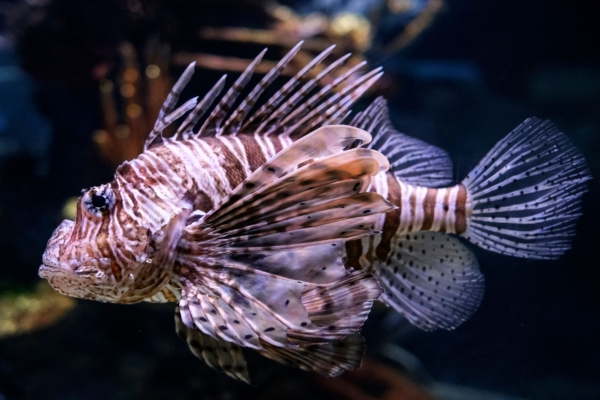
Fotis Gaitanos delicately avoided the venomous spines on the lionfish’s body, which was covered in old calluses, and freed the brightly colored, uniquely shaped invasive species from the fishing net, tossing it into a rubber box filled with ice cubes.
Gaitanos has been fishing in Larnaca, Cyprus for 40 years. In an interview with the Associated Press, he lamented that a few years ago, his nets were filled with sea bream, red porgy, or sea bass, but now, most of what he catches daily are these “uninvited guests” from the Red Sea.
With the abnormal rise in sea temperature, the eastern Mediterranean is experiencing an unprecedented ecological shift. The summer of 2025 has shown exceptionally strong temperatures, only slightly lower than the record-breaking 2024. The sustained high temperatures, coupled with the widened Suez Canal, have opened the door for lionfish and toadfish, originally inhabiting the warm waters of the Red Sea.
Gaitanos said, “Since the appearance of these two alien species, our income has worsened year by year. This has become a major issue affecting the future of the fishing industry.” Particularly with toadfish, their powerful scissor-like jaws often tear valuable fishing nets and, being inedible due to containing deadly toxins, they can only be sent to the incinerator.
Facing a threat to their livelihood, Cypriot fishermen and the government have begun to explore a new way of survival – turning invasive species into business opportunities. Unlike the toxic toadfish, lionfish, once carefully de-spined, are an excellent delicacy.
European Fisheries Commissioner Costas Kadis told the Associated Press, “By incorporating lionfish and other invasive species into our diet, we can turn challenges into opportunities while helping to mitigate environmental threats.” Currently, authorities are promoting this “sustainable ingredient” through social media campaigns like #TasteTheOcean, collaborating with renowned chefs.
Stephanos Mentonis, the owner of a fish tavern in Larnaca, confirmed to the Associated Press that he has added lionfish to his distinctive “Meze” menu.
“After customers try it, they will discover that its deliciousness is no less than any traditional famous fish,” described the 54-year-old Mentonis, stating that lionfish meat is fluffy and tender. What’s most appealing is that due to its ample supply, lionfish is priced at less than half the cost of sea bass in the market.
For cost-conscious diners looking for high value, this dish that can both “save the ocean” and “save money” is quickly becoming a new favorite on Mediterranean dining tables.
As for the completely inedible toadfish carrying deadly toxins, the EU directly turns it into cash income for fishermen. According to the latest subsidy program implemented last year, the government pays fishermen around €4.73 (approximately $5.5) per kilogram of captured toadfish, as a reward for helping control their population. These captured poisonous fish are then sent to specialized incinerators for disposal.