
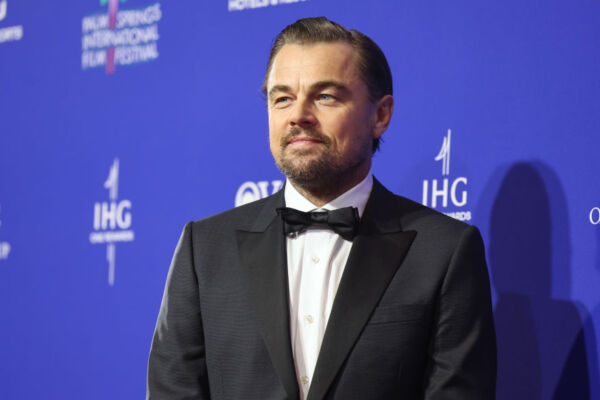
Leonardo DiCaprio, the actor who was nominated for a Golden Globe Award for his recent film “One Battle After Another,” recently shared his views on AI during an interview with American media. He acknowledged that AI can be a “tool for enhancement,” but bluntly stated that AI lacks humanity and can “never become art.”
In a recent interview with TIME magazine, where he was named “Entertainer of the Year,” Leonardo DiCaprio addressed the threat that AI image generation technology poses to actors and reassured his anxious peers. He believes that the key reason why AI cannot replace human creativity lies in its “lack of humanity.”
He emphasized, “Any work considered ‘art,’ rooted in original thinking, must have its origins from humans.” In his view, AI cannot match humans in its profound sense of human care and concern.
Using the example of the recent viral trend of “AI cover videos” where different singers’ voices are swapped for a song, DiCaprio pointed out that while these videos may initially impress, entertain, and excite, their popularity often fades quickly and they end up disappearing into the vast sea of online content.
He made a sharp critique, stating, “No matter how outstanding the technology may be, without humanity, without a profound effect deeply rooted in the soul, no matter how brilliant its technology is, it is of no real consequence.”
Despite DiCaprio’s skepticism towards the artistic value of AI, he does acknowledge the real pain that technological advancements bring. He mentioned the widespread use of AI potentially leading to a crisis in the film industry, causing many talented and experienced film professionals to face unemployment—a significant industry challenge that cannot be ignored.
DiCaprio does not completely dismiss the role of AI as a tool. He believes that if utilized properly, AI could become a powerful tool for driving young filmmakers, offering them “never-before-imagined visuals” and providing new assistance and possibilities for future film and television creation.
As artificial intelligence continues to impact Hollywood, many industry professionals have criticized this technology. Earlier this year, the Screen Actors Guild-American Federation of Television and Radio Artists (SAG-AFTRA) and several actors criticized a newly established artificial intelligence talent studio for looking for an agent for the computer-generated actress, Tilly Norwood.
Recently, Oscar-winning director Guillermo del Toro, at the Gotham Awards ceremony, announced that his upcoming film “Frankenstein,” starring Oscar Isaac and Jacob Elordi, is “for humans, by humans,” proudly asserting human involvement in the production process. He concluded his speech with a firm statement, saying “screw AI.”
James Cameron, the Hollywood director who collaborated with Leonardo DiCaprio on “Titanic,” expressed a similar sentiment during the premiere of “Avatar: Fire and Ash” in China on December 9. He stated that while AI can be used for certain tasks, it can never fully replace human creativity, emphasizing that even if AI could produce a film similar to “Avatar,” it would not have been able to do so before “Avatar” was released.