
City Life Was Too Pricey, So New Zealand Family Put House on a Truck and Moved to Homestead in the Hills
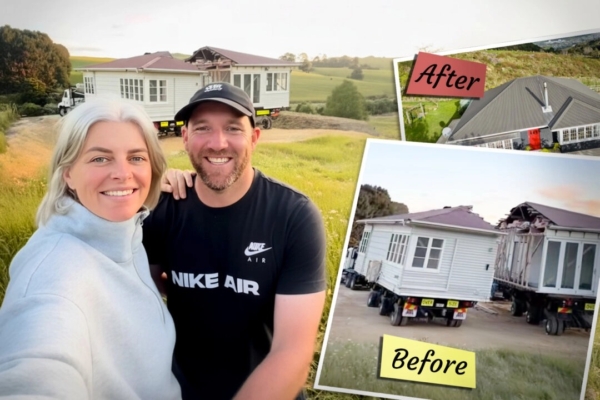
The high cost of living in New Zealand eventually became too much for Aimee Clotworthy to afford in her hometown. Along with her husband, they became part of a new trend followed by a large number of hopeful homebuyers in the Southern Hemisphere – they bought their dream house, cut it in half, loaded it onto a truck, and moved it to a remote homestead in the countryside.
Since then, Clotworthy and her family have been enjoying the sparse, economically friendly rural life, reveling in the freedom nature has bestowed upon them.
Their 12-year-old son and 7-year-old daughter have put down their iPads to play outdoors – the son enjoys hunting, while the daughter makes “mud pie magic potions” in the backyard. The couple carefully manages their expenses and keeps them under control.
“We don’t have a huge house, we don’t have a massive mortgage because we don’t need to, but we have space to grow our own vegetables,” 34-year-old Clotworthy told Epoch Times, adding that their move to the colonial-style seaside bungalow perched on a hill south of Auckland is full of character.
“We have things like stained glass windows, which a lot of houses don’t have,” she pointed out, noting that high ceilings, wide hallways, and local timber floors are not found in modern standardized homes.
Hundreds, if not thousands, of New Zealanders are doing the same thing: purchasing movable homes from real estate lots that resemble car sales yards, agents selling houses dating back to several decades ago. The Clotworthy family from Waikato purchased their ’20s bungalow in November of last year and it was their second movable house.
Like many New Zealand families, they were pushed into this extreme housing arrangement by the economic environment. The high cost of living in New Zealand makes purchasing a new house far more expensive than buying a decades-old or even century-old house that has been recycled.
“It’s much more cost-effective this way,” Clotworthy said. “Otherwise, we wouldn’t be able to afford a new house at all.”
New Zealand’s remote location results in rising costs for everything from food to building materials to fuel.
“Now a lot of New Zealanders are doing this too because the cost of living here is just too high,” she said. “Fuel prices are so high, almost reaching $3 per liter. The grocery prices are also shockingly expensive.”
For a long time, New Zealand has had issues with inflation, profiteering, and supply chain. The COVID-19 pandemic has exacerbated the cost of living crisis under these conditions.
Currently managing a beauty therapy clinic, Clotworthy and her 44-year-old husband Patrick, who runs a family butchery, have been renovating in their preferred way. As her husband isn’t skilled in renovation work, she noted that he left tasks such as plastering, varnishing the wooden floors, and making design decisions to her. Their charming ’20s house now looks more like a ’20s home and is once again fully habitable.
Clotworthy grew up in a suburban beach paradise in Whangaparāoa, just north of Auckland, and developed a love for the slower pace of rural life from an early age. After meeting Patrick, who also hailed from a small town, about a decade ago, they casually bought their first movable home.
The family once lived in a house on a farm with no regular electrical system or central heating, enduring a decade-long renovation project that meant they had almost no extra expenses. This enabled them to be in a good financial position, allowing their children to have the life they desired, and after selling the first house, they bought a second movable home.
Old houses in the city, like their current colonial-style bungalow, are obstacles in the eyes of property developers, such as the Chinese company that previously bought their bungalow and its original land, preparing to launch a new project. These developers sell the houses to intermediary agents who hoard them (almost like storing used cars in batches on vacant land) at cost, and these intermediaries then resell them to potential homebuyers in the market looking to purchase movable homes.
Some houses are renovated, while others are more run-down, but each one has its own unique charm. After purchase, the house is loaded onto a truck and transported to properties outside major cities. The Clotworthy family’s experience is just that.
She said their first movable home cost only $5000, despite holes in the floor and windows covered with cardboard. “It was colder inside than outside,” she said.
The house was eventually fixed up, but by then, they were ready to buy a new home – their current bungalow which they purchased in November 2024.
Their new home was almost completely renovated at the time of purchase and met building regulations. With two and a half houses needing to be reconnected and hooked up to the grid, they were able to once again inhabit it. The $100,000 buying price was far lower than purchasing a new house in Auckland – where new houses start around $600,000.
When searching for land, the couple found a flat hilltop in Waikato, south of Auckland. The land cost them $299,000 but provided them with the rural lifestyle they had dreamed of.
“We must have driven past that ‘land for sale’ sign a hundred times,” Clotworthy said, adding that it is a “very lovely environment.” They have a huge backyard with continuous rolling hills in view, as well as a freshwater stream for garden irrigation.
While not completely disconnecting from public systems, this homestead has enabled them to be self-sufficient by producing food. Their vegetable garden and free-range chickens, along with access to meat at a discounted price from Patrick’s family butchery, make life more sustainable.
Now, the couple’s children are thriving in nature. “There are no houses in sight, no streetlights – just peace and quiet,” Clotworthy said. “The tranquility of the countryside keeps you grounded.”
They have taken away their children’s iPads and devices, limiting TV and movie time. Their son Gordon and daughter Allice are “learning life skills that some adults don’t even have the opportunity to learn,” she said. The siblings attend a small rural school with about 200 students.
They have cultivated attention while slowing down the pace of life, following the rhythm of real life, Clotworthy said.
“We want to raise our children and be involved in it, and this is the lifestyle that allows us to do that.”