
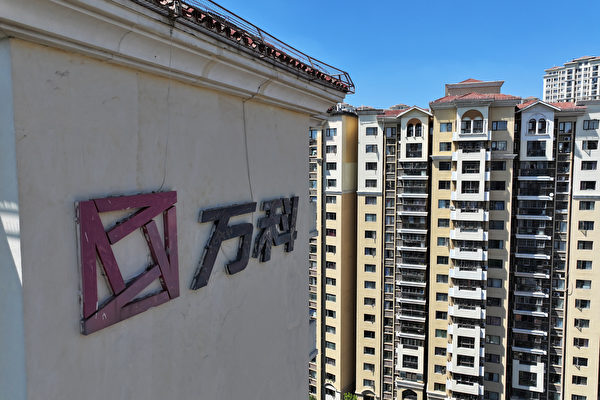
On December 13, 2025, Bloomberg reported that China’s last “too big to fail” real estate giant Vanke lost the support of the Chinese Communist government in November and announced that its default was just a matter of time.
Vanke, together with its largest state-owned shareholder Shenzhen Metro Group, released an investor announcement on November 2 that hinted at hidden intentions. Shenzhen Metro Group, for the first time, set a clear limit on future financing for Vanke and demanded collateral for loans, including providing collateral for the $2.8 billion in loans already drawn.
Vanke is one of the few remaining large real estate developers in China that has not defaulted, relying on funding support from Shenzhen Metro in the past.
The November announcement signified that Vanke’s state-owned shareholders had abandoned their consistent support and bottom-line operations of Vanke in the past two years and explained the deeper reasons behind Vanke’s struggles with stock and bond prices.
According to Bloomberg, the signal released by this move was that officials at the national level had finally lost patience with Vanke, triggering a series of chain reactions that ultimately forced Vanke to seek an extension for the repayment of some debts.
Another report from Bloomberg on Friday also cited sources familiar with the matter, stating that Vanke had provided details of a plan to postpone the payment of a second bond, due on December 28. In the coming months, Vanke faces nearly $2 billion in local debts due.
The plan to extend the bond’s maturity has reignited concerns in the industry about the dire situation of the Chinese real estate sector, causing the company’s dollar bond prices to drop more than two-thirds below previous levels, plummeting to a low of 20 cents on the dollar. The company’s total debt is approximately $51 billion.
Bloomberg reported that they interviewed dozens of insiders knowledgeable about Vanke’s situation, all of whom requested anonymity as they were not authorized to comment publicly.
Insiders revealed that Chinese regulatory authorities had no intention of bailing out Vanke and had begun formulating plans to control potential aftermath effects.
Similar to other giants like Evergrande, Vanke, which boasts stronger political and business backgrounds, has long been seen as “too big to fail.”
However, the industry now widely believes that Vanke’s default is inevitable and could potentially evolve into one of the largest corporate restructuring events in Chinese history. Vanke has over $50 billion in outstanding debt, with overseas lending institutions and bond investors holding over $7 billion.
Insiders disclosed that when investment bank China International Capital Corporation (CICC) was invited to assess Vanke’s financial condition in the third quarter, they concluded that Vanke’s assets were insufficient to cover its debts. By late November, Chinese regulatory authorities indicated that the government would not rescue this troubled developer.
In the following month, Vanke announced plans to delay the repayment of two domestic bonds and waived a call option allowing it to redeem another bond early. After unsuccessful attempts to persuade at least two local state-owned banks to provide loans, Vanke further mortgaged more assets to Shenzhen Metro to secure financing.
S&P Global Ratings has downgraded Vanke’s credit rating twice, currently at CCC-, just three levels above default.
Vanke has lost key officials who supported it the most. Reports claim that Shenzhen Metro’s Chairman and Vanke Group’s Chairman, Xin Jie, was taken away for investigation by Chinese regulatory authorities in October.
Xin Jie was seen as the “firefighter” dispatched by the Shenzhen state-owned sector to Vanke. He took over Vanke in January, restructuring the senior management team, mostly drawing from his previous affiliations with Tianjian Group and Shenzhen Metro.
On October 13, Vanke announced Xin Jie’s resignation without providing reasons. Five weeks later, Vanke released another statement citing Xin Jie’s departure for personal reasons, without disclosing specifics. Xin Jie is no longer listed as the legal representative in Shenzhen Metro’s official documents, but it remains unclear if he has been removed from the position of Chairman.
Vanke’s current focus has shifted from “rescue” to “delay”. The real estate company now needs to negotiate separately for each bond and each loan.
Li Huan, co-founder of Forest Capital Hong Kong Ltd, told Bloomberg, “Vanke is extending the maturity of each bond just to buy time and ultimately needs to implement a comprehensive restructuring plan.”
He stated that prolonging the bond maturity for Vanke is a waste of time because it does not address the root problems and might bring further turmoil to the financial markets.
“In the end, a comprehensive restructuring is inevitable,” he said.
Last Sunday, officials in Shenzhen held a meeting with bond investors, requesting understanding for Vanke’s predicament. However, they added that Vanke’s current bond extension plan leaves little room for improvement.
A default by Vanke could make potential homebuyers hesitant to invest in real estate as new development projects might remain unfinished. Fitch Ratings also warned that the financing environment for Chinese property developers in 2026 will become more challenging.
Furthermore, the Vanke incident may trigger chain reactions in the Chinese economy and financial system, dragging down the banking sector and further restraining consumption and investment.
On Thursday, policymakers in China expressed encouragement for more people to purchase unsold homes.
Recent actions by Chinese authorities include ordering two private data firms to stop publishing data on Chinese home sales. Shanghai authorities are reviewing pessimistic posts about the real estate market on the internet.