
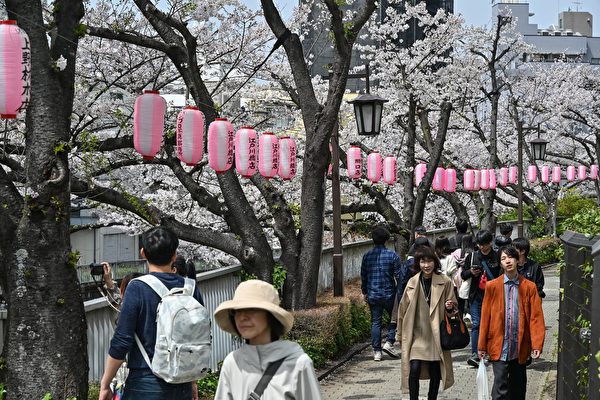
Spring has arrived in Kyoto, and with it comes the blooming of cherry blossoms painting the land in a sea of pink, creating one of the most enchanting sceneries in Kyoto Prefecture. The cherry blossom season in Kyoto, Japan, is a time that attracts both domestic and international tourists. However, while Kyoto continues to draw in a large number of international visitors, the number of Japanese tourists visiting the city seems to be decreasing.
According to a report by Nikkei Asian Review, a woman from Tokyo who comes to Kyoto every year to admire the cherry blossoms remarked that she mostly encounters foreign tourists during her visits.
“It seems like the number of Japanese tourists is decreasing each year,” said a local resident.
The cherry blossom season in Kyoto typically lasts from late March to mid-April. This year, popular tourist spots in Kyoto are bustling as usual, but almost all visitors are coming from overseas.
The traditional Japanese inn “Watazen Ryokan,” established in 1830, stated that their rooms for the spring season are almost fully booked. Nearly 90% of the reservations are from international tourists, while the number of domestic tourists in January and February has dropped by over 10% compared to last year.
“It might be because people feel that Kyoto is too crowded,” said the general manager of the inn, Masayo Ono.
The Kyoto Tokyu Princess Hotel also saw a decrease of about 10% in the number of domestic tourists in February compared to last year. A marketing representative mentioned, “Since the autumn foliage season in 2024, the number of Japanese tourists has noticeably decreased.”
Another Kyoto hotel mentioned that despite offering approximately a 10% discount on a platform specifically targeting domestic tourists, it is still challenging to attract them.
The post-pandemic travel boom has attracted a large number of domestic and international tourists to Kyoto. However, Japanese tourists seem to be increasingly turning to other destinations to avoid crowds, especially during the peak travel seasons of spring and autumn.
An organizer from a well-known travel agency stated, “The Shiga and Nara regions are currently very popular among the Japanese.”
Mikihan Ryokan reported a decrease of about 10% in spring bookings compared to the same period last year, partly due to a reduction in school trip-related bookings. School trips contributed to over 60% of the inn’s sales. Before the outbreak of the pandemic, over 40,000 students stayed at the inn annually. By 2024, this number had decreased to 35,000.
Once a common sight during the spring season in Kyoto was the figure of middle and high school students in school uniforms, wandering around the city with maps in hand. However, this scene is gradually changing.