
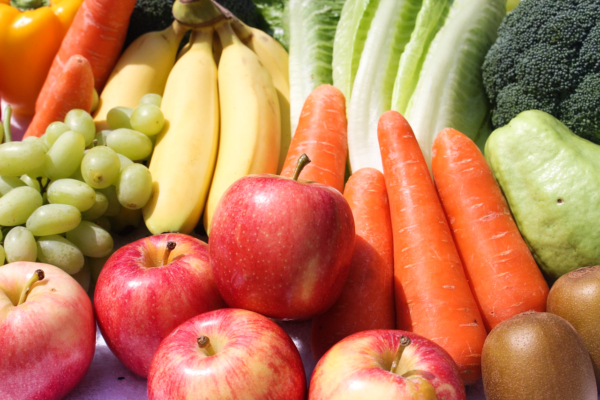
Despite the fact that vegetables and fruits are rich in nutrients and contribute to a healthy body, a woman in West Midlands, United Kingdom, is not fortunate enough to enjoy them. Due to her allergies to fruits and vegetables, consuming even a small amount could potentially be life-threatening, leading her to rely on vitamin supplements for her essential nutrition for over 20 years.
According to a report from the South West News Service in the UK, 27-year-old Chloe Raisbeck suffers from a rare condition called Oral Allergy Syndrome. Even a single bite of a fruit or vegetable could trigger an allergic reaction, potentially leading to anaphylactic shock.
Raisbeck was diagnosed with this condition in January 2005 when she was just 7 years old. She first noticed something was wrong in May 2004 when she bit into a peach at school, resulting in swollen lips and itchy throat, prompting her to seek help from the school nurse. A few days later, she experienced similar symptoms after eating an apple.
Prior to these incidents, she had never experienced any discomfort from eating fruits or vegetables.
Raisbeck underwent treatment at the hospital, where doctors confirmed her allergies. She now knows she is allergic to 15 types of fruits, vegetables, and nuts, including apples, peaches, bananas, carrots, and spinach.
She expressed not knowing the origin of her allergies and the fear associated with the symptoms she experienced after taking that bite of the peach. For over two decades, she has refrained from consuming fruits and vegetables and now relies solely on vitamin supplements to meet her daily nutritional needs.
In the UK, only about 2% of the population suffers from this rare condition. Raisbeck’s doctor warned her that even a small amount of fruits or vegetables could trigger anaphylactic shock. As a precaution, she now carries an adrenaline injector and antihistamines to prevent a severe allergic reaction in case of accidental ingestion.
Raisbeck follows a strict diet that mainly consists of “beige” foods such as pasta and rice, rotating between fish, meat, and dairy products. When attending social events, she brings her own food to avoid consuming anything that might trigger her allergies.
She mentioned that when shopping at supermarkets or dining out, she often uses Google to search for ingredients to ensure her safety. “This has consumed most of my life and has become a form of phobia,” she stated.
Despite her condition, Raisbeck has not given up hope. This year, she experimented with raspberries, a fruit she had never tried before, and found no severe reactions. She has decided to gradually explore more fruits that do not trigger her allergies and overcome her fear of consuming fruits.