
The Group of Seven (G7) foreign ministers reached a consensus on Thursday (March 13) to intensify efforts to end the Russia-Ukraine war and to condemn China’s aggressive maritime actions in the Indo-Pacific region.
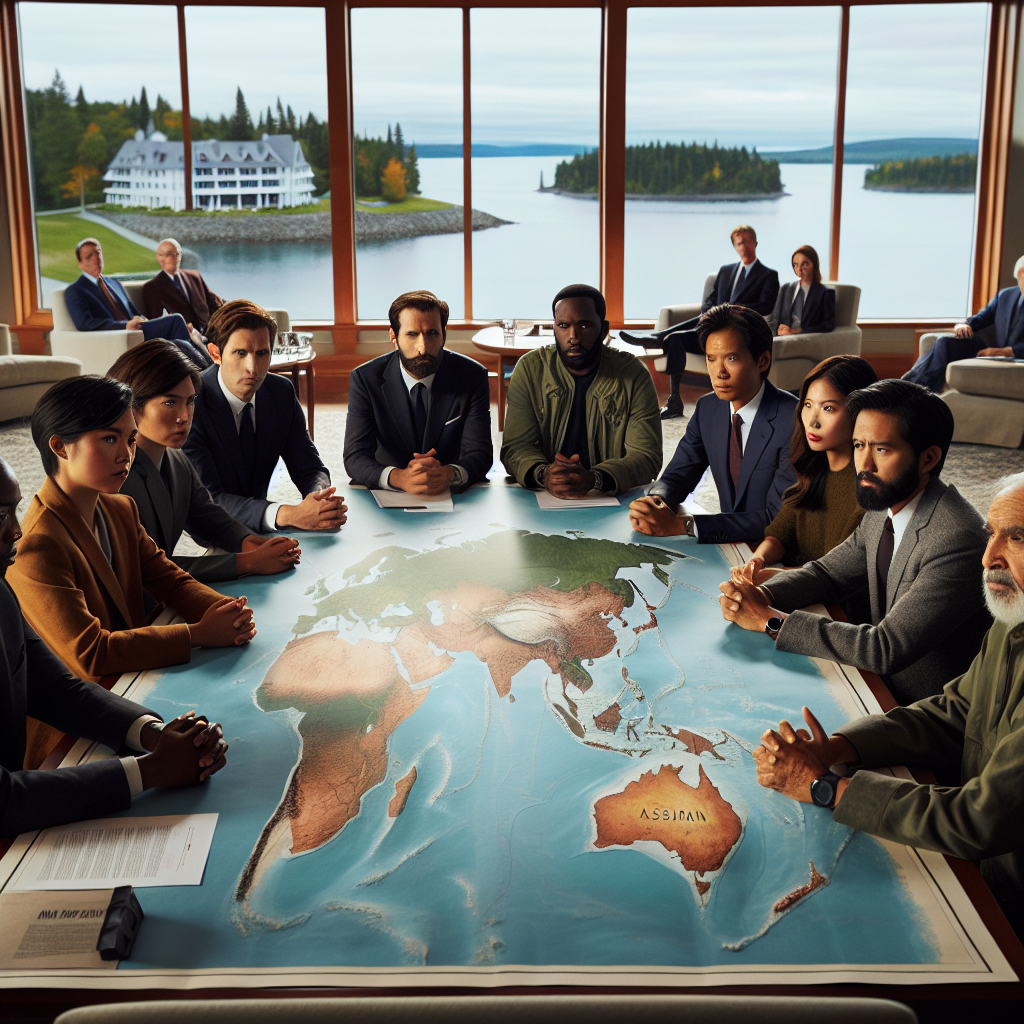
The meeting took place at the resort town of La Malbaie in Canada, with the ceasefire proposal put forward by the United States as a focal point of discussion. In addition, the ministers held a special meeting on China’s activities in the Indo-Pacific region and its impact on security.
According to Kyodo News, based on a draft document obtained, in addition to issuing a joint statement after the meeting, G7 foreign ministers are also planning to release a separate declaration specifically addressing maritime security, which could directly point fingers at Beijing.
A source mentioned that the planned maritime security statement may still undergo adjustments before the conclusion of the G7 foreign ministers meeting on Friday. However, the current draft document directly names China and condemns its expansionist actions in the South China Sea and East China Sea, including land reclamation and military outpost constructions.
In the draft statement, the ministers expressed condemnation for China’s “illegal, provocative, coercive, and dangerous actions that seek to unilaterally alter the status quo and may disrupt stability in various regions.”
The ministers also plan to express concerns over China’s activities in expanding national jurisdiction “through the use of force and other coercive forms” in the South China Sea, East China Sea, and Taiwan Strait.
According to the Japanese government, G7 foreign ministers unanimously recognized at the meeting that European security and Indo-Pacific security are increasingly interlinked.
The Japanese government stated that foreign ministers from the UK, Canada, France, Germany, Italy, Japan, and the US, along with an EU representative, reiterated their opposition to any attempts to unilaterally change the status quo “through the use of force or coercion” and expressed concerns over North Korea’s development of nuclear weapons and missile capabilities.
The government emphasized that Japanese Foreign Minister Taro Kono stressed the need for closer collaboration within the G7 to combat malicious cyber activities from North Korea, including using stolen cryptocurrency funds to support nuclear weapons development.
Since Russia’s full-scale invasion of Ukraine in February 2022, the Japanese government has repeatedly warned that “today’s Ukraine could be tomorrow’s East Asia.”
This position reflects Japan’s concerns over China’s ongoing military pressure on Taiwan.
Other G7 member countries believe that if the war were to end under conditions favorable to Russia, it would only embolden China and North Korea’s expansionist behaviors.
Chairing the meeting, Canadian Foreign Minister Melanie Joly stated, “We want to see a just and lasting peace achieved in Ukraine.”
After high-level talks in Saudi Arabia, Ukraine declared its willingness to accept the US government’s proposed “30-day ceasefire agreement,” which was pushed by the Trump administration.
G7 foreign ministers praised the ceasefire proposal facilitated by the United States and pledged to continue providing “steadfast support” to Ukraine.
The Japanese government pointed out that some member countries emphasized the need for G7 unity to exert pressure on Russia to positively respond to the ceasefire proposal.
As tensions escalate among the United States, the European Union, and Canada due to trade issues, whether the G7 can demonstrate unity, support Ukraine, and uphold a rules-based international order externally remains to be seen.