
Welcome to the “Epoch Focus” program.
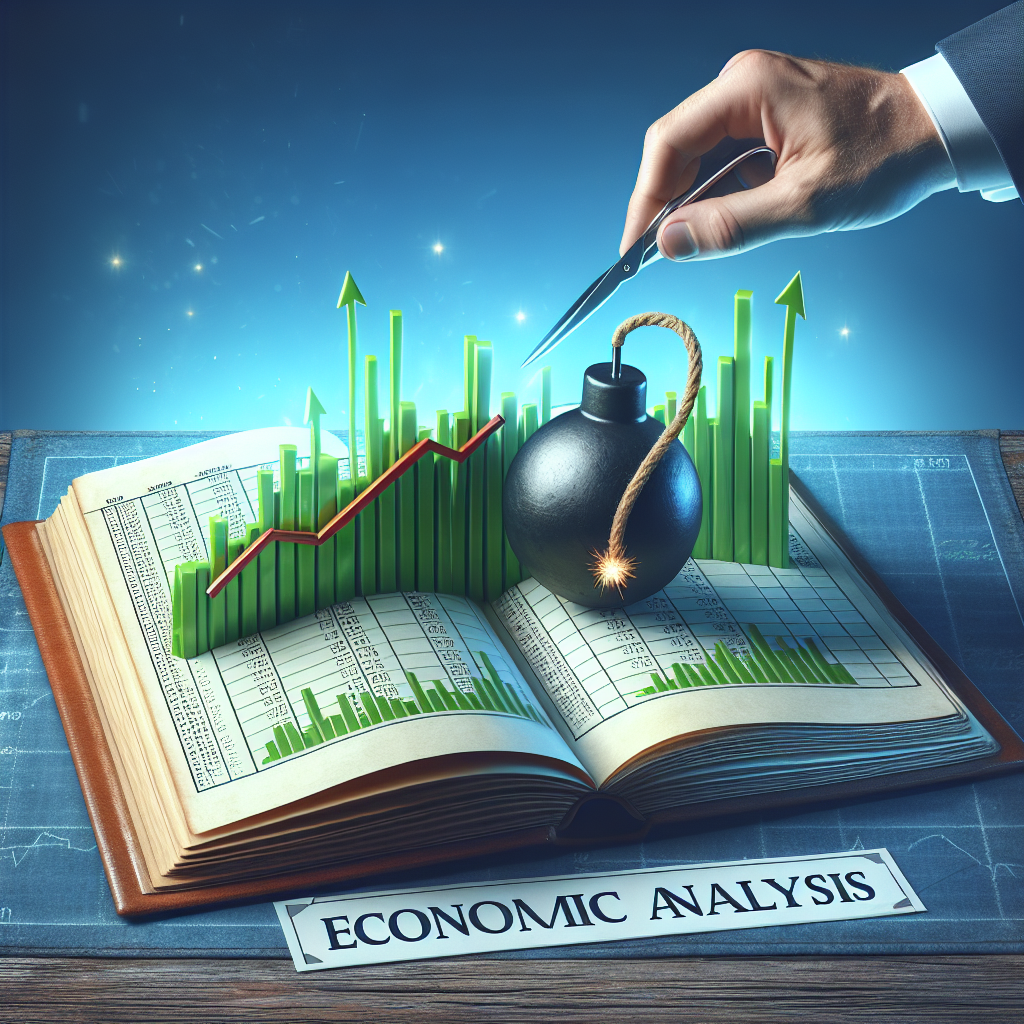
Today’s focus: The New Year Message of the CCP Leader Xi Jinping in 2025, claiming economic recovery; but according to an analysis by the Wall Street Journal, the Chinese economy is facing a heavy burden of excess, like a bomb ready to explode at any time! The CCP is engrossed in infighting, and experts predict three major moves by Beijing in 2025.
On the last day of 2024, the CCP leader Xi Jinping delivered a New Year message, which of course was heavily promoted by the authorities. Xi Jinping claimed in his message that the Chinese economy in 2024 has shown a “signs of recovery and improvement,” also stating that the current economic operation is facing some new situations, challenges of uncertainty in the external environment, but he emphasized that these difficulties “can be overcome through efforts.”
This message has been questioned by the outside world. The CCP’s economic data is often accused of being falsified, and the information conveyed by Xi sharply contrasts with the international investment community’s skepticism towards Beijing.
On January 1, the Wall Street Journal reported that the Chinese economy is facing a heavy burden of excess, including excessive debt, overbuilding, and excess capacity, these problems are like a bomb that could explode at any time.
Millions of empty or unfinished apartment buildings, the crisis of trillions of dollars in local government debt, and the overexpansion of production capacity for global market competition are eroding the foundation of China’s economy. At the same time, the scale of these excessive behaviors highlights Beijing’s difficult position in the face of the imminent Sino-US trade war.
According to Barclays Bank’s estimation, since 2021, the collapse of the real estate market has destroyed about $18 trillion of Chinese household wealth.
Over the past few decades, the Chinese economy has mainly relied on massive investment drive. Initially, these investments promoted the export growth of the Chinese manufacturing industry and the expansion of urban infrastructure. However, year after year of repetitive investments have gradually diminished the marginal benefits of this strategy, leaving behind massive debts, a large number of vacant apartments, and overcapacity in industrial production.
In terms of debt alone, the total borrowing of the government, households, and enterprises is close to three times the total annual GDP. By some measures, China’s debt level and debt burden even exceed those of the United States before the 2008 financial crisis or Europe ten years ago during the debt crisis.
Since 2020, the Chinese real estate market has continued to decline. According to the latest estimate as of late November 2023, China has as many as 80 million vacant housing units, equivalent to half of the entire housing stock in the United States.
To cope with the economic slowdown, the CCP leaders have taken a set of countercyclical policies to inject funds into the already huge industrial sector in China. This measure has led to further increase in industrial capacity while prices have been declining for two consecutive years.
Against this backdrop, Chinese manufacturers are increasingly focusing on overseas markets to seize market share with low-price strategies, but this behavior has sparked trade frictions with Western countries as well as emerging markets such as Brazil and India.
Many observers believe that various policies after Trump returns to office will pose a huge challenge to the CCP regime. Xi attempts to boost confidence through his New Year message, making people believe that Beijing can achieve economic transformation and resist external pressures.
However, although Xi talked big about economic recovery in his New Year message, the overseas scholar Yuan Hongbing, who is familiar with the CCP system, pointed out that in 2025, Xi Jinping’s main focus domestically is not on the economy, but on advancing the so-called self-revolution politically to a new stage, that is, to turn the blade inwards. The so-called anti-corruption within the CCP is aimed at the internal struggle against those not loyal to Xi Jinping politically, and Xi’s proposal of “self-revolution” is actually ultimately aimed at the CCP’s survival.
It is reported that the CCP authorities set a historical record in 2024 for the number of mid-level officials being brought down in the anti-corruption campaign. The anti-corruption campaign mainly targets corruption in areas with concentrated power, abundant funds, and resource concentration, such as finance, state-owned enterprises, energy, tobacco, pharmaceuticals, infrastructure projects, and bidding and procurement. The military is also one of the targets of the anti-corruption campaign. Throughout the year 2024, dozens of senior executives and former senior officials of military-industrial enterprises were investigated.
Yuan Hongbing believes that in 2025, there will be three actions within the CCP’s internal rectification. The first one is still focusing on the military, mainly to solve the issue of political disloyalty of military officers, and as (fallen political commissar) Miao Hua has been in charge of military personnel for many years, the military faces a major purge.
The second action is to conduct a large-scale cleansing of CCP officials and officials of state-owned enterprises and institutions. This is the basis of the CCP’s autocracy. Since the second half of 2024, prison expansions or new constructions have been carried out all over China, and these are not prepared for ordinary criminal activities, but for the CCP officials. The authorities are preparing to launch a big storm in 2025.
The third action focuses on retirees, emphasizing a retrospective investigation of the past twenty years. It is likely that the families of some retiring members of the Standing Committee will undergo purges, mainly to confiscate past corrupt gains.
Yuan Hongbing also said that all the authorities’ purification actions are related to war preparedness. According to internal sources within the CCP system, Xi Jinping himself has no confidence in managing the economy well, plus Trump returning to power, the US wanting to wage an economic war, Xi’s international political relations are unlikely to be improved, and the living space of the CCP is bound to deteriorate further, so launching a war in the Taiwan Strait becomes Xi’s only way out.
Furthermore, Xi also talked big about improving people’s livelihood in his New Year message, claiming that “everyone’s life is colorful.” However, there is a discrepancy between this and the actual living conditions of the Chinese people this year. The reality is that many ordinary Chinese people are facing even more difficulties in their lives, with pay cuts, unemployment, shop closures, especially social violence and aggression, leaving the Chinese people struggling in dire straits.
The mainland’s Spring Festival travel rush in 2025 will start on January 14th, and many online travel booking platforms have opened tickets for the return journey during the Spring Festival, with ticket prices dropping significantly, with the highest drop approaching 70%. This news has made it to the hot search and triggered netizens’ criticisms.
According to the Urban Express, data from Air Travel Horizontal shows that as of December 24, 2024, the number of domestic flight tickets booked for the traditional 2025 Chinese New Year holiday (January 28 to February 4, 2025) exceeds 2.44 million; and the number of international flight tickets booked exceeds 1.12 million, an increase of about 37% year on year. The period before New Year’s Eve is the peak period for flight bookings.
In terms of ticket prices, flight steward data shows that as of December 23, 2024, the average economy class ticket price (excluding taxes) for domestic flights during the 2025 Chinese New Year has dropped by 2.2% year on year. For example, tickets departing from Hangzhou to Kunming and Sanya have dropped by 64%; to Haikou by 63%; to Guangzhou by 61%. Various platforms have also advised consumers on money-saving strategies for buying tickets: reverse buying, off-peak buying, and purchasing in advance for better deals.
Currently, flight ticket prices from major cities such as Beijing, Shanghai, Guangzhou, and Shenzhen are still relatively high, while ticket prices from some cities are relatively low, with prices ranging between 40-60% off.
The above topics have been trending, but many netizens are skeptical, considering it a commercial ploy.
“honest581”: Don’t worry, the return tickets will make up for the cost.
“nanzoey”: The outbound tickets are cheap, but the return tickets are expensive.
“幸福融聯”: Do you all remember what happened last year during the Spring Festival? A ticket to Hainan cost less than 100 yuan, but the return ticket was over a thousand. Just over a year, have you all forgotten?
For example, in mid-February last year, as the Spring Festival holiday came to an end, many tourists who went to Sanya, Hainan began to feel anxious because they did not buy return tickets in advance. However, ticket prices soared, and many flights only had business seats left, costing thousands to tens of thousands.
Airlines across various platforms are engaging in a price war through price cuts to attract customers, and the underlying reason behind this is related to the current sluggish domestic economy. With the severe unemployment, consecutive closures of businesses, real estate market collapse, weak domestic demand, coupled with natural and man-made disasters, people are tightening their wallets. Now, the reduction in airplane ticket prices is also a means to stimulate consumption.
Subscribe to the YouTube channel:
Subscribe to the Clean World channel:
https://www.ganjingworld.com/channel/1eiqjdnq7goaraJSIlYTiKCOa1020c