
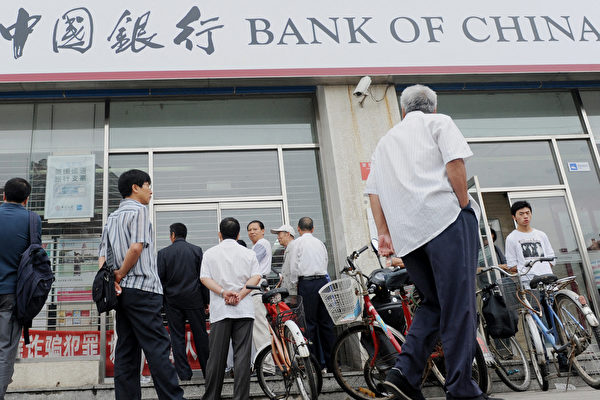
In the just concluded year of 2024, 199 small and medium-sized banks in China disappeared, surpassing the total for the past three years. This news made it to the top search on Baidu on January 1st.
According to the Chinese media “Caijing” on December 30th, the China Enterprise Early Warning System data shows that in 2024, a total of 199 small and medium-sized banks were deregistered (including industrial and commercial deregistration, approved mergers, approved dissolutions, etc.), exceeding the total for the past three years from 2021 to 2023. In 2021, 67 small and medium-sized banks were deregistered, 44 in 2022, and 78 in 2023.
The 199 deregistered banks include 36 credit cooperatives, 56 rural commercial banks, 6 rural mutual aid funds, 100 village banks, and 1 city commercial bank. Among them, 89 were dissolved, 102 were merged, and 8 were deregistered industrially and commercially. From the data, rural financial institutions have the highest proportion.
According to the data released by the People’s Bank of China in the “Financial Stability Report (2024)”, at the end of 2023, the central bank conducted ratings for 3,936 banking institutions. From the ratings results, there were 357 banks in the “red zone”, among which rural cooperatives (including rural commercial banks, rural cooperative banks, rural credit cooperatives) and village banks accounted for a higher proportion of banks in the “red zone”. Institutions marked as in the “red zone” are in a state of higher risk.
In addition, in terms of regional distribution, Liaoning deregistered 41 banks, Hebei deregistered 36, Xinjiang deregistered 25, and Hainan deregistered 20 banks.
An article published by China’s media outlet “Entrepreneurial Life Guide” on December 31st expressed that the sharp increase in the deregistration of small and medium-sized banks indicates that they are facing problems such as fund shortages and poor management, coupled with inadequate risk control and loan management. In the face of economic fluctuations, they appear more vulnerable. Moreover, large fintech companies have seized some market share by virtue of resource and technological advantages, exacerbating the survival pressure on small and medium-sized banks.
The article stated that in the competition for deposits and loans, the interest rate spread for small and medium-sized banks has reached a historic low, making profitability difficult, forcing some small banks to choose deregistration.
China’s think tank “Valley Trends” also believes that with the contraction of profits in many industries, perhaps those most severely affected are the “workers” in the banking industry. The wave of bank mergers is reshaping not only the landscape of the banking industry, but also the fate of millions of individuals.