
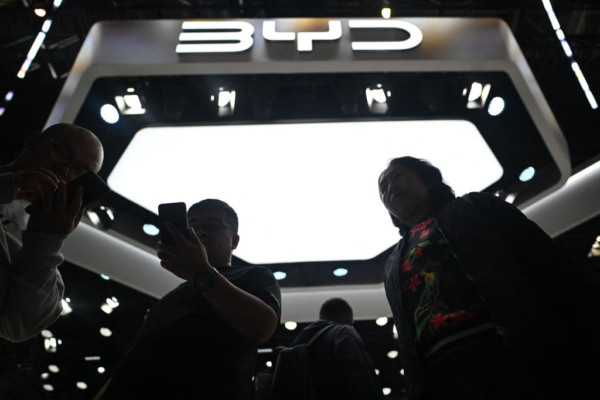
Helping to Build a New Factory in Brazil for Chinese electric vehicle manufacturer BYD, Chinese workers have been subjected to conditions akin to slavery, sparking international attention after the news was exposed. On Thursday, December 26, Brazilian labor authorities stated that these Chinese workers are victims of human trafficking.
Brazil is BYD’s largest overseas market, and this incident has sparked increasing controversies.
According to Reuters, the Brazilian Labor Prosecutor’s Office issued a statement after meeting with representatives of both companies, BYD and the construction contractor Jinjiang Construction Brazil, stating that they have agreed to assist and relocate 163 workers to hotels until a termination agreement is reached.
This brief statement did not provide detailed information.
BYD is constructing a new factory in the state of Bahia in northeastern Brazil. On December 23, the Brazilian Ministry of Labor issued a statement saying that the Chinese workers at the construction site were working in harsh conditions, leading to an order to cease construction for BYD and its construction contractor, while also protecting the 163 workers.
The BBC quoted the Brazilian Prosecutor’s Office as saying that the workers were housed in four “facilities (dormitories).” In one place, workers slept on beds without mattresses, with 31 workers sharing one bathroom, having to wake up “very early” every day to prepare for work. The conditions found in the residence were described as shocking, precarious, and intolerable.
The Brazilian law defines “slave-like conditions” as including debt bondage and work that violates human dignity. The Ministry of Labor further stated that this situation also constitutes “forced labor,” as many workers have had their wages withheld and face high costs if they want to terminate their contracts.
BYD and Jinjiang Construction Group did not immediately respond to Reuters’ requests for comments on Friday.
Jinjiang Construction Group refuted the Brazilian authorities’ evaluation of working conditions as “slave-like.” In a social media post shared by a BYD spokesperson, Jinjiang Construction Group stated that describing the workers as “slaves” is inaccurate and there are translation misunderstandings.
Initially, BYD stated that they had cut ties with Jinjiang, but later accused “foreign forces” and some Chinese media of “intentionally smearing Chinese brands and the country, disrupting Sino-Brazilian relations.”
Prosecutors in Brazil stated that they will meet with representatives from these two companies again on January 7 and present an agreement.
This agreement may exempt BYD and Jinjiang Construction from the Labor Prosecutor’s investigation, but they may still face scrutiny from labor inspectors and federal prosecutors, the latter demanding to share evidence.
The Prosecutor’s Office stated, “Measures may be taken in the criminal field.”
BYD has been constructing this new factory in Brazil, initially planning to produce 150,000 cars, as part of BYD’s plan to start car production in Brazil by early 2025. In the first 11 months of 2024, nearly one-fifth of BYD’s car sales outside China were from Brazil.
The Chinese government has also been wooing Brazil, and reports of misconduct at BYD’s new factory in Bahia could become a major sticking point in the relationship between the two countries.
While Brazil seeks Chinese investment, Beijing’s practice of sending Chinese workers to its investment countries poses challenges to creating job markets locally, while creating job opportunities is a top priority for Brazilian President Lula.
This investigation has brought unwelcome attention to BYD, which has been trying to expand its overseas market.
According to the corporate database Tianyancha, Jinjiang also conducts construction business for BYD in China.