
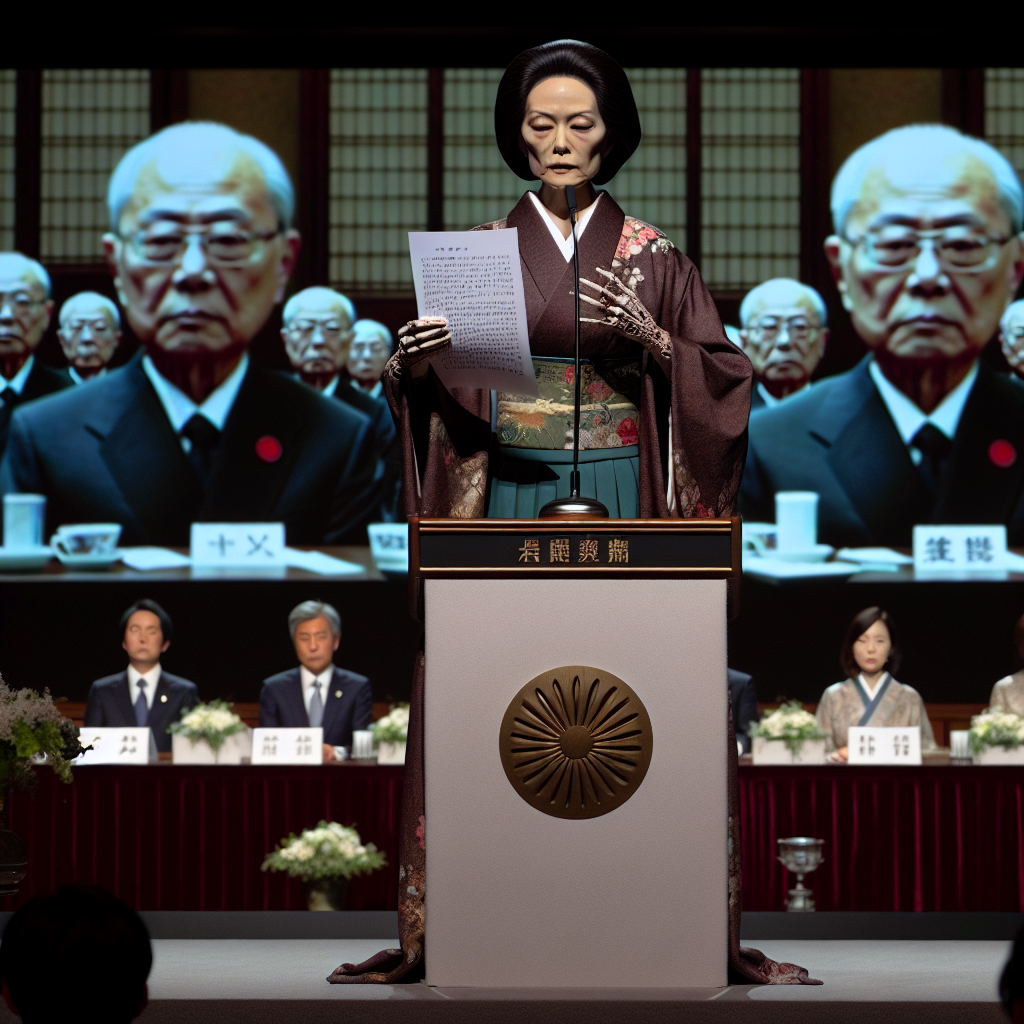
Former Japanese Prime Minister Shinzo Abe’s wife, Akie Abe, recently gave a speech in Tokyo discussing the relationship between Japan and Taiwan, as well as her interactions with prominent figures such as incoming U.S. President Trump, Taiwan President Lai Ching-te, and others. She urged for the appreciation of Taiwan and emphasized the importance of continuing to serve as a bridge for communication and peace with the world.
On December 22nd, Akie Abe was invited by the “Japan Lee Teng-hui Friendship Association” to deliver a speech titled “My Views on Taiwan.” She mentioned a pleasant dinner she had with Trump and his wife in the U.S., although she did not disclose details of their recent meeting, she shared a story from May 2019 when hosting the Trumps at a restaurant in Roppongi, Tokyo. Trump had expressed his belief that under his and Shinzo Abe’s leadership, war between the U.S. and Japan would not occur.
Akie mentioned that she perceived Trump as someone who is not inclined towards war and expressed hope that his re-election would lead to global peace. She highlighted Shinzo Abe’s stance that “an issue involving Taiwan is an issue for Japan,” emphasizing its significance. However, she identified herself as a pacifist, advocating for peaceful resolutions before considering confrontations.
Recounting her private trip to Mount Tai in China in September, she shared her prayer for the prevention of war, emphasizing the importance of prioritizing peace in a world facing various challenges. Akie disclosed her meetings with foreign leaders such as Indian Prime Minister Modi, aiming to improve Japan’s international image and continue acting as a bridge for communication in areas inaccessible to Japanese diplomats.
During her visit to Taiwan last July, Akie Abe met with then-President Tsai Ing-wen, attended various events honoring Shinzo Abe, and felt the Taiwanese people’s warm affection towards her husband. She emphasized the need to contribute towards fostering a strong friendship between Japan and Taiwan.
Furthermore, Akie remembered Vice President Lai Ching-te’s condolence visit shortly after Shinzo Abe’s passing, highlighting Taiwan’s unique gesture among international leaders. She appreciated the invite to Lai’s inauguration in May, expressing solidarity and support for his challenging role as President.
Akie Abe stressed the importance of cherishing democratic, rights-respecting Taiwan and outlined Shinzo Abe’s legacy of supporting Taiwan, earning him the reputation of being a strong advocate for the island. Under Shinzo Abe’s leadership, Japan-Taiwan relations significantly improved, fostering increased people-to-people interactions, political exchanges, and joint efforts in international forums supporting Taiwan.
Taiwanese Diplomacy Professor Lee Deng-ko expressed Taiwan’s great admiration for Shinzo Abe and highlighted his contributions toward regional peace and cooperation, especially in promoting U.S.-Japan-Korea collaboration, which enhanced the region’s security and stability.
The concept of “an issue involving Taiwan is an issue for Japan,” originally proposed by Shinzo Abe, has now become an international consensus, significantly deterring Chinese military aggression towards Taiwan. Tsai Ing-wen’s characterization of Taiwan-Japan collaboration as a “virtuous cycle” based on shared democratic values serves as a model for global democracy and prosperity.
Looking ahead, a security forum hosted by Canada will occur in Taipei on February 20-21 next year. Akie Abe confirmed her attendance, along with Japanese lawmaker Shinji Yoshida’s support group, showing her ongoing commitment to strengthening Japan-Taiwan ties.
In conclusion, Akie Abe envisioned enduring friendship between Japan and Taiwan, highlighting the establishment of the “Japan Lee Teng-hui Friendship Association” and expressing hope for continuous positive relations between the two nations.
Following their dinner at Seiko Gakuen on December 19th, Trump officially notified Japan of his intent to meet with Prime Minister Shigeru Ishiba in mid-January next year. This development, seen as facilitated by Akie Abe, showcases her influence in setting up the meeting between Trump and Ishiba.
Shortly after Prime Minister Shigeru Ishiba took office in October, Trump expressed interest in meeting with him before his inauguration to build a personal rapport, similar to Abe’s approach during Trump’s first term. However, due to U.S. legal constraints, this meeting was deemed impractical, posing a political challenge for the Ishiba administration.
In this context, Akie Abe’s meeting with Trump served as a bridge for the Ishiba-Trump encounter, receiving praise from Foreign Minister Takeshi Iwaya who lauded her role in strengthening Japan-U.S. relations through her irreplaceable and vital personal connections in the diplomatic sphere.
Akio Yaita, Executive Director of the Indo-Pacific Strategic Think Tank and a seasoned Japanese media figure, highlighted the media reports on Akie Abe’s dinner conversations with Trump reflecting Trump’s commitment to maintaining world peace amidst discussions about China, Taiwan’s security, and the Ukraine conflict.
Yaita mentioned that Trump gifted a photo book with the word “Peace” inscribed in English to Ishiba through Akie Abe, showcasing the significance of peace in international relations. Reflecting on Shinzo Abe’s memoirs, which emphasized Trump’s belief in peace, Yaita emphasized that Trump values friendships, highlighting the importance of the strong bond between Trump, Akie Abe, and Shinzo Abe in maintaining global peace.
These interactions and discussions underscore the evolving dynamics in international relations and the essential role of personal connections and diplomacy in fostering peace and stability in the region and globally.