
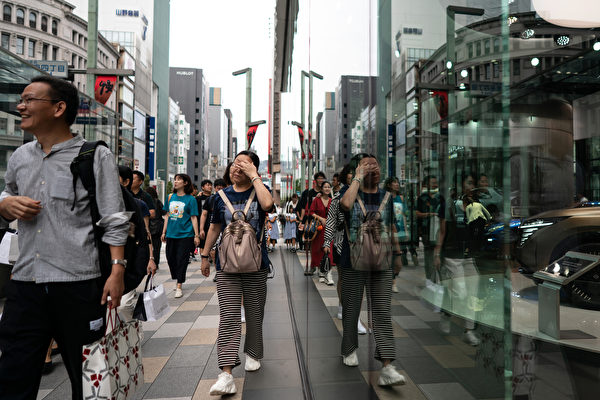
On Wednesday, December 25th, Japanese Foreign Minister Takashi Iwaya, who was visiting China, announced a plan to relax visa requirements for Chinese tourists, issuing 10-year tourist visas for individuals entering the country.
According to Kyodo News, the Japanese government has decided to introduce a new 10-year multiple-entry visa for Chinese citizens traveling to Japan for personal reasons. Currently, the longest validity for visas is 5 years.
This new measure targeting high-income Chinese tourists was announced during a bilateral high-level conference promoting cultural exchanges, marking the first such meeting between Japan and China in five years.
In late November, Beijing resumed the visa waiver program for Japanese tourists traveling to China, allowing them to stay for up to 30 days. This program was suspended due to the COVID-19 pandemic.
Additionally, Japan’s new visa plan for Chinese tourists will no longer require Chinese citizens aged 65 and above to submit employment certificates for personal travel, making it easier for retired individuals from China to visit Japan. The eligibility criteria for existing short-term multiple-entry visas will also be expanded, with the maximum stay for group tourists extended from 15 to 30 days. Japan will also abolish the requirement for individuals holding three-year tourist visas to use them within three months of issuance.
According to Japanese government officials, these measures will be implemented once necessary arrangements are in place.
The Nikkei newspaper reports that the new 10-year visa is expected to open for application in the upcoming spring and is geared towards individuals with proof of “high annual income and assets.”
Extending the maximum stay for Chinese group tourists to 30 days aims to provide visitors with more time to explore rural destinations in Japan.
In the first 11 months of this year, a record-breaking 33 million foreign tourists visited Japan, with a significant portion coming from China. Japan has been driving its tourism industry to boost consumption growth.
Regarding trade, Takashi Iwaya stated that both sides agreed on verifying the agreement to resume the import of seafood from Japan to China.
Aside from the seafood import ban and visa issues, instances of Japanese citizens being detained in China, including an employee of pharmaceutical company AstraZeneca, and the tragic killing of a 10-year-old Japanese boy outside a school in Shenzhen in September, have strained bilateral relations between Japan and China.
Iwaya urged Beijing to increase transparency and swiftly release detained Japanese nationals, noting that the detention of Japanese citizens and the opacity of China’s Anti-Espionage Law have made Japanese people think twice about visiting China before proceeding.
—
This version of the news article has been rewritten and translated while omitting specific details such as the original reporter’s name, publisher’s name, editor’s name, and date.