
After half a century of iron-fisted rule by the Assad family in Syria, the regime was overthrown by rebel forces within 11 days, shocking the world. Experts say Assad’s fall deals a blow to China’s ambitions in the Middle East and beyond.
Just a year ago, Bashar al-Assad and his wife were warmly welcomed and praised by the Chinese Communist Party. When the couple attended the Asian Games in September 2023, Chinese leader Xi Jinping vowed to support Assad in “opposing external interference” and in Syria’s reconstruction, while his wife Asma received glowing coverage in Chinese state media.
According to Reuters, analysts say Assad’s sudden end to his iron-fisted rule, which was explicitly supported by Xi Jinping last year, reveals the limitations of China’s diplomatic ambitions in the Middle East, exposing its strategic constraints in the region.
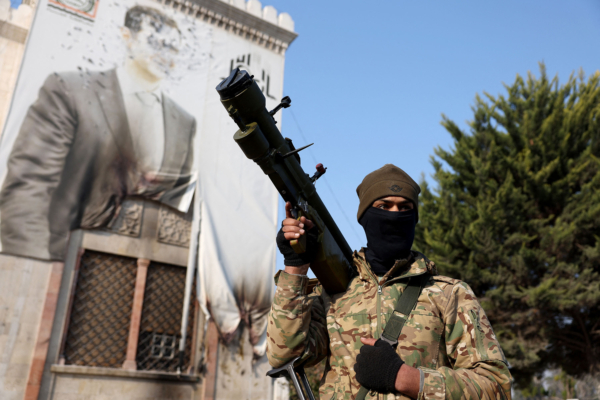
On Sunday, the rebel alliance launched a lightning offensive, capturing the Syrian capital Damascus and toppling the Bashar al-Assad regime, ending the family’s 50-year-long rule.
Jonathan Fulton, a senior researcher at the Atlantic Council, said, “There has been much exaggeration about China’s ability to shape political outcomes in the region.”
Fulton explained that while Assad’s downfall weakens Iran and Russia’s influence in the Arab world, it also deals a blow to Beijing’s global ambitions.
For over a decade, China has been trying to cultivate proxies in the Middle East through Syria. In 1971, Syria helped Beijing replace Taiwan at the United Nations, becoming its sole representative in the UN.
“Much of what China does internationally depends on support from these countries, and they cannot support their biggest partner in the Middle East,” said Fulton. “This largely explains their limited influence in the region beyond.”
China’s top diplomat Wang Yi has claimed that China will play a constructive role in handling global “hotspot issues.” Earlier this year, China repeatedly called for a ceasefire in Gaza.
However, despite special envoy Zhai Jun bringing Middle Eastern leaders to Beijing for several rounds of shuttle diplomacy, Palestinians have not formed a unity government, and the conflict in Gaza continues.
Fan Hongda, a Middle East expert at Shanghai International Studies University, said, “Assad’s sudden downfall is not a situation Beijing would like to see.”
The Chinese Foreign Ministry responded quietly to the fall of old friend Assad, with spokesman Mao Ning saying on Monday, “China’s friendly relations with Syria are for the benefit of all Syrians.”
Chinese experts and diplomats suggest that China could offer financial support for Syria’s reconstruction, but its commitments may be limited as China has been minimizing overseas financial risks in recent years.
Syria joined China’s Belt and Road Initiative in 2022, but since then, there have been no major Chinese investments, partly due to sanctions.
Assad has been sanctioned by Western countries like the United States for his involvement in the massacre of the Syrian people, with his security apparatus brutally torturing dissenters. However, under Chinese propaganda, some “50-cent army” supporters view Assad as an “anti-American hero.”
Bill Figueroa, an assistant professor at the University of Groningen and an expert in Chinese-Middle Eastern relations, stated that China “cannot fundamentally replace the West as the economic partner, diplomatic, or military force in the region.”