
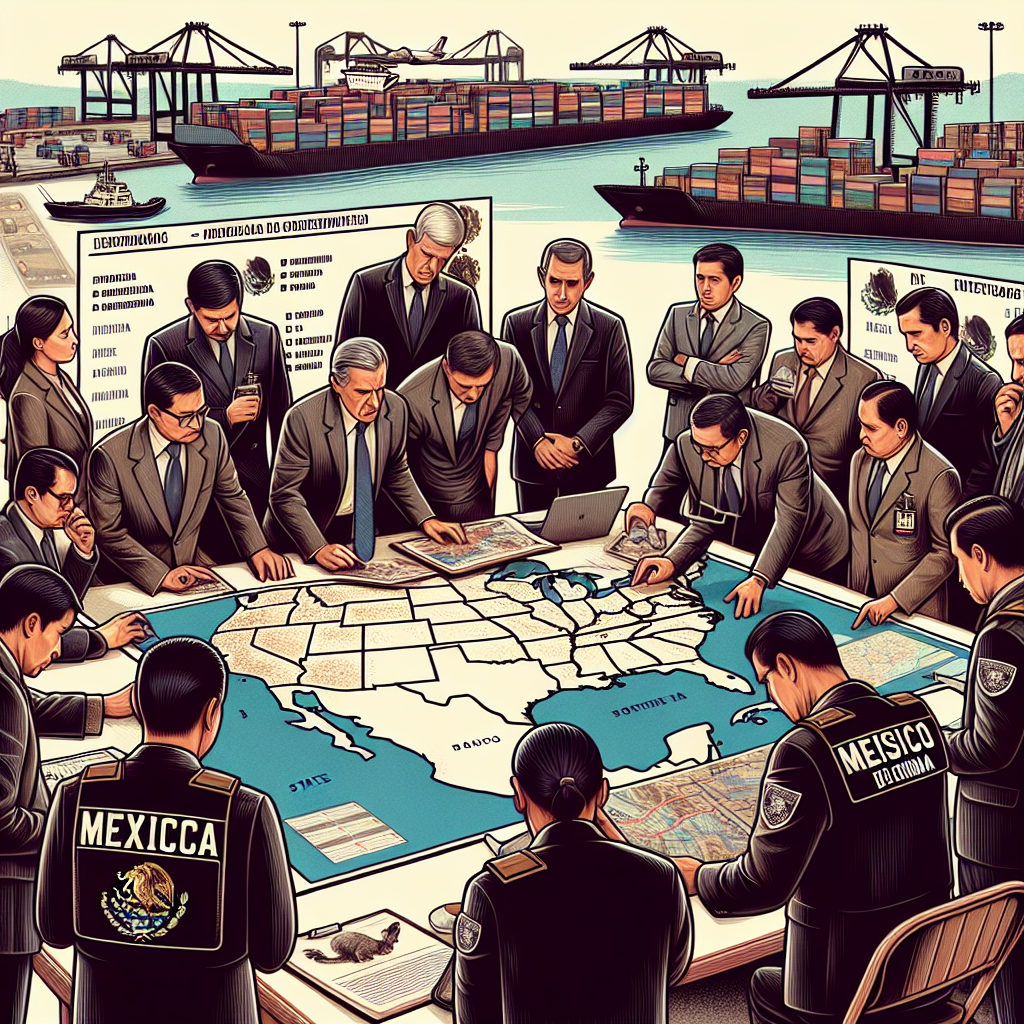
According to the Mexican Ministry of Economy, Mexico plans to launch a nationwide “cleanup” operation aimed at combating the influx of illegal goods from China.
The Ministry of Economy announced that they will conduct searches in all 32 states of Mexico, including ports and airports. Around 200 officials carried out a raid on a shopping plaza in Mexico City known for selling Chinese goods, seizing over 260,000 items valued at 7.5 million pesos (370,000 US dollars).
Luis Enrique Vazquez, Technical Manager of the Office of Foreign Trade of the Ministry of Economy, stated in a phone interview with Bloomberg, “The searches will help determine the scale of these illegally imported goods in the country.”
He mentioned that the raids will allow Mexico to track and quantify the seemingly large quantity of (illegal goods) being dealt with.
Vazquez declined to disclose the timing and location of the next search for security reasons.
The United States and Canada have expressed concerns that Mexico’s trade practices with Beijing are not in line with those of its North American allies. President-elect Trump recently announced plans to impose tariffs on neighboring countries Canada and Mexico to curb illegal immigration into the US and combat the influx of illegal drugs like fentanyl.
When asked by reporters about concerns of Beijing potentially using the USMCA (US-Mexico-Canada Agreement) as a backdoor to export cheap goods to North America, Canadian Finance Minister Chrystia Freeland stated that Canada believes the USMCA members have the opportunity to develop a fully consistent policy towards China.
Ontario, Canada’s most populous province, has proposed the removal of Mexico from the free trade agreement and signing a bilateral deal with the US, which accounts for three-quarters of Canada’s total exports.
“We believe that today all (USMCA) countries have the opportunity to work together to develop a fully consistent policy towards China, protect all our workers, and ensure mutual support in this truly important event,” said Freeland.
Both Canada and the United States have imposed tariffs on Chinese electric cars and steel, citing Beijing’s deliberate policy of overcapacity.
Freeland reiterated that Canada hopes the USMCA agreement remains a trilateral one.
When asked whether this move is a signal to Trump, Ebrard jokingly responded that he did not receive a phone call from the US President-elect regarding the raid on the shopping plaza in Mexico City.
During Thursday’s search, Mexican authorities found a range of products, from screws to coffee machines, toys, and textiles. The items for sale included goods from Bangladesh, China, Malaysia, Vietnam, and Indonesia.
Local chambers of commerce also accused Chinese e-commerce platforms of violating regulations and evading parcel taxes. Vazquez stated that the Ministry of Economy is currently working with the Ministry of Finance and the National Tax Authority to establish mechanisms to ensure these platforms pay taxes.
The Mexican Tax Authority announced last month in a statement that they are strengthening measures for controlling and monitoring incoming goods. Vazquez mentioned that ensuring tax compliance by these platforms is the next step.
Vazquez emphasized that these measures have been brewing for several months and denied that they were in response to pressure from the United States.