
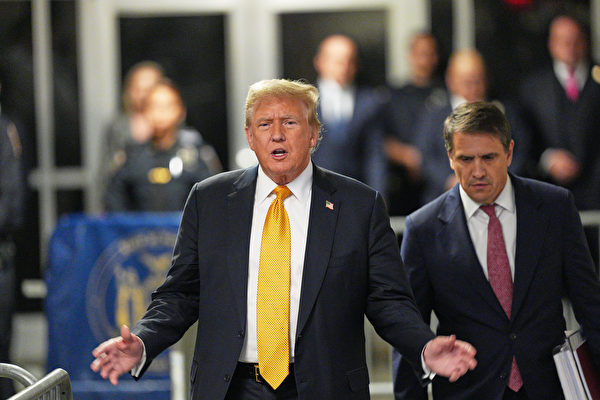
Former President Donald Trump, unlike most defendants, has managed to turn his criminal conviction into a rallying point. During his presidential campaign, his supporters printed slogans like “I’m Voting for the Felon” on T-shirts, hats, and lawn signs.
Last spring, Trump was convicted in New York on 34 counts of falsifying business records in the “Hush Money Case”. He then proclaimed that the “real verdict will be delivered by the people on November 5th.”
Now, just a week after Trump’s overwhelming election victory, a Manhattan judge is set to decide: should the verdict in the “Hush Money Case” be upheld? Or should it be overturned based on a Supreme Court ruling in July granting presidents broad immunity from criminal prosecution?
Judge Juan M. Merchan stated that he would release a written opinion on Tuesday (November 12) regarding Trump’s request to overturn his conviction and decide whether to order a retrial or dismiss the charges altogether.
Merchan had initially planned to rule in September but delayed the decision to avoid any appearance of influencing the election. If Trump takes other actions to delay or end the case, his decision might be postponed again.
If the judge upholds the original verdict, sentencing will take place on November 26. However, the verdict could still be subject to change or cancellation through various appeals or legal means.
Trump’s lawyers have been working for months to overturn his conviction for falsifying business records and attempting to cover up a $130,000 hush money payment to adult film star Stormy Daniels, who claimed to have had an affair with Trump and threatened to disrupt his 2016 campaign.
Trump has denied her allegations, insisting he did nothing wrong, and condemned the court’s decision as a politically motivated “witch hunt” aimed at undermining his presidential campaign.
The Supreme Court ruling grants former presidents immunity, preventing them from being prosecuted for official acts performed while in office and prohibiting prosecutors from using such acts as evidence of personal misconduct.
In October 2016, Trump’s then-lawyer Michael Cohen made a payment to Stormy Daniels. At the time, Trump was a private citizen running for president but had not yet been elected or sworn into office.
However, by the time Cohen reimbursed the payment, Trump was already the president. Cohen testified they had discussed the repayment arrangements in the Oval Office. The jury found that these reimbursements were incorrectly recorded as legal fees for Trump.
Trump’s lawyers argued that the Manhattan District Attorney’s Office used evidence that should not have been admissible, including testimony about Trump’s first presidential term, tainting the case.
Prosecutors maintained that the Supreme Court ruling “provides no basis for overturning the jury’s verdict.” They argued that Trump’s conviction involved unofficial acts and personal conduct, making him ineligible for immunity.
The Supreme Court did not define official acts, deferring that to lower courts and did not clarify the relationship between its ruling on one of the two federal criminal cases against Trump and the state case involving the hush money.
Law professor Ilya Somin from George Mason University suggested that the Court’s ruling had some ambiguities, particularly regarding what constitutes an official act, a key issue in this case involving the payment to the woman.
With the sentencing date nearing the end of the month, potential penalties for Trump, if the verdict stands, could include fines, probation, or up to four years in prison.
The question of whether a president-elect enjoys the same legal protection as a sitting president has no precedent. However, Trump’s position as a former president and president-elect is unique, giving his lawyers grounds to argue for his “avoidance of imprisonment”.
One potential argument they may use is that sparing Trump from potential incarceration would not only benefit him but also prevent the nation from suffering the consequences of having a leader in prison, regardless of the scale of the disaster.
According to David Driesen, law professor at Syracuse University, Trump may seek interventions from courts, including the Supreme Court if possible, to buy time.
Meanwhile, Trump has been attempting to transfer the case from state to federal court where he could seek immunity. His lawyers have asked the U.S. Second Circuit Court of Appeals to overturn a New York state judge’s decision in September denying the transfer.
Perhaps Judge Merchan will order a retrial, but a retrial seems unlikely during Trump’s term in office.
In addition, Trump’s lawyers have argued in court filings that due to the Supreme Court ruling, the jury should not be allowed to hear conversations involving him and former White House communications director Hope Hicks, and details about his actions from another aide.
They claimed that the use of Trump’s 2018 financial disclosure report was also impermissible, as he was required to submit this report as president. It was noted that Trump repaid Cohen for unspecified expenses in 2017.
Lawyers Todd Blanche and Emil Bove contended that the prosecutors were trying to attribute some of Trump’s actions during his term to criminal motives, resulting in “unfair bias” against him. They wrote that the prosecutors presented a “suspicious theory” that part of Trump’s 2018 social media posts was part of a “pressure campaign” to deter Cohen from betraying him.
Blanche and Bove argued that the Supreme Court’s immunity ruling “impeded an investigation into these motives”.
Prosecutors countered that the ruling does not apply to relevant evidence and that in any case, it is only a small part of the “vast array of testimony and documentary evidence” considered by the jury.
(Information in this article referenced from the Associated Press reporting)