
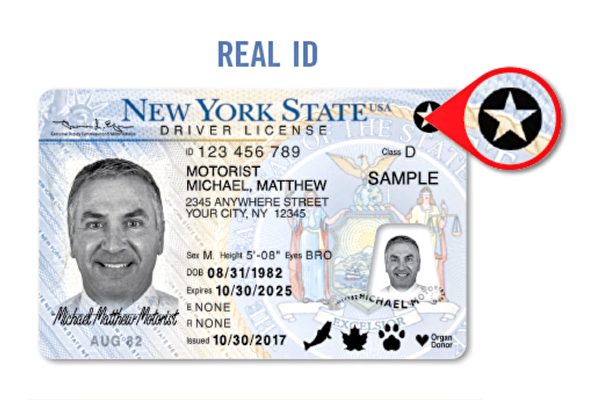
The Biden administration proposed on Thursday (September 12) to further postpone the full implementation of the new rule requiring Americans to obtain a new ID card in order to board flights or enter federal buildings until May 2027.
Congress approved stricter federal ID issuance standards with the REAL ID Act in 2005, but the implementation deadline has been repeatedly delayed.
In December 2022, the Department of Homeland Security (DHS) extended the enforcement deadline of the law to May 7, 2025, citing potential significant impacts on U.S. airlines and airports if the requirements were immediately enforced.
The Transportation Security Administration (TSA), a part of DHS responsible for overseeing airport security checkpoints, stated on Thursday that they aim to “phase in” the requirement before May 2027, rather than extending the deadline set by the REAL ID Act. Passengers without compliant IDs or other acceptable documents may face delays at airport security checkpoints.
Carter Langston, a spokesperson for the TSA, advised travelers to obtain the new ID as soon as possible to avoid delays, emphasizing “don’t wait.”
The Department of Homeland Security believes that without the delay in full implementation, U.S. agencies could face severe operational disruptions, negative public impacts, and potential security vulnerabilities.
The REAL ID Act passed by Congress in 2005 enacted recommendations from the 9/11 Commission, calling for the U.S. government to set standards for issuing forms of identification, such as driver’s licenses, and made corresponding regulations.
According to Reuters, a concern is that still over 124 million people do not have compliant IDs. The DHS estimates that states and territories have issued approximately 162 million IDs that meet the REAL ID standards, accounting for 56% of total state IDs.
The TSA mentioned that agencies could issue warning notices or apply gradual pressure, rather than fully enforcing the ID requirement starting from next May.
Many Americans only travel by air once or twice a year, and the TSA stated that before informing passengers that they cannot board flights without the new ID in the future, the agency might opt to provide three warnings to prevent “resulting in long lines and crowding at federal facilities or airport security checkpoints.”
The agency further added that “a chaotic atmosphere and personal frustration from being denied entry could potentially distract security personnel, preventing them from properly executing procedures.”
The Department of Homeland Security additionally stated that for “isolated violations,” they do not anticipate opting for tracking practices.