
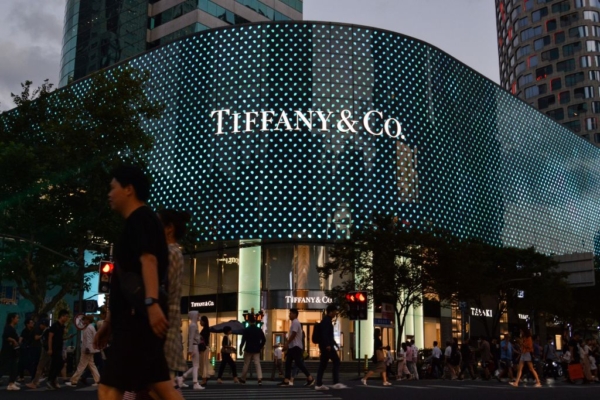
French luxury goods giant LVMH Moët Hennessy Louis Vuitton, under its famous luxury jewelry brand Tiffany & Co., is planning to downsize the scale of its flagship store in Shanghai, which spans over 1000 square meters. This move reflects the severe challenges faced by global luxury brands in China amidst the slowdown in the economy and the sluggish real estate market.
According to Bloomberg, sources have revealed that the store has decided to vacate about half of its space and will make room later this month. The landlord, Lai Sun Group, is in talks with potential new tenants.
Sources have mentioned that Tiffany has also requested Lai Sun Group to reduce the rent for its flagship store in Shanghai.
As the largest Tiffany flagship store in Asia, Tiffany’s Shanghai Hong Kong Plaza store held a grand opening ceremony at the end of 2019. The store has two floors and features Tiffany’s third global and mainland China’s first Blue Box Cafe. Despite the shrinkage in store size, the cafe will continue to operate.
Due to the impact of China’s weak economy, the luxury goods market in China continues to be sluggish. In the first half of this year, LVMH’s watches and jewelry sector saw a 3% year-on-year decline in revenue, becoming one of the worst-performing sectors. The sector’s recurring business profit decreased by 19%.
Since LVMH acquired Tiffany for $16.2 billion in 2021, this 187-year-old luxury jewelry brand has failed to meet its ambitious sales targets.
In a report by Bloomberg in July, some of Tiffany’s employees chose to leave due to reduced commissions, with some even switching to competitors, taking some loyal customers along.
Tiffany is also facing pressure from competitors, with some of its market share being taken over by Cartier, a company under the Swiss luxury goods group Richemont.
According to research firm Euromonitor International, in 2023, Tiffany’s global market share in the luxury jewelry sector decreased by about 0.7 percentage points compared to the previous year, while Cartier’s market share increased by four percentage points during the same period.
Currently, China is Tiffany’s second-largest market, with a total of 39 standalone stores. In major cities, Shanghai leads with 7 standalone stores, followed closely by Beijing with 3 stores.