
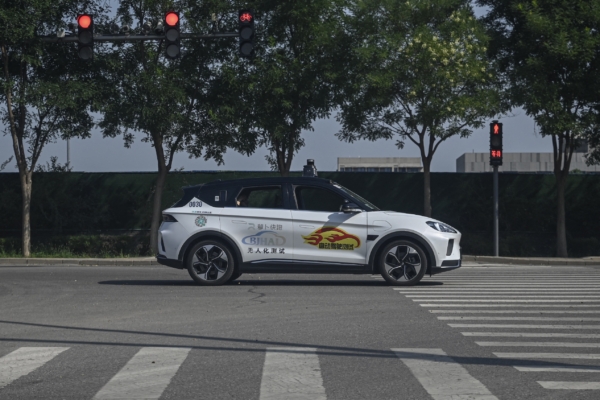
Dangdang.com co-founder Li Guoqing stated on July 15th that “DaSun”, also known as “Radish Run”, engages in unfair competition by following the business model of offering discounts to attract customers and then making profits.
In a recent video, Li Guoqing, former co-founder and chief shareholder of Dangdang.com and founder of Xiangxiangxiang e-commerce, discussed DaSun. According to a consumer test bill, after traveling 17 kilometers with DaSun, the cost was only 13.51 yuan (RMB), with a duration of 48 minutes. However, this was after applying a discount. The bill included a starting price of 16 yuan, a mileage fee of 47 yuan, a waiting time fee of 18 yuan, and a long-distance fee of 19 yuan, totaling 100 yuan. After a discount of 86 yuan, only 13.5 yuan was left.
Li Guoqing believes that DaSun operates by using internet subsidies, initially suffering losses to attract taxi drivers and then aiming for monopoly and high profits. Competing below costs is considered unfair competition, though it’s unclear if they are below the actual cost of the vehicle. If research and development costs are factored in, it would definitely constitute unfair competition below costs.
Public information shows that DaSun is an autonomous driving ride-hailing service platform under Baidu, operating test services in 11 cities in China and conducting fully autonomous driving services and tests in Beijing, Wuhan, Chongqing, Shenzhen, and Shanghai.
Since its launch, DaSun has been criticized for using low prices similar to public transport to dominate the traditional taxi market, causing dissatisfaction and protests among taxi drivers.
In Wuhan, ride-hailing and taxi drivers have expressed opposition to DaSun’s market dominance, fearing being replaced by these autonomous driving taxis, which poses risks of unemployment and income challenges for them.
Many opinions suggest that the days of autonomous driving taxis replacing ride-hailing and traditional taxis may not be far off. Driving a taxi or working for ride-hailing services remains a top choice for many unemployed workers in China. According to statistics from China’s ride-hailing supervision and information exchange platform, the number of ride-hailing driver’s licenses issued has increased significantly from 2.545 million in October 2020 to 5.406 million in April 2024, a 112.4% increase.
As DaSun has become a hot topic frequently trending online recently, Li Guoqing’s comments have sparked discussions among netizens.
One netizen, “Ai Dan,” commented: “It’s the same tactic as electric cars, mass production and sales, then a big harvest at the consumer level. The reason for the low prices now is to eliminate taxis and ride-hailing, then prices will surge, asking if you will still ride. If not, you can walk, and they will justify it as returning to normal prices.”
“Jing Gege” said: “The issue now isn’t about high or low prices. This is affecting the survival of many low-income people. Many people work part-time in ride-hailing after work. Why do you have to think about working part-time in ride-hailing yourself?”
A Tencent netizen remarked: “It’s like when engines and cars appeared hundreds of years ago, carriage drivers collectively protested to restrict the development of engines and cars because the advancement would lead to thousands of carriage drivers and coal shovelers losing their jobs. If they had truly prevented the development of engines and cars to avoid job losses at that time, how many years would technology be set back now?”