
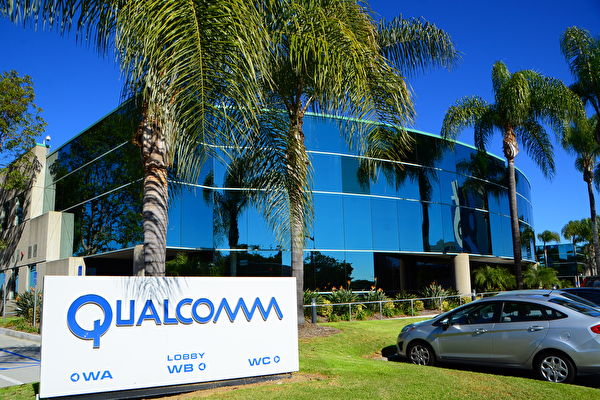
Global fourth-largest smartphone manufacturer and Shenzhen-listed company Transsion Group (referred to as Transsion) is once again caught up in a patent dispute. The world’s top two mobile chip supplier Qualcomm has filed a lawsuit against Transsion in the High Court of Delhi, India, alleging infringement of four non-standard essential patents.
According to a report by the Financial Times, earlier this week, Qualcomm initiated legal action in India against manufacturers under brands like Tecno, Itel, and Infinix, owned by Transsion, and has also filed claims of alleged patent infringement in Europe and China.
Ann Chaplin, the legal executive of Qualcomm, stated in an interview on Friday, July 12, “Transsion has refused to accept Qualcomm’s license for most of its mobile products, so we are exercising our rights through litigation.”
Chaplin added, “Qualcomm’s lawsuit against Transsion is to protect our patent rights and help all our licensees return to a fair competitive environment.”
A smartphone is comprised of components and technologies developed and patented by multiple companies. Smartphone manufacturers are obligated to pay patent royalties to each owner of intellectual property. Failure to pay such fees may lead to legal action.
In a statement released after the lawsuit, Qualcomm stated that while Transsion has signed a licensing agreement for some of its products recently, the vast majority of its products are still infringing on Qualcomm’s valuable patent portfolio.
In response to inquiries from Chinese media Interface News, Transsion stated in a declaration, “We have signed a 5G standard patent licensing agreement with Qualcomm and are currently fulfilling the agreement,” and accused Qualcomm of not fully adhering to fair, reasonable, and non-discriminatory principles.
Transsion has been employing a business model with extremely low costs, using low prices to gain market share by weakening competitors. As per research company Counterpoint, the average selling price of Transsion smartphones ranges from $110 to $120.
Aside from Qualcomm, court documents reveal that in January of this year, Dutch company Philips also filed an intellectual property lawsuit against Transsion in India. As of now, neither company has issued a comment on this matter.
In late 2020, Philips initiated an infringement lawsuit against Xiaomi, and the two companies reached a patent licensing agreement regarding the use of UMTS and LTE (3G/4G standard essential patents) in 2022. Public records show that Philips holds a total of 49 4G standard essential patent families and 47 3G standard essential patent families.
According to sources cited by the Financial Times, Finnish telecommunications company Nokia is also pressuring Transsion to pay for patent technology used in their phones.
Chinese tech giant Huawei filed a legal lawsuit against Transsion in China in September 2019, accusing Transsion of unauthorized use of Huawei’s boot screen, involving intellectual property infringement. In June 2020, a court announcement revealed that the two parties had reached a settlement, but specific details were not disclosed.
Specializing in selling low-cost phones in emerging markets and known as the “King of African Phones”, Transsion holds over 40% market share in the African smartphone market, ranking first. In South Asia, Transsion ranks first in the smartphone markets of Pakistan and Bangladesh, and sixth in India’s smartphone market share.
Transsion is seeking a competitive position in the Indian smartphone market. Public data shows that in the 2023 fiscal year, Transsion’s profits in India nearly doubled year-on-year, reaching 2.1 billion rupees (approximately $25 million). Additionally, according to market research firm Counterpoint, the company held an 8.6% market share in the Indian smartphone market last year.