
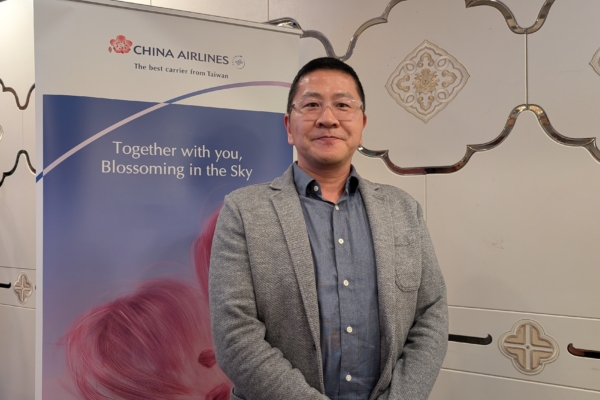
With the FIFA Club World Cup set to kick off in the United States this summer and the highly anticipated 2028 Los Angeles Olympics drawing closer, the tourism and hotel market in Southern California is currently in a crucial period full of hope yet challenges. According to former President of the North American Taiwanese Hotel Association, Wang Weixing, in an interview with Epoch Times, while major events do increase market demand, hotel operators are cautiously optimistic as the market is currently undergoing structural adjustments without explosive growth.
Wang Weixing mentioned that despite the arrival of multiple international events in Los Angeles, the latest observations indicate a “stable to slightly declining” trend in the overall Southern California hotel market in 2025. Behind this seemingly contradictory phenomenon lies the operational pressures faced by operators.
“Although there are major events boosting demand, the rising operational costs far outpace the growth in income,” explained Wang Weixing. Personnel costs, insurance fees, and various material expenses are continually increasing. With consumer confidence yet to fully recover and house prices not seeing significant increases, operators still face considerable operational pressures.
Regarding the upcoming summer World Cup matches, Wang Weixing analyzed that the market response shows a high degree of “polarization.” Hotels located near the competition venues or transportation hubs have indeed experienced an increase in room reservations. However, compared to past world-class events, the growth rate this time appears to be more “moderate.”
“We have not yet seen a comprehensive ‘full house’ phenomenon,” Wang Weixing noted. Various hotels have implemented different distribution and marketing strategies on their own, and the market has not witnessed a frenzy of unified pricing adjustments or concentrated room reservations. This indicates that both consumers and operators are becoming more rational in pricing.
Regarding the development assessment for 2026 and the expected impact of the 2028 Olympics, Wang Weixing believes that while the market generally holds a positive view of its long-term development, it is still influenced by the overall economic environment in the short term.
While some international tourists have inquired about booking for the 2028 Olympics in advance, Wang Weixing revealed that most hotels remain cautious about opening early long-term reservations. Operators are concerned that if they set prices too early and fail to reflect future cost structures, it may lead to profit loss. Currently, the municipal government and tourism authorities are closely coordinating with local hotel operators to integrate booking systems, plan facilities, and arrange traffic routes, with the overall process still in the planning stages.
Looking back in history, Los Angeles successfully hosted the Olympics in 1984, which boosted local tourism and urban development. Wang Weixing reminded that the ultimate effectiveness of international events still depends on multiple factors such as the global economic environment, US dollar exchange rates, and international travel willingness, saying that “whether past glory can be reproduced remains to be seen.”
Regarding the influx of tourists during Asian traditional New Year festivals, Wang Weixing analyzed that in recent years, the impact of Asian tourists on the Southern California hotel market has diminished. The number of tourists from mainland China and several Asian countries has significantly decreased compared to pre-pandemic levels. Influenced by visa policies and international situations, the positive effect of the Lunar New Year on the overall market is relatively limited.
Currently, the Southern California tourism market mainly relies on domestic travel within the United States, especially with interstate travel on the West Coast being relatively active. The strong US dollar has increased the cost for international travelers visiting the US, directly affecting the revival of international tourism.
In conclusion, Wang Weixing emphasized that the World Cup and Olympics undeniably bring long-term positive expectations for the Southern California tourism market. However, in the short term, operators must find a balance between cost control and improving service quality, handling the changes in the global tourism market with caution.