
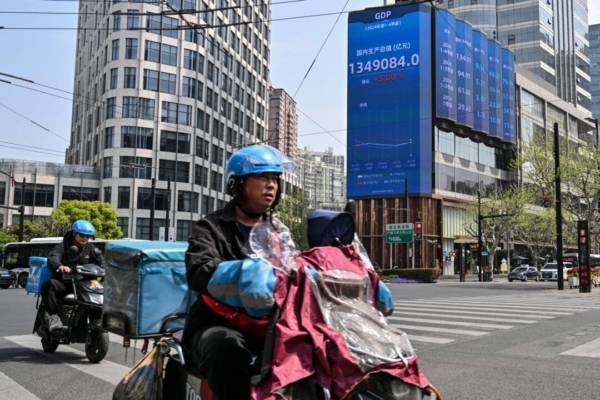
China’s economy is currently in a deep downturn phase. Recently, several major economic provinces in China have significantly lowered their GDP growth targets for 2026. Among the top ten provinces in terms of GDP ranking, six provinces have reduced their 2026 growth targets, including Guangdong, which has held the top spot in national GDP for 37 consecutive years. Guangdong has lowered its GDP growth target to “4.5% to 5%” for the first time since 2000, attracting wide attention from the market.
Currently, the GDP situation for all 31 provinces in China in 2025 has been revealed. Some provinces did not reach their initial GDP targets for the year. Recently, various provinces in Mainland China have successively announced their economic growth targets for 2026.
Compared to the 2025 GDP growth targets, major economic provinces (usually referring to the top ten provinces in GDP) have significantly lowered their 2026 GDP growth targets.
As of February 3rd, among the ten major economic provinces that have announced their 2026 growth targets, six have directly lowered their growth target figures (Guangdong, Zhejiang, Henan, Hubei, Fujian, Hunan); the remaining four provinces, Shandong and Shanghai, maintained their growth targets from 2025, while Jiangsu adjusted theirs from “5% or higher” to “5%”, and Sichuan adjusted theirs from “over 5.5%” to “around 5.5%”. In comparison, in 2025, only three major economic provinces lowered their GDP growth targets.
Corresponding to the adjustment of growth targets, there has been a recurring phenomenon in recent years where major economic provinces have failed to achieve their GDP growth targets. From 2023 to 2025, six, four, and three major economic provinces respectively failed to meet their growth targets. Among them, Guangdong, Hubei, and Hunan have not reached their expected GDP growth in the past three years, while Henan has failed to meet its growth target for five consecutive years from 2020 to 2024.
According to Economic Observer, over the past three years, the national GDP growth target has been set at around 5%. Against the backdrop of setting higher growth targets, major economic provinces have been falling short of expectations in economic growth in recent years.
From 2023 to 2025, Guangdong, which has held the top spot in national GDP volume for 37 consecutive years, set its GDP growth target at 5%, but actual growth rates were 4.8%, 3.5%, and 3.9% respectively, combined with data from 2022, Guangdong’s GDP growth has not met expectations for four consecutive years.
Against this backdrop, Guangdong has set its growth target for 2026 at “4.5% to 5%”, marking the first time since 2000 that the province’s GDP growth target has been below 5%.
As Guangdong, which has held the top spot in national GDP for 37 years, adjusts its target, it carries significant implications for the economic direction.
Zhejiang, ranking fourth in GDP volume, had set its growth targets at around 5.5% in the previous two years, achieving them precisely. For 2026, the province has lowered its growth target to between 5% and 5.5%.
Henan, ranking sixth in GDP volume, set growth targets at 5.5% or higher from 2020 to 2025, but only achieved the expected target in 2025.
In 2026, Henan further lowered its GDP growth target to around 5%, a noticeable decline from the 5.6% actual growth rate in 2025, where the province ranked third nationally and first among the major economic provinces.
Hubei, ranking seventh in GDP volume, started with a GDP growth target of 7% from 2022 to 2026, continuously decreasing by 0.5 percentage points each year, yet it has failed to meet its growth target for four consecutive years.
Similarly to Hubei, Hunan, ranking tenth in GDP volume, has also experienced four consecutive years of economic growth below target. From 2022 to 2025, Hunan’s actual GDP growth remained between 4.5% and 4.8%, while its growth targets were set at 5.5% or higher. For 2026, the province has further lowered its growth target to around 5%.
On January 30th, Guangdong’s economic performance for 2025 was announced, with a year-on-year GDP growth of only 3.9%. The province failed to achieve its initial target of around 5% GDP growth for 2025, lagging behind the so-called national average growth rate. In the major economic provinces, Guangdong’s economic growth has also fallen into the lower range.
For a long time, due to the Chinese Communist Party’s habit of fabricating official statistics, there has been widespread skepticism about the truthfulness of official economic data, with concerns that the actual economic situation may be more severe.
At the same time, society as a whole is sensing an “economic recession feeling,” with increasing employment pressure, layoffs, and mid-career risks rising. Currently, the challenges facing the Chinese economy are not just cold macroeconomic data, but rather a “recession feeling” experienced by multiple generations, from middle-aged to young people. Waves of unemployment, layoffs, and mid-career crises are impacting each generation in different ways as the economy declines.
Looking at the industry level, weaknesses in traditional manufacturing and real estate chains are significant hindrances. Many internet users have pointed out that despite Guangdong leading the country’s GDP for 37 consecutive years, its GDP growth is only 3.9% for the latest year, questioning how the nation can achieve 5% growth. The lack of credibility in the data due to fabrication is evident.
At the industry level, weaknesses in traditional manufacturing and real estate chains are significant hindrances. According to Interface News, the automobile manufacturing industry in Guangzhou was in negative growth in the first 11 months of 2025, with industrial added value dropping by 0.8% year-on-year and overall industrial growth in the city at only 1.3%. Similarly, Foshan, known for its traditional strengths in construction materials and home industry, also faced industry-specific growth bottlenecks, with the latest data indicating only a 0.7% increase in total industrial output for the city in the first three quarters of 2025.
Behind the insufficient market orders for core traditional industries like home manufacturing, ceramics, and sanitary ware lies weak demand in the domestic real estate market and downstream home renovation needs. Adjustments in the real estate sector and its related industries are important factors contributing to the slowdown in Guangdong’s economic growth. In 2025, the sales area of newly constructed commercial buildings in Guangdong fell by 17.1%, real estate development investment dropped by 23.6%, leading to a 17.3% decline in the province’s fixed asset investment compared to the previous year. Over the past six years, the proportion of real estate industry value added to Guangdong’s GDP has dropped from over 10% to 7%.
Simultaneously, facing pressure on exports and weak domestic demand, Shenzhen, once hailed as the “Silicon Valley of China,” is now experiencing an unprecedented economic winter. The city’s key economic indicators continue to deteriorate, with business losses reaching as high as 40%.
As key pillars of the Chinese economy, with several major economic provinces synchronously lowering their growth targets, this is seen as an important signal of a cyclical economic change.
Economic Observer pointed out that for decades, GDP has been the primary achievement benchmark for local governments. In this context, some local governments have adopted extensive development methods at significant resource costs to maintain “high growth,” even inflating GDP data in certain regions, leading to data distortion. Some scholars have summarized this as a “GDP championship.”
An article by financial commentator “Insight” suggests that since the “Reform and Opening Up” policy, various regions have engaged in fierce competition to achieve growth rankings (the “GDP championship”). The current adjustment of growth targets in major economic provinces may be a response to changes in the domestic and international economic environment. Looking at the international scene, global economic growth is slowing down with increased uncertainty in external demand. Domestically, resource and environmental constraints are tightening, population structures are changing, and traditional growth models are becoming unsustainable.
In this context, setting more “practical” economic growth targets signifies that China’s economy is transitioning from high-speed growth to stable and lower-paced growth.