
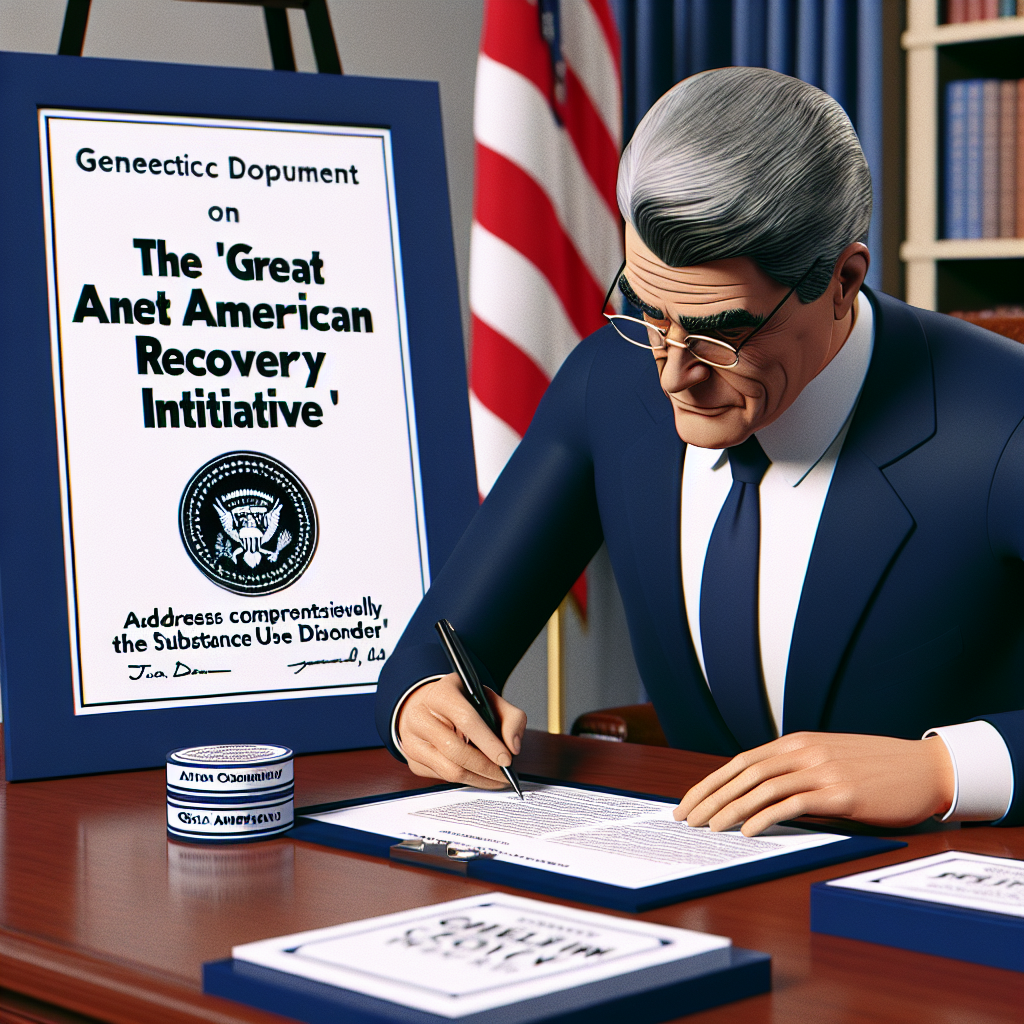
President Donald Trump signed an executive order on Thursday, January 29th, officially launching the “Great American Recovery Initiative.” This initiative aims to comprehensively address the addiction crisis, also known as Substance Use Disorder (SUD). The plan, named the “Great American Recovery Initiative,” seeks to address addiction as a treatable chronic disease rather than an isolated event or a moral failure.
The program will comprehensively adjust the federal government’s approach to addiction issues, shifting the focus towards prevention and early intervention. It aims to disrupt dependency before it forms and provide continuous, systematic, and long-term support for individuals in recovery.
The White House stated that measures related to the initiative would be coordinated at the federal level, strengthening interagency coordination. They aim to foster partnerships between federal agencies, local governments, religious organizations, and tribal communities to implement tailored solutions according to specific needs.
Robert F. Kennedy Jr., the Secretary of the U.S. Department of Health and Human Services, and Kathryn Burgum, former First Lady of North Dakota, serve as co-chairs of the initiative. Kennedy emphasized during a White House press conference, “Addiction is not a moral failure but a chronic, treatable disease. For too long, our country has responded with fragmentation, stigma, and silence, lacking in science, empathy, and coordination.”
According to White House data, approximately 50 million Americans are affected by addiction, accounting for about 16.8% of the population. Kennedy admitted that a significant portion of these individuals have never received any treatment.
Sharing her 23-year journey of alcohol recovery, Kathryn Burgum conveyed that with early and proper intervention, individuals struggling with addiction can recover, providing families with the opportunity to rebuild.
This executive order builds upon related policies established during Trump’s first term. In 2017, Trump declared the opioid crisis a national public health emergency and initiated various actions to combat both drug supply and demand.
The new initiative focuses on integrating national resources to establish a comprehensive care continuum from early intervention, treatment, to reintegration into the community. It aims to align addiction treatment models with other chronic diseases, emphasizing evidence-based medicine, technological advancements, and community support.
Within the executive order, Trump emphasized the government’s commitment to enhancing interdepartmental coordination, rallying the healthcare system, religious organizations, and the private sector to create a new nationwide response framework to save lives, restore families, and strengthen community resilience.
Since last year, the Trump administration has intensified efforts to combat international drug trafficking. According to official U.S. data, by the end of 2025, the U.S. Coast Guard seized over 469,000 pounds (approximately 212.7 tons) of cocaine, an amount estimated by the Department of Homeland Security to manufacture around 177 million lethal doses.
Furthermore, starting in November last year, the U.S. military launched the “Joint Task Force Southern Spear” operation against drug trafficking and terrorism activities in the Western Hemisphere. By the end of 2025, these operations had involved at least 30 strike missions.
In the executive order, Trump stated, “Over the past year, we have made significant progress in curbing the influx of illegal drugs threatening American communities. The next step is to drive national-level actions to prioritize addiction treatment and recovery, further solidify and expand upon existing achievements.”