
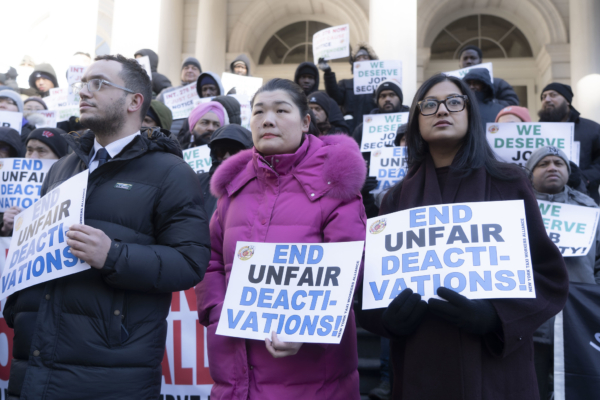
On January 29th, the New York City Council overturned multiple vetoes exercised by then-mayor Adams at the last minute before leaving office with a supermajority vote, passing a total of 17 bills in one fell swoop. These bills cover areas such as street vendor reform, worker protections, affordable housing, public safety, and government accountability, setting a record of “overturning more vetoes in one day than the total for the past decade.”
City Council Speaker Manning stated that these bills had been thoroughly debated by the council by the end of 2025.
The focus of the day’s meeting was on street vendor reform. Several bills were seen as a major adjustment to the restricted and dysfunctional street vendor system of the past few decades.
Intro 431-B will add approximately 21,000 street vendors and mobile food vendor licenses by 2031 (adding 2,000 food vendor permits and 2,100 general vendor licenses annually), gradually breaking the strict cap in place since 1979; Intro 408-A will establish a “Street Vendor Assistance Department” within the Small Business Services, providing training, education, resource connections, and annual reports; Intro 1251-A authorizes relevant agencies to continue processing applications, addressing long-standing administrative delays and backlog issues.
Bronx Councilor Sanchez pointed out that currently about 70% of food vendors and 40% of general vendors operate without permits, with some waiting for up to ten years. “We are not looking to increase the scale of vending on the streets, but rather to bring existing vendors into compliance to replace decades of dysfunction.”
The Council also overturned Adams’ vetoes on several labor bills. A bill proposed by Queens Councilor Krishnan prohibits ride-sharing platforms like Uber and Lyft from deactivating driver accounts without proper justification or legal basis, providing procedural safeguards for nearly 100,000 workers. “Drivers should not lose their jobs without any notice,” Krishnan said.
Furthermore, the “Aland Etienne Safety and Security Act” was revived, requiring certain security employers to provide employees with wages not less than public contract standards, paid leave, and additional benefits. The legislation, named after security guard Etienne who died in the line of duty, is seen by the Council as a tribute to frontline workers.
In the realm of public safety, the Council also passed bills requiring parental or legal consent before collecting DNA from minors in most cases by law enforcement and strengthened city sanctuary policies, prohibiting federal immigration agencies from setting up offices in city corrections facilities.
The Council restored the amendment to the “Gender Motivated Violence Act,” reconstructing civil compensation pathways for survivors caught in legal grey areas due to court rulings to hold perpetrators or conspirators accountable and establishing an 18-month litigation window.
On housing, the Council overturned a veto to establish a city land banking system, gradually replacing the practice of selling tax liens to private trusts to prevent homeowner displacement and protect property equity. It also requires co-op boards to adhere to specific timelines when reviewing purchase applications to enhance transparency.
The Procurement Reform Act requires contractors with city contracts worth over $100,000 to disclose conflicts of interest and misconduct, enhancing accountability.
Although most vetoes were overturned, the “Community Opportunity to Purchase Act” (COPA) did not reach the two-thirds threshold required by the city charter, thus the veto remains in effect. The legislation was originally intended to grant non-profit organizations and some developers the right to preemptively purchase apartment buildings under certain conditions to preserve affordable housing units.
Current Mayor Mamdani and progressive council members have pushed for the revival of COPA but faced strong opposition from the real estate industry and small property owner groups. Opponents argue that the measure would increase market costs, hinder investment, and reduce housing supply; supporters, however, point out that the bill affects only about 1% of transactions but could potentially save thousands of affordable housing units.
Council Speaker Manning did not make a commitment regarding the future of COPA.
Council members Chuang Wenyi and Huang Youxing released a joint statement emphasizing the importance of property rights for working families as a crucial cornerstone in accumulating wealth in America. They acknowledged the need for economically affordable housing in the city but opposed the enforcement of COPA at the expense of property owners’ rights, thanking colleagues for preventing COPA from taking effect.
This “veto sweep” is seen as a systematic counterattack by the City Council against former Mayor Adams and sets the stage for a policy game between the Council and the new mayor. Progressive council members expressed disappointment over the unsuccessful revival of the COPA bill, indicating ongoing struggles in the future.
For street vendors who cheered in the cold wind, the vote of that day was a milestone.