
A recent investigation by the Associated Press has uncovered a disturbing trend where a large number of Bangladeshi laborers are being deceived with false promises of “civilian jobs” and lured to Russia, only to be forcibly sent to the front lines in Ukraine. These individuals face the constant threat of violence, imprisonment, and even death.
31-year-old Maksudur Rahman, who used to work in his hometown, was convinced by a recruiter to go to Russia for a job as a “camp cleaner,” with the promise of a monthly salary of $1,000 to $1,500 and the chance to obtain permanent residency.
Upon arriving in Moscow, he and a group of his fellow countrymen were asked to sign Russian documents, believing it to be a cleaning contract when it was actually a military agreement.
When Rahman discovered that he was expected to undergo drone tactics and weapons training and voiced his objections, a Russian military commander coldly told him through a translation software, “Your agent brought you here. We purchased you.”
The laborers were threatened with physical violence or up to 10 years of imprisonment if they refused to carry out their tasks. Rahman recounted being kicked and questioned about why they were crying and not working.
These workers were tasked with extremely dangerous missions, such as advancing at the forefront of Russian military units, transporting supplies weighing up to 80 kilograms to the front lines, digging trenches, clearing bodies from the battlefield, and evacuating injured personnel.
Another survivor, Mohan Miajee, mentioned that due to their lack of understanding of the Russian language, any confusion in following orders would result in severe beatings with shovels or being handcuffed and locked in cellars.
During a drone attack, Rahman sustained a leg injury and managed to escape while receiving treatment at a hospital near Moscow. He sought help from the Bangladeshi embassy in Russia and was eventually issued travel documents to return home.
However, not everyone is as fortunate as Rahman. Many Bangladeshi families are still anxiously awaiting news of their missing loved ones.
Ajgar Hussein, 40, who sold his land to go abroad, tearfully informed his wife during their last call that he had been “sold” and has been missing for several months.
Apart from the missing individuals, there are also young lives lost in this deceitful scheme. Twenty-year-old Sajjad, who believed he was going to work as a chef abroad, tragically lost his life in a drone attack.
Sajjad’s father recalled that shortly after hearing the news of his son’s death, his mother also passed away due to extreme grief.
An investigation by the Bangladeshi police revealed the existence of a human trafficking network operated by intermediaries connected to the Russian government, where each victim had to pay up to $9,800 in intermediary fees. While the exact number of victims is difficult to determine, survivors reported seeing hundreds of Bangladeshi nationals at the front lines.
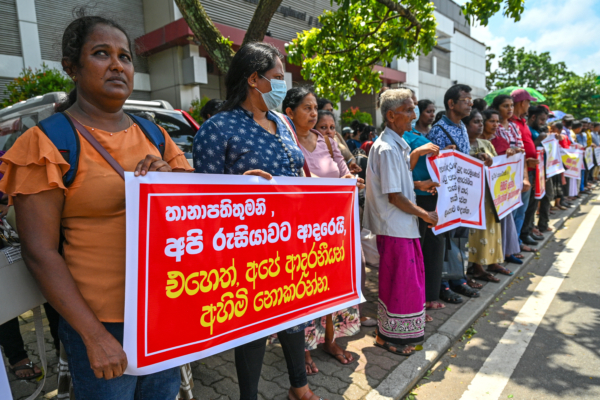
According to reports from Agence France-Presse, neighboring South Asian countries are also facing a similar crisis. In June 2024, the Sri Lankan government confirmed that at least 455 retired soldiers were illegally recruited to fight in Russia. In Colombo, the families of the missing soldiers have repeatedly gathered outside the Russian Embassy in Sri Lanka to demand the release of their deceived relatives sent to the front lines.
The investigation revealed that Russia is also targeting men from India, Nepal, and African countries through similar means. The Russian Defense Ministry, Foreign Ministry, and the Bangladeshi government have yet to respond to inquiries from the Associated Press.
The Associated Press report highlights that as the war in Ukraine is entering its fourth year, the Kremlin is entangled in a costly “battle for human resources.” Despite Russia’s strict secrecy regarding battlefield losses, international evaluations are alarming.
The UK Ministry of Defence estimated last summer that the total casualties (including deaths and injuries) of Russian troops may have surpassed one million.
In an attempt to cover up the significant casualty toll at the front lines and prevent triggering a second national mobilization, Russian authorities are recruiting “volunteers” globally through promises of money, freedom, and citizenship.
However, behind these seemingly attractive promises lie extensive deception tactics and extremely high risks on the battlefield.