
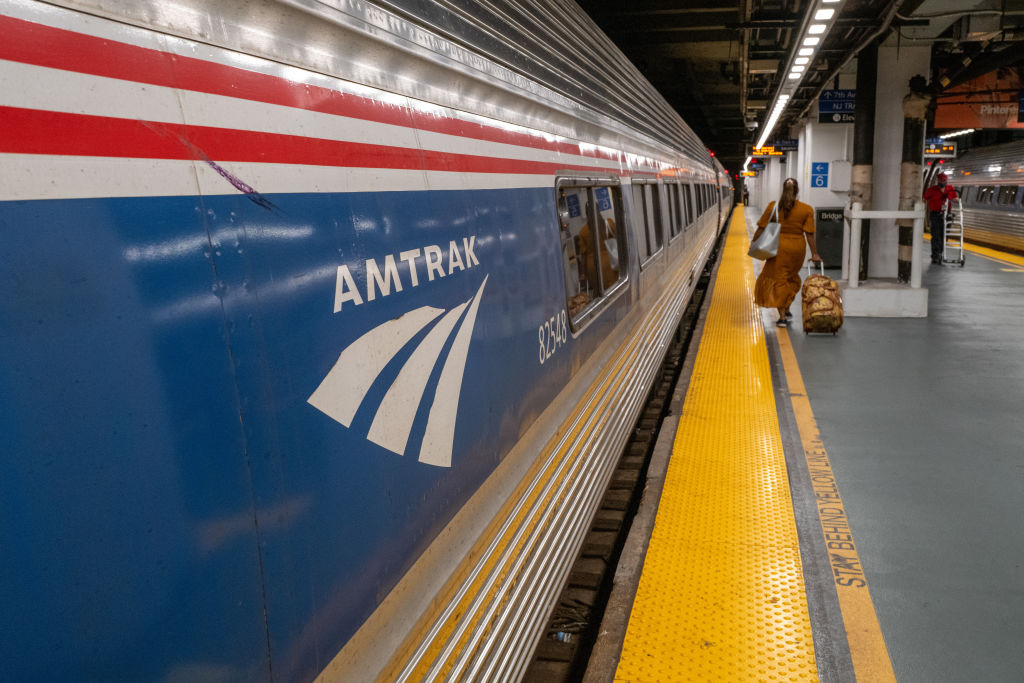
Amtrak, the United States’ national passenger rail service, has recently reported astonishing growth figures for the 2026 fiscal year, which ended on September 30. The company experienced a record ridership of 37.1 million passengers, reflecting a notable 7.4% increase from the previous year. This marks the third consecutive year that Amtrak has set new records for passenger numbers.
During the same period, Amtrak posted a total operating revenue of $4.1 billion, representing a 4.9% rise over the previous fiscal year. Although the company recorded an adjusted net loss of $492.7 million, this figure demonstrated an improvement of 19% compared to the prior year, highlighting a positive trend even amid challenges.
The surge in ridership can be attributed to rising fuel prices and soaring airfare, which have prompted many Americans to reconsider their travel options. A growing trend has emerged where individuals choose rail travel over driving or flying, influenced by the economic landscape. Additionally, Amtrak officials credit this growth to upgrades such as new trains, improved infrastructure, and enhanced service quality.
Bill Herrmann, Amtrak’s acting president, shared insights during a recent interview, stating, “I have no doubt that ticket and gas prices are making people think, ‘Maybe I should consider taking a train.’” He emphasized that significant investments in the Northeast Corridor’s infrastructure are vital to enhance reliability and boost ridership, with new, dependable trainsets playing a critical role in this transformation. Some of these new trainsets are set to replace aging trains that have been in service for over four decades.
Amtrak plans to completely replace the trainsets used on the Northeast Regional routes by 2028, having initiated the replacement of its Acela high-speed trains with a new generation of trains last year.
Herrmann expressed optimism about Amtrak’s competitive position against airlines, stating, “To be honest, I hope my business can compete with airlines, and within the next few years, our passenger numbers will surpass some of those airlines.” One of Amtrak’s ambitious goals is to reduce the travel time between New York and Washington, D.C. from the current duration of around three hours to just 2.5 hours.
He further indicated that if the company receives approval to operate the new trains at higher speeds and reduce the number of stops, achieving this target could be feasible by 2028. “At that point, you can confidently plan your itinerary, attend meetings, or make dinner engagements within a 2.5-hour timeframe,” he remarked.
In recent years, Amtrak has benefitted from approximately $2.4 billion in annual government allocations. Additionally, in 2021, the company was approved for a substantial investment of $22 billion earmarked for significant projects over a five-year span.
Herrmann articulated Amtrak’s hope for Congress to consider providing multi-year funding, as relying solely on annual budget cycles complicates planning efforts considerably.
This year, rising airline fuel prices caused by the early stages of the Iran crisis have resulted in the highest airfare Americans have seen in a decade, further complicating travel plans. Given these high ticket prices, more travelers are seeking alternative modes of transportation, prompting Amtrak to accelerate its modernization efforts in response to market demands.
This comprehensive growth strategy and investment in infrastructure position Amtrak not just as a viable alternative for travelers, but as a competitive player in the transportation sector amid changing economic conditions.