
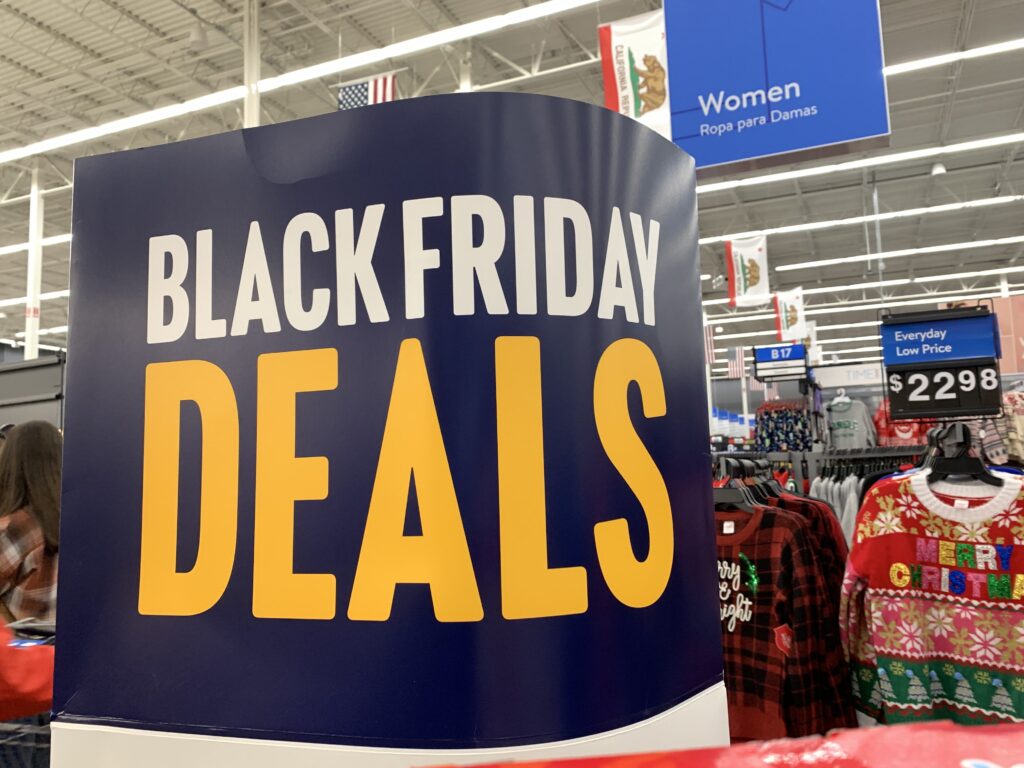
Despite facing inflationary pressures stemming from high prices, the American year-end shopping season has still demonstrated remarkable consumer momentum. According to the latest estimates from the National Retail Federation (NRF), total retail sales in the U.S. during the year-end holiday season from November to December 2026 are projected to reach an impressive $1.013 trillion, marking a year-on-year increase of 4.2%. This will be the first time in history that retail sales have surpassed the trillion-dollar milestone.
The just-concluded Black Friday, a major shopping event, saw online consumer spending soar to $13.1 billion in a single day, which is a staggering 11.1% increase from the previous year, setting a new record in the process.
Recent data from Mastercard SpendingPulse revealed that the total retail sales combining both online and physical stores on Black Friday grew by 4.1% compared to last year. Delving deeper into the statistics, it becomes evident that the surge in consumer activity has a pronounced trend towards online shopping.
Online shopping, in particular, reached historic heights this Black Friday, according to Adobe Analytics. American consumers spent a remarkable $13.1 billion online, easily surpassing last year’s figure of $11.8 billion and exceeding initial market estimates of $12.9 billion.
This surge is expected to continue into the following Monday, known as “Cyber Monday,” when online sales are projected to reach $15.1 billion.
A significant factor contributing to this explosion of online shopping is artificial intelligence (AI). Stats from Salesforce indicate that nearly a quarter of holiday orders across the country were influenced by AI recommendation and comparison tools. Shoppers who interacted with AI shopping assistants tended to spend 43% more per transaction than the average consumer.
While some areas, such as New York and New Jersey, witnessed long lines of eager consumers braving cold and rain to grab early bird gift cards, overall traffic to physical stores on Black Friday experienced a decline. According to Passby analytics, total visits to brick-and-mortar shops across the nation were around 760 million, marking a 2.4% decrease year-on-year. The majority of shoppers adopted a “get in and out” strategy, clearly targeting specific items and leaving more significant portions of their budget for online price comparisons.
The unprecedented rise in year-end holiday sales beyond the trillion-dollar threshold can be attributed not only to the energizing ‘five golden days’ from Thanksgiving to Cyber Monday—which are expected to attract over 182 million shoppers—but also to many retailers beginning their aggressive “early bird Black Friday” promotions in late October and early November, extending the shopping season significantly.
However, retail analysts have also noted structural changes underpinning these record-breaking figures: Of the estimated 4% growth in total year-end retail sales, nearly half is attributed to the inflationary effects of rising product prices, indicating that the actual number of items purchased did not dramatically increase.
With budgets being carefully allocated, consumers not only flocked to purchase electronics and toys but also capitalized on Black Friday discounts to stock up on essential household items like toilet paper and cleaning supplies. Additionally, there was a notable uptick in the use of “buy now, pay later” (BNPL) payment options, making this year’s Black Friday a savvy comparison-shopping and online-dominant battle for consumers.