
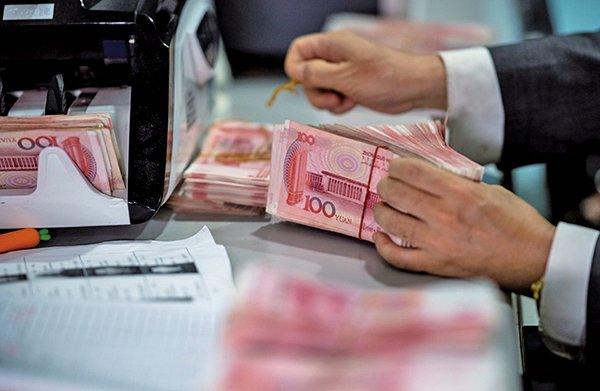
In a recent move aimed at diversifying sources of long-term deposits, the People’s Bank of China has announced a reduction in the purchasing threshold for individual investors interested in large-denomination certificates of deposit (CDs). This adjustment reflects an increasing urgency to attract more capital as the overall landscape for savings continues to evolve.
As per projections for 2026, the scale of maturing household term deposits is expected to reach an astonishing 77 trillion yuan (approximately $11 trillion). This significant volume of funds is not only contending for bank CDs but is also being siphoned off into government bonds, wealth management products, and insurance offerings. With interest rates consistently on a downward trajectory, the efficacy of lowering the purchase threshold to retain depositors will be contingent on whether these rates remain appealing.
On November 27, the People’s Bank released a revised set of regulations governing large-denomination CDs, decreasing the minimum investment amount for individuals from 200,000 yuan to 100,000 yuan, and for institutional investors from 10 million yuan to 5 million yuan. These new regulations will take effect from March 21, 2027. They will also allow for the transfer, early withdrawal, and redemption of CDs through banks’ proprietary channels and select compliant third-party platforms.
Despite these adjustments, the market for transferring large-denomination CDs is still relatively quiet. Data from the central bank indicates that by the end of 2025, 1,536 financial institutions qualified to issue these CDs, and the total outstanding balance was approximately 31.7 trillion yuan, which represented around 10.8% of the total yuan deposits. However, according to statistics cited by Xinhua News Agency, the four largest banks managed to facilitate only about 800 billion yuan in total transfers of large-denomination CDs during that year, amounting to merely 5.5% of their overall CD balances.
Moreover, prior reports from the Daily Economic News have pointed out that some banks have struggled to price their large-denomination CDs in a way that accurately reflects their liquidity advantages, leading to diminished activity in the transfer market. While lowering the purchase threshold may expand the pool of potential buyers, it does not necessarily enhance the appeal of the product itself.
According to calculations from Guotai Junan, the total value of household term deposits maturing in 2026 is approximately 77 trillion yuan. For instance, a resident in Jinan who previously held a three-year deposit with a 3.1% annual interest rate found that similar products now offer rates between 1.2% and 1.5%.
The direction of capital flows is also undergoing transformation. Data from Guotai Junan shows that in the first half of 2026, large banks experienced a term deposit growth rate of around 15.1%, exceeding the 8.1% growth seen among smaller banks. During the same period, non-bank financial institutions added 4.7 trillion yuan in deposits. Over 2024 and 2025, asset management products classified as “deposit-like,” which include wealth management, insurance, and money market funds, saw an annual net inflow of nearly 7 trillion yuan. This suggests that funds are being reallocated within the banking system, with some also flowing into alternative financial products.
For conservative savers, government bonds remain an attractive option. Reports from Economic Observer indicate that on November 10, when an electronic savings bond was released, some banks saw their mobile banking quotas sell out within minutes, with three-year bonds offering a nominal interest rate of 1.63% and five-year bonds at 1.70%, both surpassing the listed rates for term deposits at major state-owned banks during the same period.
Furthermore, Zeng Gang, the director of the Tianfu Financial Research Institute, analyzed that while lowering the purchase threshold might widen the scope of individual participation, it could also blur the lines between large-denomination CDs and standard term deposits. This blurring could intensify competition among banks for deposits. Ultimately, the success of these regulatory changes will hinge on interest rate pricing, as the threshold alone cannot dictate market demand.