
**A Shift in Pricing: Lele Tea Reduces Product Prices Amid Store Closures**
Starting from November 27, the mainland chain tea brand Lele Tea announced a significant reduction in the prices of all its products available through their mini-program, cutting prices by approximately 30%. This comes in light of a challenging year for the brand, during which a total of 142 stores were closed by November 11.
According to reports from the news outlet Blue whale, Lele Tea has cut the price of its fresh lemon water from 17 yuan to 5.9 yuan per cup, representing a drastic decrease of around 65%. Additionally, the brand’s signature drink, the brown sugar boba “dirty tea,” has seen its price drop from 23 yuan to a new starting price of 12.9 yuan. Other drinks, such as the strawberry peach and mango sago, have also had their prices slashed from 22 yuan down to 12.9 yuan.
Lele Tea clarified that customers ordering through the mini-program will benefit from these new prices for both self-pickup and delivery, eliminating the need for coupons or membership subscriptions. While some product pages still display “limited time offers,” the brand stated in its pricing announcement that the new price structure will not be time-limited.
Founded in Shanghai in 2016, Lele Tea made a name for itself with its unique chocolate bread “dirty bun” and brown sugar beverages. Data compiled by Guoyuan Securities indicated that in 2020, the average selling price of Lele Tea’s fresh beverages was 24 yuan per cup. After the recent price adjustments, many drinks are now priced between 10.9 yuan and 13.9 yuan, aligning more closely with offerings from competing tea brands such as Gu Ming and Cha Bai Dao.
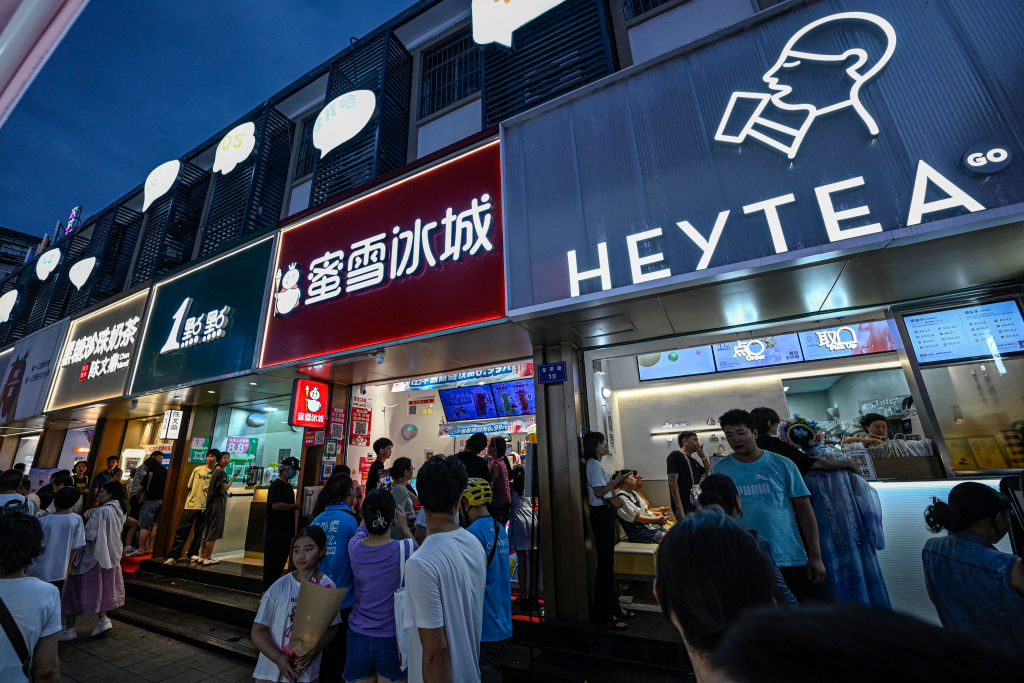
As reported by the Beijing Business Daily, Lele Tea had a total of 418 operational stores as of November 11. In the previous year, the brand had closed 142 locations. After accounting for newly opened stores, the total number of operating outlets is up by 18 compared to the same period last year.
In April, the last direct-operated store in Beijing, located in Wudaokou, was shut down due to rent expiration. At that time, all remaining 27 Lele Tea locations in Beijing were franchises. By November, both Zhengzhou and Chongqing had no Lele Tea outlets in operation.
In 2023, Lele Tea opened up franchise opportunities, and in 2025, it plans to launch franchise stores with a maximum area of 30 square meters, reducing the initial investment required from 350,000 yuan to 200,000 yuan. The head of the franchise operations, Kong Lingshuai, stated last August that intense price competition for deliveries has made it increasingly challenging for individual stores to turn a profit.
Additionally, according to observational data from “Narrow Door” collected by the Observer Network, approximately 141,600 milk tea shops closed in mainland China over the past year as of November 13. Even when new stores opened during this period are considered, the net total of tea shops remains about 52,300 fewer than the previous year.
Data from the National Bureau of Statistics of the Communist Party of China revealed that restaurant revenues across the mainland increased by only 0.7% year-on-year in October, with growth slowing by 1.4 percentage points compared to September. Specifically, revenue from large-scale dining enterprises fell by 2.9% year-on-year.
A report released by Ping An Securities on November 24 warned that delivery subsidies set to roll out in 2025 would likely generate more orders in the short term but could also squeeze the profits of tea drink franchise operators. Wang Yunan, CEO of Gu Ming, remarked at a results briefing in March that when factoring in delivery fees and platform commissions, a store doing 3,000 yuan in delivery sales may earn less than one making 1,000 yuan from dine-in service.
In conclusion, the recent price cuts at Lele Tea signify a new strategy to regain customer interest amid an increasingly competitive market, while also reflecting the challenges faced by tea drink brands in sustaining profitability. As these dynamics unfold, the future of Lele Tea and similar franchises remains uncertain in a market that is both vibrant and volatile.